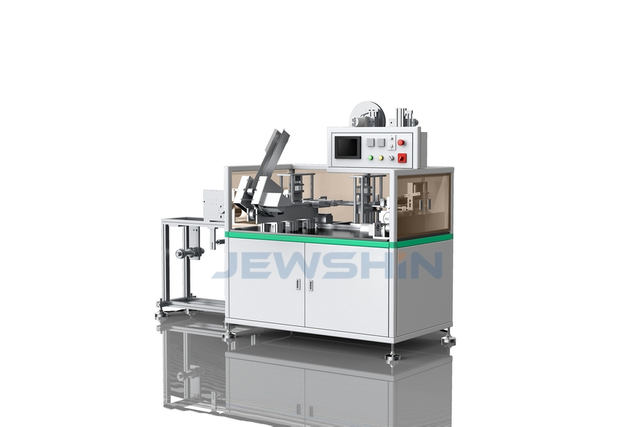
Supported Card Applications
SIM Card Packaging
Automate the packaging of compatible SIM cards or SIM-related card products. Define whether the package contains a single card, a carrier card, or multiple components, and specify the required product orientation.
Scratch Card Packaging
Package scratch cards for promotional, gaming, telecommunications, or retail applications. The card surface and scratch-off coating should be tested to confirm that feeding and packaging do not cause unwanted abrasion.
Game and Collectible Card Packaging
Package individual game cards or counted card sets. Multi-card applications require clear requirements for card quantity, order, alignment, and acceptable counting tolerance.
Membership and Loyalty Card Packaging
Automate film packaging for membership, loyalty, identification, and promotional cards. Coding, labeling, or printed-information requirements should be specified during line planning.
Gift and Prepaid Card Packaging
Package compatible gift, prepaid, or stored-value cards. If the process involves variable information, barcode verification, or traceability, define the required data and inspection workflow.
Paper Card Packaging
Package greeting cards, promotional cards, inserts, and other compatible paper cards. Paper stiffness, coating, static, and curled edges can affect feeding performance and should be tested.
What Does an Automatic Card Packaging Machine Do?
Depending on the selected configuration, a card packaging process may include:
Loading cards into a feeder or feeding station.
Separating cards individually or in predefined quantities.
Detecting card presence and feeding status.
Unwinding and positioning the packaging film.
Aligning the cards inside the package.
Sealing and cutting the film.
Inspecting the product or finished package.
Collecting or transferring packaged cards.
The functions included as standard vary by model. Coding, machine vision, rejection, counting, and collection equipment should be identified as standard or optional in the final quotation.
Card Feeding Options
Reliable card feeding is essential for consistent packaging. Feeding performance depends on card dimensions, thickness, rigidity, surface friction, coating, static, and stack condition.
Integrated Card Feeding
Integrated feeding can synchronize card dispensing directly with the packaging cycle. This arrangement is suitable for products that can be separated consistently from a stacked supply.
Servo Friction Feeding
A servo friction feeder separates stacked cards and feeds them individually into a connected process. JEWSHIN offers different feeder sizes for small, medium, and large flat products.
View Friction Feeder Machines
Multi-Head Feeding
Multi-head feeding is intended for higher-volume lines or applications requiring several feeding stations. The loading method, refill frequency, synchronization, and available floor space should be evaluated as part of the complete line.
Multi-Card Set Feeding
When several cards must be packed together, the machine configuration should be evaluated for:
Number of cards per pack.
Required card sequence.
Card alignment.
Counting accuracy.
Missing-card and double-card detection.
Product rejection requirements.
Packaging Materials and Sealing Methods
Heat-Sealed Film Packaging
Heat sealing uses controlled temperature, pressure, and contact time to seal compatible film. The required settings depend on film material, thickness, package size, and operating speed.
Ultrasonic Film Packaging
Ultrasonic sealing uses mechanical vibration to create a seal in compatible materials. It may reduce direct thermal exposure in the sealing area, but material compatibility and finished-seal quality must be verified through testing.
Printed and Unprinted Film
Both the film structure and printing requirements should be confirmed. If printed film must align with each card package, ask whether registration-mark tracking is required and supported.
Film Compatibility
Provide the following information for evaluation:
Film material.
Film thickness.
Roll width and diameter.
Printed or unprinted design.
Sealing layer.
Required seal strength.
Easy-open or perforation requirements.
Finished-package dimensions.
Do not assume that all films are compatible with every sealing system.
Optional Coding and Inspection Functions
Depending on the model and project requirements, the line may be evaluated for integration with:
Machine Vision Inspection
Cameras may be used to inspect defined product or package characteristics. Clearly specify what must be checked, such as:
Vision inspection supports quality control but should not be described as guaranteeing zero defects. Detection limits and rejection logic must be defined and validated.
Coding and Printing
Compatible printing equipment may add:
Batch codes.
Dates.
Serial numbers.
Barcodes.
QR codes.
Variable information.
Confirm whether information is printed on the card, packaging film, label, or another component.
Counting and Rejection
Sensors or vision systems may monitor feeding and packaging conditions. Define how a nonconforming product is identified, tracked, and removed from the line.
Finished-Pack Collection
Finished products may be discharged to a conveyor, collection table, or downstream process. Required pack orientation and handling should be included in the line design.
How to Choose a Card Packaging Machine
Define the Card
Provide:
Card material.
Minimum and maximum dimensions.
Thickness.
Weight.
Surface finish.
Rigidity or flexibility.
Embossed, coated, or scratch-sensitive areas.
Define the Package
Confirm:
One card or multiple cards per pack.
Required card order and orientation.
Film material and thickness.
Finished-package dimensions.
Sealing method.
Package appearance and opening requirements.
Set a Practical Output Target
State the required packages or cards per hour and the daily operating schedule. When multiple cards are packed together, distinguish between:
Cards per hour.
Packages per hour.
Cards per package.
These values are not interchangeable.
Identify Quality-Control Requirements
List the specific defects or conditions that must be detected. Avoid using only general terms such as “vision inspection” or “quality control.”
Define Integration Requirements
State whether the line needs to connect with a printer, coder, labeler, database, conveyor, inspection system, or collection unit. Include communication and traceability requirements where applicable.
Test Representative Samples
Use samples from the complete product range, including the smallest, largest, thinnest, thickest, and most difficult cards. Testing should use the intended packaging material whenever possible.
Benefits of Automatic Card Packaging
Reduce Repetitive Manual Handling
Automatic feeding and packaging can reduce repeated manual card placement, film handling, sealing, and collection. Actual staffing requirements depend on product loading, film replacement, quality checks, and downstream handling.
Support Consistent Packaging
Controlled card feeding and film handling can improve package dimensions, card position, and seal consistency when the product and material are compatible with the selected configuration.
Increase Production Capacity
Automated equipment can support repeat, higher-volume card production. Practical capacity should be evaluated as sustained output under agreed operating conditions.
Add Inspection and Traceability
Optional cameras, sensors, and coding equipment can support defined inspection or traceability tasks. The exact scope, detection capability, and data requirements must be confirmed for each project.
Prepare for Future Production Growth
Modular feeding, inspection, and collection options may help manufacturers develop a line around changing production requirements. Future products should still be checked for compatibility.
Frequently Asked Questions
What types of cards can an automatic card packaging machine handle?
Potential applications include SIM cards, scratch cards, game cards, membership cards, gift cards, promotional cards, and other compatible paper or PVC cards. Final suitability depends on card dimensions, thickness, surface, rigidity, and packaging requirements.
Can the machine package multiple cards together?
A multi-card configuration may package a defined number of cards together. Provide the required quantity, sequence, alignment, total thickness, and acceptable counting tolerance for assessment.
What is the difference between heat sealing and ultrasonic sealing?
Heat sealing uses controlled heat and pressure to seal compatible film. Ultrasonic sealing uses high-frequency mechanical vibration with compatible materials. The best method depends on film structure, seal requirements, speed, and finished-package quality.
How fast can a card packaging machine operate?
Output depends on the machine, card size, quantity per package, film, feeding arrangement, inspection functions, and collection method. Compare machines using sustained output under defined test conditions rather than maximum speed alone.
What does “pieces per hour” mean?
It may refer to individual cards rather than completed packages. For multi-card packaging, ask the supplier to state both cards per hour and finished packages per hour.
Can the machine detect missing or double cards?
Sensor or vision-based detection may be available, depending on the selected configuration. Define the required inspection conditions and confirm detection performance using actual samples.
Can variable data or barcodes be printed?
Compatible coding equipment may be integrated into the line. Specify the data format, print location, verification requirements, and connection with any existing database or production system.
Can one machine package different card sizes?
A machine may handle multiple card sizes within its working range. Settings, guides, feeding components, or film specifications may need adjustment during changeovers.
Can cards with glossy or sensitive surfaces be packaged?
This may be possible, but sample testing is recommended. Glossy coatings, static, embossed areas, and scratch-sensitive surfaces can affect feeding and handling.
Is machine vision included as standard?
Inspection equipment should not be assumed to be standard. Confirm the camera, lighting, software, inspection items, reject mechanism, and validation method in the quotation.
Should I send card and film samples before ordering?
Yes. Representative samples allow the feeding, sealing, card position, packaging appearance, inspection, and practical output to be assessed before the final configuration is approved.
Request a Card Packaging Solution
Send the following information for an application-specific recommendation:
Card type: SIM, scratch, game, membership, gift, promotional, paper, or PVC card.
Card dimensions: Minimum and maximum length, width, and thickness.
Pack quantity: Number of cards in each finished package.
Card arrangement: Required sequence, orientation, and alignment.
Packaging film: Material, thickness, dimensions, and sample.
Sealing: Heat sealing, ultrasonic sealing, or another required method.
Output: Cards per hour and finished packages per hour.
Inspection: Card presence, count, orientation, print, barcode, or package checks.
Coding: Required variable data and print position.
Installation: Destination, available space, power supply, and line direction.
Samples: Representative cards and packaging materials for testing.
Request a Card Packaging Machine Recommendation
WhatsApp: +86 131 2813 6672
Email: wendy@jewshin.com
Watch Machine Videos · Download Product Information