

A practical flow wrapper sealing temperature window is a qualified operating range, not a universal number: start with film-supplier and laboratory heat-seal data, then confirm the range on the actual wrapper with controlled settings and seal-strength checks before approving production.
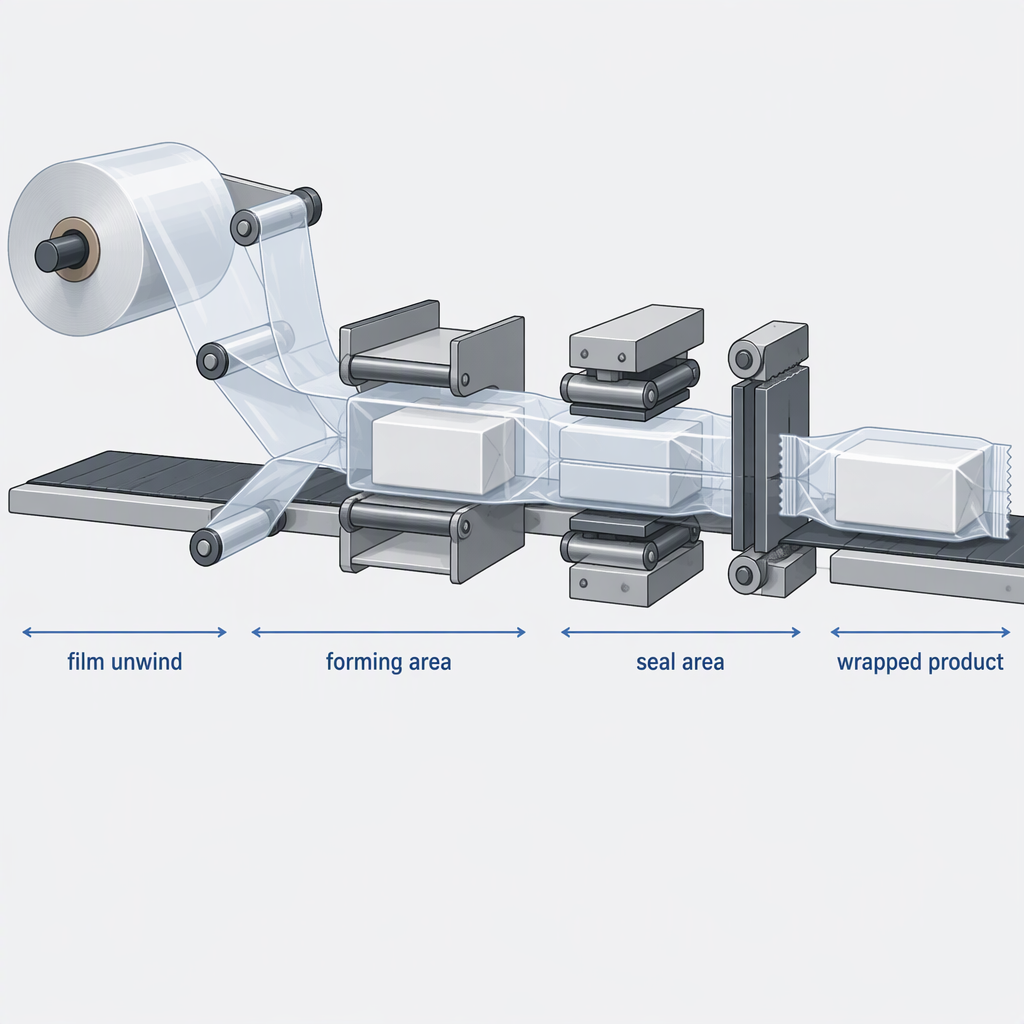
What a sealing temperature window means on a flow wrapper
A sealing temperature window is the range of sealing-jaw settings that can make an acceptable seal for a defined film, product, speed, dwell/contact condition, and acceptance criterion.
ASTM F2029-16(2021) addresses laboratory preparation of heat seals for flexible barrier materials and connects heat-sealability work to seal strength, so it is useful for building the first technical basis for a temperature-window search.
ASTM F88/F88M-23 describes seal strength as a quantitative measure used for process validation, capability, and control of flexible barrier material seals.
For a buyer, the useful question is not “What temperature should every flow wrapper use?” It is “At which settings does this specific film structure keep acceptable seal strength and failure behavior while the wrapper runs at the intended production conditions?”
Use lab heat-seal curves as a starting point, not the final setpoint
Laboratory heat-seal curves help define where to begin, but they should not be treated as the final production setpoint for a horizontal flow wrapper.
This distinction matters because a lab sealer and a production wrapper may differ in contact geometry, pressure consistency, dwell/contact time, speed, heat transfer, and how the film is tensioned around the product.
Ask the film supplier for the heat-seal curve, test conditions, specimen structure, and recommended starting range, then translate that information into a controlled wrapper trial rather than copying a single lab number into production.
Run a controlled production trial to locate the usable range
Run the window search by changing one main sealing variable at a time while keeping film, product, speed, jaw setup, and inspection method consistent.
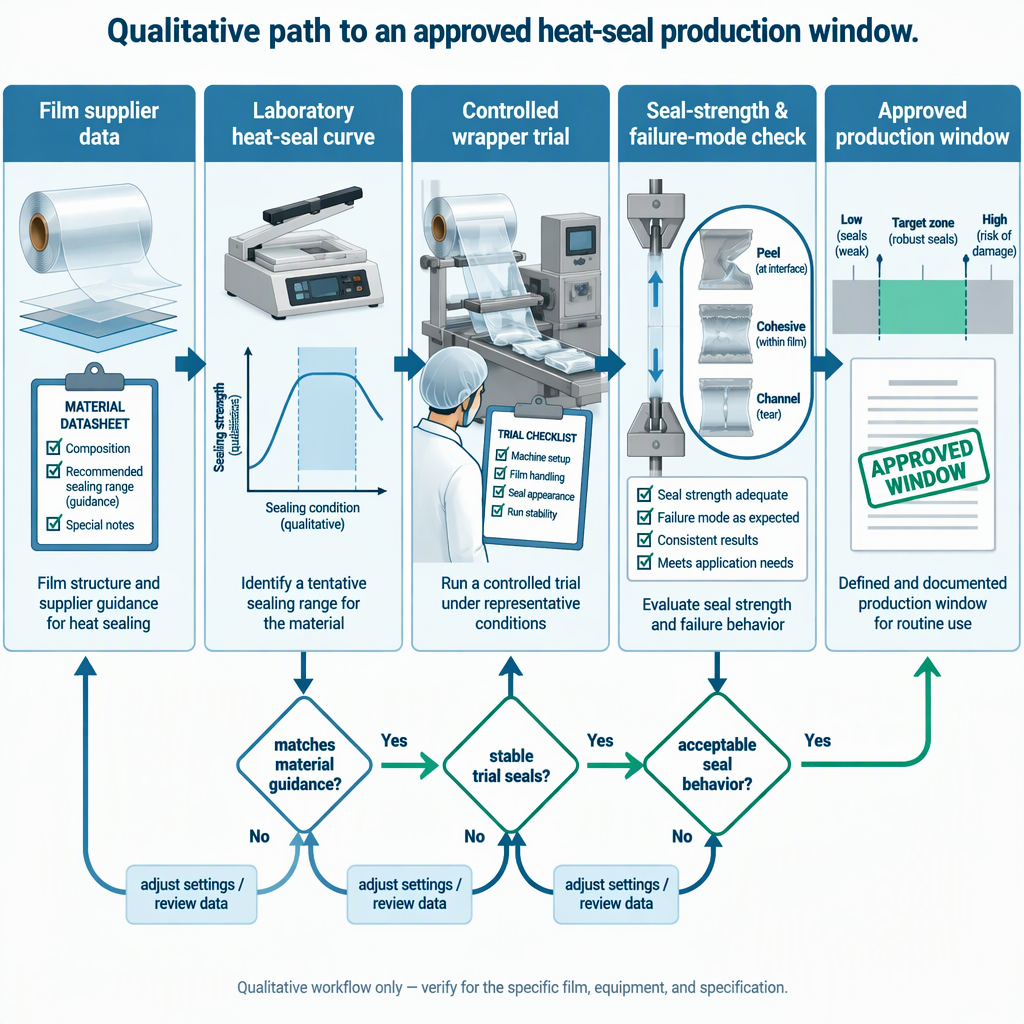
- Collect the film supplier’s construction, sealant-side identification, and laboratory heat-sealability information before the machine trial.
- Choose a cautious starting range from the lab curve or supplier recommendation, then define fixed trial conditions such as product format, film roll, line speed, and sealing-jaw setup.
- Adjust sealing temperature in planned increments while holding the other conditions as stable as practical.
- At each trial point, take sealed samples and test or submit them for seal-strength measurement using an agreed method.
- Record visible seal quality, the force needed to separate the seal, and the failure mode so the decision is based on more than appearance.
- Do not mix film lots, product formats, or major speed changes inside the same temperature-window run.
- Do not approve the window from one short trial if normal production will run different materials, speeds, or pack sizes.
- Keep retained samples and test records for the accepted and rejected trial points.
Measure seal strength and record how the seal fails
The usable window should be judged with seal-strength results and failure-mode notes, not only with a visual check of the package edge.
The ASTM F88/F88M-23 standard page describes a method for measuring the force required to separate a sealed test strip and for identifying the failure mode.
| Trial observation | Buyer interpretation | Next check |
|---|---|---|
| Seal separates at low force in the tested strip. | The point may be outside the acceptable operating window for the agreed seal-strength target. | Check the result against the buyer’s product, distribution, and quality acceptance requirement. |
| Failure mode changes across the temperature series. | The seal behavior is changing, so temperature alone may not explain the result. | Review dwell/contact time, pressure/contact quality, film side, and speed before changing materials or equipment assumptions. |
| Visual seal looks acceptable but test data are inconsistent. | Appearance is not enough to approve the setting for process control. | Repeat sampling and document the test method, sample orientation, and failure mode. |
Prepare RFQ data before asking for a sealing recommendation
Before asking any wrapper supplier for a sealing recommendation, prepare the film, pack, speed, and acceptance data that define the real application.
- Film structure, thickness, sealant side, and supplier heat-sealability information.
- Target product size, pack format, product temperature, and whether the product creates contamination risk at the seal area.
- Expected line speed, sealing-jaw contact condition, and any limits on dwell/contact time.
- Seal-strength target, sampling plan, and accepted failure-mode description.
- Acceptance criteria for start-up, steady running, and changeover conditions.
| RFQ item | Why it matters | What to ask the supplier |
|---|---|---|
| Film heat-seal data | It gives the starting relationship for the trial rather than a guessed temperature. | Ask how the supplier will convert film data into a wrapper trial plan. |
| Seal-strength requirement | It defines the quantitative basis for acceptance. | Ask what sample records are needed to demonstrate the accepted window. |
| Production conditions | Speed, contact condition, and product format can shift the practical operating range. | Ask which variables must stay fixed during trial approval. |
Keep machine context separate from material validation
Machine information can help frame the RFQ, but it does not replace film-specific seal validation.
Use that type of material context to start the conversation about packaging material, infeed, sealing and cutting, downstream handling, and acceptance testing, while still requiring the actual film data and production-trial records for the buyer’s application.
Do not treat a material example on a product page as a guarantee that every grade, laminate, thickness, product, or production speed will share the same sealing temperature window.
Use competitor discovery only as research context
Competitor pages can suggest questions buyers may ask, but sealing-window decisions should be based on applicable standards, film data, and controlled production trials.
If a page discusses horizontal flow wrapper sealing and cutting, use it only to sharpen the RFQ checklist: what film is being sealed, which data prove the window, and how production acceptance will be measured.
Conclusion
The safest purchasing path is to define the sealing window as a tested range for a specific film and production condition, then document the accepted settings before routine production.
- Use laboratory heat-seal data to choose a starting range, not a final production guarantee.
- Approve the window with seal-strength and failure-mode records.
- Give suppliers the film, pack, speed, and acceptance data before requesting recommendations.
Frequently asked questions
These answers help engineering and procurement teams avoid universal temperature assumptions when specifying flow wrapper sealing requirements.
Can I use one sealing temperature for all flow wrapping films?
No. A temperature window depends on the specific film structure, sealant side, contact condition, speed, and acceptance requirement, so a universal setpoint is not a sound RFQ basis.
What should I ask the film supplier for first?
Ask for the film construction, sealant-side information, recommended starting range, and laboratory heat-sealability data, including the conditions used to create the curve.
Why can a lab heat-seal curve differ from my wrapper result?
Laboratory preparation helps define starting relationships, while the production wrapper adds its own speed, contact, pressure, product, and heat-transfer conditions.
Is visual inspection enough to approve the setting?
No. Seal-strength measurement and failure-mode records give a stronger basis for process validation, capability, and control than appearance alone.
What should procurement include in the RFQ?
Include film data, pack format, intended speed, sealing constraints, acceptance criteria, and the sampling or test method expected for trial approval.
How should JEWSHIN machine information be used?
Use the JEWSHIN flow-wrapper page as limited machine and material-example context, then confirm the actual film’s sealing window with buyer-specific trial and test data.
Do OPP, OPP/PE, and OPP/CPP share the same window?
No. They may appear as material examples for a wrapper model, but each film construction and grade still needs its own sealing-window confirmation.


