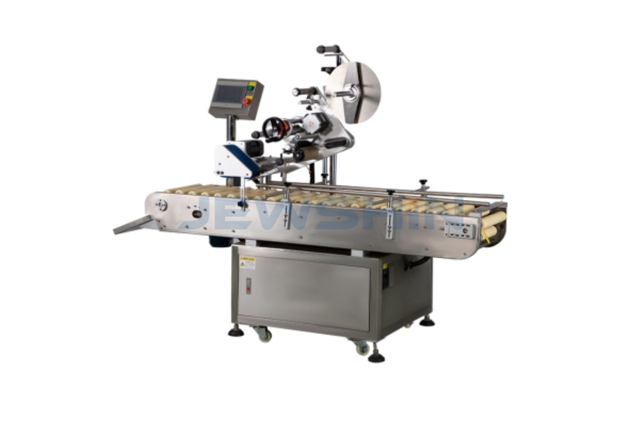
Views: 0 Author: Wendy Liu Publish Time: 2026-11-17 Origin: Jewshin
Quick answer: Choose a pressure-sensitive label when a label applied to a defined area of the container meets your branding and information needs. Evaluate a shrink sleeve when you need graphics around more of the container or have a shape that would be difficult to cover with a conventional label. The best choice depends on the container, artwork, label material, production line, and finished-pack requirements—not on appearance alone.
For buyers planning a new bottle or jar packaging line, the decision also affects equipment scope. A pressure-sensitive labeling system applies labels from a roll. A shrink sleeve system places a sleeve around the container and then uses a separate shrinking process to conform it to the container.
This guide explains the differences, the questions to ask suppliers, and the tests to complete before ordering equipment.

A pressure-sensitive label has an adhesive backing and is supplied on a release liner. A labeling machine dispenses the label and applies it to a container.
Depending on the label and machine configuration, the application may involve:
one label on the front of a container;
separate front and back labels;
a label wrapped around part of the container; or
a label applied to another specified area.
Pressure-sensitive labeling is worth evaluating when the container has a suitable labeling surface and the desired artwork fits within a defined label area.
The result depends on more than the applicator. Container shape, label dimensions, adhesive, surface condition, and how consistently containers enter the machine all affect placement.
A shrink sleeve is a printed film sleeve placed over a container or part of it. After application, a controlled shrinking process makes the sleeve conform more closely to the container.
A sleeve may be considered when the design calls for graphics around a larger area of a bottle or jar. It can also be useful to evaluate for certain contoured containers—but complex shapes need careful testing because distortion, wrinkles, and sleeve movement can affect the finished appearance.
A shrink sleeve project may require:
container infeed and spacing;
sleeve application;
a shrink tunnel or other specified shrinking system; and
inspection and outfeed handling.
Important: A sleeve applicator alone does not produce the finished, shrunk package. Ask suppliers to identify every machine included in their proposal.
Selection factor | Pressure-sensitive label | Shrink sleeve |
How it is applied | Adhesive label is dispensed from a liner and pressed onto the container | Film sleeve is placed over the container and then shrunk |
Typical artwork approach | Graphics appear in the specified label area | Graphics can extend around more of the container |
Container shape | Requires a suitable surface and application method for the label | May accommodate some contours, subject to distortion and shrink testing |
Main equipment | Labeling machine and application-specific handling | Sleeve applicator, shrinking equipment, and application-specific handling |
Main quality checks | Position, adhesion, wrinkles, and readability | Position, shrink finish, artwork distortion, and readability |
Main material inputs | Label stock, adhesive, liner, and roll specification | Sleeve material, dimensions, print layout, and roll specification |
Neither format is automatically cheaper or more reliable. Compare total equipment scope, material cost per acceptable container, changeovers, and quality results for your application.
Start by evaluating pressure-sensitive labeling if:
your artwork fits on a front, back, or specified wraparound label;
the container has an area where the label can be applied consistently;
you need a particular label position relative to a cap, handle, seam, or molded feature;
your existing packaging materials are already pressure-sensitive labels; or
you want to add a labeling step to an established filling and capping line.
The application still needs testing. A label that applies well to one bottle may behave differently on a jar with a curved shoulder, a textured surface, or variation in container dimensions.
If the container will be wet, cold, or exposed to particular storage conditions at the point of labeling, disclose those conditions to the label-material supplier and machinery supplier. Adhesion and application results should be assessed under conditions relevant to your operation.
A shrink sleeve is worth comparing when:
artwork is intended to cover more of the container;
the brand design relies on graphics around a contoured bottle;
the container has limited space for a conventional label; or
the product design specifies a sleeve for a defined decorative or packaging function.
However, more printable area does not guarantee a better result. A sleeve’s appearance depends on the container geometry, film, artwork layout, sleeve placement, and shrink process.
Pay particular attention to text, barcodes, and other critical graphics near shoulders, necks, recesses, or other areas where distortion may occur. Ask for decorated samples of the actual container, not only a flat artwork proof.
If a sleeve is also intended to provide tamper evidence, define the required design and verification criteria separately. Not every decorative sleeve is a tamper-evident feature.
The same labeling machine category can cover very different applications. Before requesting a recommendation, record:
container material;
minimum and maximum container dimensions;
shape, including shoulders, handles, recesses, or tapered areas;
whether the container is empty or filled when decorated;
cap or closure type;
whether a label must face a particular container feature;
surface condition at the labeling station; and
how the container is transferred to the next machine.
For a jar with a straight labeling panel, a pressure-sensitive label may be straightforward to evaluate. For a heavily contoured bottle requiring graphics across much of its surface, a sleeve may merit closer investigation. Neither observation is a substitute for a sample trial.

If the design works within a defined front or wraparound label area, request samples using a pressure-sensitive label. If graphics need to cover the shoulder or most of the container, compare that result with a printed sleeve.
Do not finalize artwork until the packaging format and its usable print areas have been reviewed.
Some brands need a front label aligned with a handle, molded mark, or container seam. Ask how the proposed system will identify and maintain that orientation.
Orientation may add equipment or affect achievable output. It should appear explicitly in the quotation scope if required.
List every bottle, jar, label, and sleeve size the line must run. Ask which guides, settings, or change parts must be adjusted for each SKU.
A machine that produces an excellent sample on one SKU may still be inconvenient for a factory that changes formats several times a day.
For a shrink sleeve, review the container, cap, existing label or print, and filled product as applicable. Test whether the proposed shrinking method achieves the required finish without unacceptable effects on the container or its contents.
Do not assume that an empty-container test establishes performance on a filled product, or vice versa.
Define how you will check label position, sleeve position, readability, adhesion where applicable, and finished appearance. If barcode readability or printed information is critical, make it part of the acceptance criteria rather than a visual afterthought.
Labeling is often only one step in a larger process:
Container handling → filling → capping → labeling or sleeve application → inspection → downstream packing
The actual order depends on the product, container, and line design. Tell the equipment supplier which steps already exist and which are part of the new project.
For integration, confirm:
the speed and spacing of containers arriving at the labeling station;
whether containers need to be dried or otherwise prepared;
how bottles or jars are kept stable;
whether coding or inspection equipment is required;
how stops are communicated between machines; and
where rejected or unfinished containers will go.
A labeling machine’s advertised speed does not establish the output of the complete line. Ask for an estimate based on acceptable finished containers under defined operating conditions.
JEWSHIN lists both labeling and sleeve labeling equipment and filling and capping equipment. If your project includes several steps, describe the complete process when you request a recommendation.
Arrange a trial with representative containers and the proposed label or sleeve material. If possible, include the smallest, largest, and most difficult SKUs.
Trial item | Pressure-sensitive label | Shrink sleeve |
Position | Check placement against the agreed reference point | Check sleeve height and position before and after shrinking |
Appearance | Check bubbles, wrinkles, edges, and alignment | Check wrinkles, uneven shrink, and graphic distortion |
Information | Check critical text and barcode readability | Check critical text and barcode readability after shrinking |
Container condition | Check for marking or instability during handling | Check for effects of the shrinking process |
Output | Record acceptable containers under stated conditions | Record acceptable containers under stated conditions |
Changeover | Test adjustments between relevant sizes | Test sleeve and container changes between relevant sizes |
Ask the supplier to record the materials and setup used. A result produced with a substitute label or sleeve may not be reproducible with the material you eventually buy.
For regulated products, involve your quality and packaging-material teams. A successful machinery trial does not, by itself, establish that the material or finished pack meets all applicable requirements.
Compare the two formats on a cost per acceptable finished container basis rather than material price alone.
Consider:
label or sleeve material and printing;
material lost during setup and normal running;
equipment included in the quoted line;
utilities and routine maintenance;
operator involvement;
changeover time; and
rejected or reworked containers.
For sleeves, include the equipment and operating requirements of the shrinking process. For pressure-sensitive labels, include the complete label specification and application requirements.
Use figures from your material suppliers, your factory, and representative trials. A general claim that one format “always costs less” is unlikely to hold across different containers, volumes, and artwork requirements.
To help a supplier compare the options, send:
photos and samples of each container and cap;
minimum and maximum container dimensions;
a photo or drawing of the intended decoration;
current label or sleeve specifications, if available;
artwork showing critical text and barcodes;
the number of SKUs and changeover frequency;
target acceptable containers per hour;
whether containers arrive empty or filled;
details of existing upstream and downstream equipment; and
destination country, electrical requirements, and available floor space.
If you have not chosen between a label and a sleeve, state that clearly. Request two defined configurations and ask what each would include and how each would be tested.
JEWSHIN’s published equipment range includes labeling and sleeve labeling machines, as well as filling and capping equipment and other packaging machines.
Share your containers, artwork goals, output target, and line layout with JEWSHIN. Ask its team to clarify:
which labeling method it recommends for each SKU;
which machines and conveyors the proposal includes;
what label or sleeve specifications it assumes;
how representative samples would be tested; and
the installation, training, and support terms for the quoted project.
The final recommendation should be based on your actual containers and materials, not only on a product-category description.

They may be, depending on the container shape, labeling area, label material, and application method. Test the actual bottle and label to check placement, adhesion, and appearance.
No. Sleeve dimensions and positioning depend on the intended design and container. Define the required coverage and test how the sleeve looks after shrinking.
Not automatically. If tamper evidence is required, specify the design and performance criteria and verify the finished pack against them.
A proposed machine may support a defined range. Ask the supplier to confirm that range, any required change parts, and the changeover process using your actual SKUs.
No. A shrink sleeve system decorates or covers a container with a sleeve. A shrink wrapper typically uses film to wrap an individual product or bundle as an outer package. They are different packaging tasks and may require different equipment.
There is no universal answer. Achievable output depends on the container, material, machine configuration, changeovers, inspection requirements, and the rest of the line. Compare acceptable finished containers under the same stated conditions.
Yes, where practical. The actual container, cap, label or sleeve, and artwork give a supplier a better basis for evaluating placement and finished appearance than drawings alone.
JEWSHIN lists equipment across several packaging stages. Send your existing process flow and specify which steps you want included so its team can assess the project scope and explain the proposed interfaces.
Pressure-sensitive labels and shrink sleeves can both create an effective finished package, but they place different demands on materials, equipment, artwork, and line operation.
Begin with your container and finished-design requirements. Then compare complete equipment scopes and test representative SKUs with the materials you intend to use in production. The best decision is the one that delivers acceptable, repeatable containers within your actual process—not simply the most attractive sample or the lowest machine quotation.
Planning a bottle or jar labeling project? Send JEWSHIN your container photos, size range, decoration reference, material samples, and target output to discuss an appropriate configuration.