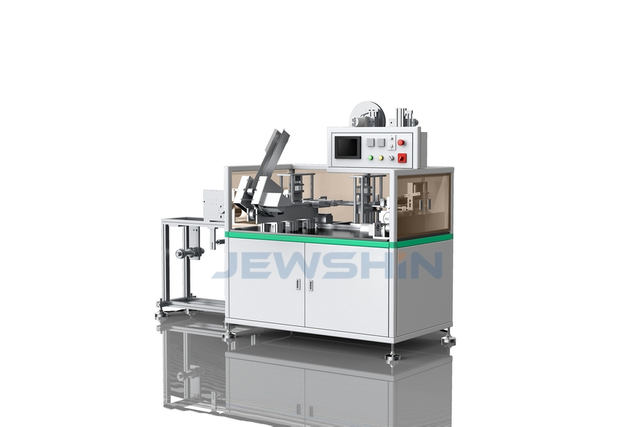
Views: 0 Author: Wendy Liu Publish Time: 2026-03-22 Origin: Jewshin
If you are searching for the best card packaging machines from China, you are probably not just comparing equipment specifications. You are trying to make a smart purchasing decision that affects your production efficiency, packaging consistency, labor cost, and long-term return on investment.
I have worked with buyers who came to us with very different needs. Some needed a compact solution for standard playing cards or SIM cards. Others needed a fully automated packaging line integrated with friction feeding, ultrasonic sealing, labeling, or cartoning . In every case, the right machine was never simply the cheapest one. The best solution was the one that matched the customer's product, packaging style, speed target, factory layout, and business growth plan.
In this buyer's guide, I will explain how to choose card packaging machines, what key factors matter most, and how to evaluate suppliers from China more professionally and efficiently.

China has become one of the most important sourcing destinations for packaging machinery, and there are several practical reasons for that.
China has a mature supply chain for automation components, fabricated parts, electrical systems, and packaging machinery assembly. Manufacturers like Jewshin, based in Dongguan—one of China's most advanced manufacturing hubs—can offer complete, cost-effective solutions because we source precision servo motors, PLCs, and pneumatic components from world-class brands at scale .
Many international buyers choose Chinese packaging equipment because they can achieve a competitive combination of reliable performance, flexible customization, reasonable investment cost, and scalable automation options. You can typically save 30% to 50% compared to equivalent European or North American machines.
For many card packaging projects, standard machines are not enough. Buyers often need changes in product size range, sealing method, infeed structure, coding system, or line integration. A capable Chinese manufacturer can customize these details efficiently—often within weeks rather than months.
Professional packaging machine suppliers in China now understand the needs of overseas markets much better than before, including CE-related expectations, food and consumer goods packaging requirements, English technical communication, and remote after-sales coordination.
In practical terms, card packaging machines are used to package card-type products or products mounted on cards in a controlled, repeatable, and efficient way. Depending on the application, this may involve product feeding, counting or stacking, bagging or wrapping, sealing, labeling, cartoning, and end-of-line case packing.
Buyers typically need packaging solutions for:
Playing cards and trading card games (TCG)
Educational and flash cards
Gift cards and promotional cards
SIM cards and IC cards
Membership and loyalty cards
Small flat paperboard products and card-based retail kits
Because product dimensions, thickness, stack quantity, and packaging material can vary significantly, there is no one-size-fits-all model. That is why supplier consultation is an important step before purchasing.
At Jewshin, card packaging is one of our core specialties. We have developed a comprehensive product line specifically engineered for flat, lightweight, and appearance-sensitive card products . Here is an overview of our key systems:
These are our flagship automatic card packers, designed for high-speed bagging of single or multi-card stacks into OPP or CPP bags.
JX-009BZJ Ultrasonic High-Speed Card Packaging Machine: Our precision ultrasonic sealing system eliminates heat damage to sensitive card surfaces, producing clean, professional sealed bags at high speed .
JX-008BZJ Ultrasonic High-Speed Card Packaging Machine (Multi-Card Bagging Capable): Specifically designed for multi-card stacking and bagging in a single automated pass—ideal for trading card game (TCG) packs and educational card sets .
JX-007BZJ High-Speed Automatic Card Packaging Machine (Heat Sealing & Bagging System): A cost-effective heat-sealing alternative for buyers whose card materials are not heat-sensitive .
JX-L300 Automatic High-Speed Bagging Machine (For Cards & Red Envelopes): Designed for broader flat product bagging, including cards, red envelopes, and small printed materials. This is an excellent choice for buyers who need one machine to handle multiple flat product types .
Accurate feeding is the foundation of any reliable card packaging line. Our servo friction feeder series ensures cards are separated, aligned, and delivered to the downstream packaging machine with zero misfeeds:
JX-100 High-Speed Servo Friction Feeder: For small cards and leaflets.
JX-200 Servo Friction Feeder: For medium-sized cards and brochures.
JX-300 Large Format Servo Friction Feeder: For large-format cards and printed materials up to 300mm width .
These feeders can also be paired with our Automatic Friction Feeder Conveyor (For Inkjet Coding & Labeling) to add inline coding or labeling before the card enters the bagging station .
When buyers ask me how to choose the right machine, I usually recommend focusing on the following areas first.
Before discussing machine models, you need to define the product itself. Ask these questions:
What type of card product are you packaging?
Is it a single card, a stack of cards, or a card set?
What are the length, width, and thickness ranges?
Is the surface sensitive to scratches or static?
Does it need counting, sorting, or collating before packaging?
Buyer tip: Prepare a product information sheet with product photos, dimensions, packaging material, output target, sample package photos, and any current production pain points. This helps us recommend a more accurate solution.
This is one of the most important buying factors. You should clarify what kind of finished package you want:
Pillow bag or flat bag
Shrink-wrapped pack
Card set in OPP pouch
Carton-packed retail unit
Multipack bundle or display-ready package
The same card product may require completely different equipment depending on the packaging result. For example, a simple bagged card set may need our JX-009BZJ ultrasonic bagging machine, while a retail-ready boxed card game may require feeding, wrapping, cartoning, and sealing as an integrated line .
Not every buyer needs a fully automatic system on day one.
Semi-automatic: Best for startups, small batch production, frequent product changeovers, or limited initial budgets.
Automatic standalone machine: Best for growing manufacturers with stable product specifications and labor reduction goals.
Fully integrated automatic packaging line: Best for large-scale factories with high speed requirements and long-term expansion planning.
If your labor cost is rising, your order volume is increasing, or your packaging consistency is becoming harder to control manually, upgrading to a higher automation level is the right decision.
Many buyers start by asking, "What is the maximum speed?" That is understandable, but real production speed is more important than theoretical speed.
You should confirm:
Speed under actual product conditions
Speed range for different card sizes
Speed after adding coding or labeling modules
Speed stability during long production runs
What to ask the supplier: Can you provide a video test with my actual samples? Is the quoted speed continuous and stable? What factors reduce speed in real production?
If you handle multiple SKUs, flexibility becomes critical. Ask about supported size range, changeover time, tool-free adjustment availability, servo-driven positioning, and recipe storage on HMI.
A machine with slightly lower output but faster changeover may create better daily productivity than a faster machine with difficult adjustments.
Card products may be packaged using different materials. You should confirm machine compatibility with PP film, OPP film, laminated film, shrink film, PE bag material, printed film, and recyclable packaging materials.
If sustainability matters in your market, ask whether the machine can support eco-friendly or reduced-material packaging options.
Card products are flat, lightweight, and appearance-sensitive. That means feeding design matters enormously. A suitable card packaging machine should protect edges, corners, surface printing, stack alignment, and count accuracy.
Poor feeding design can cause scratches, misalignment, inaccurate counts, sealing defects, and package inconsistency. This is exactly why we developed our JX-100, JX-200, and JX-300 Servo Friction Feeder series—to ensure every card is separated and delivered flawlessly before it reaches the bagging station .
A professional buyer should not judge a machine only by appearance. Look deeper at frame structure, electrical layout, wiring quality, control system (PLC brand), servo motors, pneumatic components, sensors, sealing assembly, and guarding/safety design.
At Jewshin, we believe long-term reliability is one of the most important parts of machine value. Lower downtime, fewer maintenance interruptions, and more stable output usually create greater ROI than low upfront cost alone.
For card packaging, customization is often necessary rather than optional. You may need customized solutions for special product sizes, mixed-card sets, counting and stacking, unusual packaging shapes, coding or printing integration, barcode inspection, labeling units, cartoning connection, or end-of-line case packing.
A good supplier should clearly explain what can be customized, what remains standard, how customization affects lead time and cost, and how future upgrades can be handled.
Many buyers focus heavily on machine price and only ask about service later. In my experience, that is a mistake.
Before placing an order, you should ask:
Do you provide installation guidance and remote technical support?
Are manuals and training materials available in English?
How are spare parts managed and shipped?
What is the warranty scope and troubleshooting response time?
At Jewshin, as a 4-Year Verified Supplier on Alibaba, we understand that global buyers need more than equipment shipment. They need clear communication, professional documentation, operator training, and reliable technical support across the entire project lifecycle .

Not all packaging machine suppliers have the same strengths. Some are traders. Some are assembly workshops. Some are true manufacturers with engineering capability. Here is a practical checklist:
Company capability: Do they have their own factory? Do they have an R&D team? Do they understand export projects?
Product understanding: Do they ask detailed questions about your product? Do they propose the right solution instead of pushing one standard machine?
Technical professionalism: Can they provide layout drawings? Can they support customization? Can they provide machine testing with your samples?
Quality and compliance: Do they mention quality control procedures? Can they support CE-related needs?
Service support: Do they respond quickly and clearly? Is their English communication professional?
A trustworthy supplier will not only quote quickly. They will also help you reduce technical and commercial uncertainty.
Over the years, I have seen several purchasing mistakes repeated frequently:
Choosing only by price: The cheapest machine can become the most expensive one if it causes downtime, product damage, or unstable packaging quality.
Ignoring changeover needs: Focusing only on the current product and forgetting future SKUs limits flexibility and shortens useful machine life.
Using incomplete product information: If the supplier does not receive accurate dimensions, materials, and output expectations, the solution may be inaccurate from the start.
Overbuying automation: Some companies invest in a fully automatic system before their volume is ready. A modular solution that can be upgraded later is often the smarter path.
Underestimating service importance: Fast support, proper documentation, and spare parts planning make a major difference after installation.
The best card packaging machine is not simply the most advanced or the fastest. It is the one that best matches your real production needs. For most buyers, the best solution should offer stable packaging quality, suitable speed, easy operation, manageable maintenance, product protection, flexibility for size changes, good material compatibility, upgrade potential, and dependable supplier support.
In other words, the best machine is the one that helps your business operate more efficiently and grow with less risk.
At Jewshin, we focus on practical packaging automation, not generic machine selling. Based in Dongguan, China, we combine in-house engineering, manufacturing capability, deep customization expertise, and global communication experience .
Our broader automation experience covers multiple packaging applications beyond cards, including automatic bagging and wrapping solutions, heat shrink systems, labeling and sleeving, case erecting and case sealing, cartoning machines, and end-of-line packaging integration . This broader technical background allows us to help customers evaluate not only an individual card packaging machine, but also how that machine fits into a larger production workflow.
When customers discuss a card packaging project with us, we do not start with "Here is the cheapest model." We start with: What exactly are you packaging? What output do you need? What packaging result do you want? How much flexibility do you need? What will create the best long-term value for your factory?
That is how professional machine selection should work.
If you are planning to buy a card packaging machine from China, I recommend sending suppliers the following information to receive the most accurate recommendation:
Product information: Product name, photos, dimensions, thickness, single piece or stacked pack, surface sensitivity.
Packaging requirement: Desired package style, packaging material, sealing type (heat seal vs. ultrasonic), printing/coding/labeling needs.
Production target: Target speed, shift length, labor reduction goals, factory layout limitations.
Commercial information: Target market, certification expectations, delivery timeline, budget range, future expansion plan.
Is it a good idea to buy card packaging machines from China?
Yes, if you choose a supplier with real engineering capability, export experience, and reliable service support. China offers strong value in terms of manufacturing capacity, customization, and cost-performance balance.
What information should I send before requesting a quotation?
You should send product photos, dimensions, packaging style, required speed, packaging material, and any special functions such as counting, labeling, or cartoning.
Can card packaging machines be customized?
Yes. In many projects, customization is necessary to match product dimensions, stack quantity, feeding method, packaging format, and line integration requirements. At Jewshin, we regularly customize our JX-series machines for unique card sizes and multi-card stacking configurations .
How do I know if I need a standalone machine or a full packaging line?
That depends on your production volume, labor cost, packaging complexity, and future expansion plan. A professional supplier should help you compare both options objectively.
What is the difference between ultrasonic sealing and heat sealing for cards?
Ultrasonic sealing (used in our JX-008BZJ and JX-009BZJ) uses high-frequency vibration to bond film without generating surface heat, making it ideal for heat-sensitive printed cards. Heat sealing (used in our JX-007BZJ) is more cost-effective and works well for cards that can tolerate brief thermal contact .
What matters more, speed or stability?
For most manufacturers, stable output is more important than peak speed. A machine that runs consistently at a reliable production rate usually creates better ROI than one with a higher but less stable maximum speed.
If you are evaluating card packaging machines and want a solution matched to your product and packaging goals, our team at Jewshin is ready to help.
Jewshin — Dongguan Jewshin Intelligent Machinery Co., Ltd.
Website: www.jewshin.com
Email: wendy@jewshin.com
WhatsApp: +86-13128136672
We are always happy to review your samples, packaging requirements, and automation goals to help you find the most suitable packaging solution.