Views: 0 Author: Wendy Liu Publish Time: 2026-03-13 Origin: Jewshin
Hi, I am Wendy Liu, CEO of Dongguan Jewshin Intelligent Machinery Co., Ltd. Over my years in the packaging machinery industry, I’ve seen countless startups, e-commerce brands, and mid-sized manufacturers struggle to scale their operations simply because they chose the wrong entry-level equipment.
When choosing a small packing machine, the best option depends entirely on your product type, output needs, and desired automation level. For businesses seeking a compact vertical form fill seal (VFFS) machine for snacks or powders, semi-automatic models offer reliable performance . If you need consistent portion control and airtight sealing for items like coffee or pharmaceuticals, you must prioritize machines with adjustable filling mechanisms and durable heat-sealing systems.
A well-chosen small tabletop packing machine can increase your packaging speed by up to 60% compared to manual methods. In this guide, I will walk you through exactly how to evaluate your options, avoid common pitfalls, and source reliable equipment from verified manufacturers.

A small packing machine is a compact, often tabletop or countertop-sized system designed to automate the packaging of small-volume products into bags, pouches, or wraps. These machines are the backbone of startups, small manufacturing units, laboratories, and home-based businesses where floor space and budgets are limited, but consistency and hygiene are non-negotiable.
Common applications include:
Food: Nuts, candies, spices, dried fruits, and baked goods.
Pharmaceuticals & Cosmetics: Pills, supplements, creams, and sachets.
Industrial: Small hardware, granules, or powders.
Unlike large industrial systems, small packing machines typically support lower throughput—ranging from 10 to 60 bags per minute (BPM)—making them ideal for agile batch production.
The demand for small packing machines has surged globally, driven by the rise of direct-to-consumer (DTC) brands and private labeling. Entrepreneurs launching niche products no longer need massive infrastructure to achieve professional-grade, retail-ready packaging.
These machines offer a rapid return on investment by:
Reducing labor costs and human error in filling accuracy.
Improving compliance with strict weight regulations.
Enhancing customer satisfaction through visually appealing, tamper-evident seals.
Understanding the different variants is the first step in matching the right machine to your workflow. Here are the core categories:
Pros: Excellent for wrapping individual solid items like protein bars, cookies, or medical devices. They offer a highly professional, retail-ready appearance.
Cons: Limited to rigid or semi-rigid products.
Jewshin Insight: At Jewshin, our Horizontal Flow Wrappers are engineered for seamless operation, making them a top choice for bakeries and snack producers globally .
Pros: Creates bags directly from roll film, integrating the forming, filling, and sealing processes. Suitable for liquids, powders, and solids.
Cons: Requires precise film tension control and has a slightly more complex setup than basic pouch sealers.
Pros: Very simple operation—just place the pouch, fill, and seal. Minimal training is required.
Cons: Higher material costs for pre-made pouches compared to roll film. Ideal for low-volume operations using custom-designed doypacks.
Pros: Provides strong vacuum protection, which is excellent for oxygen-sensitive foods like meats or cheeses.
Cons: Slower cycle times due to batch processing.
When comparing options, especially if you are sourcing internationally, assess these critical parameters to ensure you get what you pay for:
Film Compatibility: Check whether the machine supports BOPP, PET, CPP, aluminum laminate, or compostable films.
Packaging Speed: Semi-automatic units average 10–30 BPM; fully automatic ones reach 40–60 BPM. Choose a machine rated for at least 20% above your peak demand.
Filling Accuracy: Look for ±1–3% deviation depending on product density. Machines with servo-driven dosing systems offer superior repeatability.
Build Material: Ensure the frame is made of stainless steel (like 304 or 316L) to resist corrosion and meet food safety standards. Avoid plastic-heavy constructions.
Control Interface: Digital touchscreens (PLCs) simplify recipe storage and product changeovers.
Value isn't always found in the absolute lowest cost. While Chinese-made machines offer highly competitive pricing, it is crucial to prioritize reliability, certifications, and post-purchase support.
As a 4-Year Verified Supplier on Alibaba, Jewshin understands the pain points of overseas buyers. Based in Dongguan—the heart of China's manufacturing sector—our factory is ISO 9001:2015 certified, and our machinery carries CE, FDA, and RoHS compliance .
Red Flags to Avoid When Sourcing:
Sellers unwilling to provide live video demonstrations.
Lack of English documentation or touchscreen interfaces.
Unclear warranty terms and no dedicated after-sales support team.
Define Your Product: Is it granular, viscous, fragile, or free-flowing? This determines your filler mechanism.
Estimate Output: Calculate your required daily bag count.
Check Compliance: Ensure the machine meets your local electrical codes (e.g., CE for Europe, UL for the US) .
Test Sample Runs: Always ask the manufacturer to run a test with your specific product and film before finalizing the purchase.
Selecting the right small packing machine requires balancing product requirements, production volume, and long-term reliability. For most small businesses, investing in a durable, well-reviewed model pays off exponentially through reduced downtime and improved product presentation.
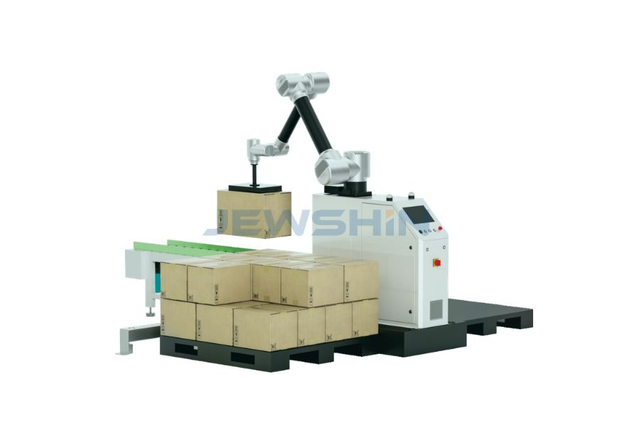
At Jewshin, we provide a seamless integration of R&D, manufacturing, and global distribution . Whether you need a compact flow wrapper for your bakery or are looking to upgrade to automated case sealers and palletizers as you grow, our team is here to help .
Ready to find the perfect machine for your business?
Don't navigate the complex machinery market alone. Visit us at www.jewshin.com or email me directly at wl4952739@gmail.com . Contact our team today for a free customized packaging solution tailored exactly to your product and budget!
Q: What is the most reliable small packing machine for coffee beans?
A: A semi-automatic VFFS machine equipped with a volumetric cup filler or multihead weigher ensures accurate portioning and airtight sealing to preserve aroma.
Q: Can I use biodegradable films with my small packing machine?
A: Yes, but confirm film compatibility with the manufacturer first. Some compostable rolls require lower sealing temperatures and precise pressure adjustments.
Q: How much maintenance does a small packing machine need?
A: Daily cleaning of sealing jaws and weekly inspections of heater strips are typical. Major servicing may be needed every 6–12 months, depending on usage.
Q: Are small packing machines from China safe for my business?
A: Absolutely, provided you buy from a verified manufacturer. Look for suppliers like Jewshin that offer CE certification, strict quality control (ISO 9001), and dedicated English-speaking support .
Q: Do I need special training to operate these machines?
A: Most modern models come with intuitive PLC touchscreens. While basic operation is simple, we always provide comprehensive English manuals and video training to ensure proper setup and calibration.