Views: 0 Author: Wendy Liu Publish Time: 2026-04-07 Origin: Jewshin
In the printing and post-press industry, the difference between a highly profitable order and an operational bottleneck usually comes down to how you handle the finishing steps. Collating and binding are often well-automated, but secondary requirements—like inserting promotional pages, applying specific barcodes or labels, and punching hanging holes—frequently force manufacturers to revert to slow, tedious manual labor.
Recently, a highly respected South Korean manufacturer with a 50-year history in producing wire-bound notebooks, desk calendars, and wall calendars faced exactly this challenge. Through a referral from an existing customer, they contacted Jewshin with a specific operational pain point: they had secured a large order for wall calendars that required page insertion, precise flat labeling, and hole punching before final delivery.
If executed manually, these three tedious steps would have completely paralyzed their production throughput. We designed a custom non-standard automated line that eliminated the manual work entirely. Here is how we integrated our equipment directly into their existing factory workflow to achieve a "zero manual intervention" production process.
Customer Background:
Location: South Korea
Industry Experience: 50 years in the printing and stationery industry
Core Products: Wire-bound notebooks, desk calendars, wall calendars
The Catalyst: A new wall calendar order requiring three specific finishing steps: page insertion, labeling, and hole punching.
The customer already possessed a highly efficient, automated collating and binding production line. However, the new calendar order required additional finishing steps after the binding was complete.
Usually, factories handle this by taking the bound calendars off the line, stacking them on tables, and having teams of workers manually insert pages, apply stickers by hand, and push the calendars through manual hole-punching presses. This approach is slow, creates alignment errors (especially with labels and hole placements), and drastically drives up labor costs. The customer needed a way to automate these final steps without disrupting their current binding speed.


When the customer approached us, we realized that standard, off-the-shelf machines would not solve their problem efficiently. They didn't need three separate machines; they needed one continuous workflow.
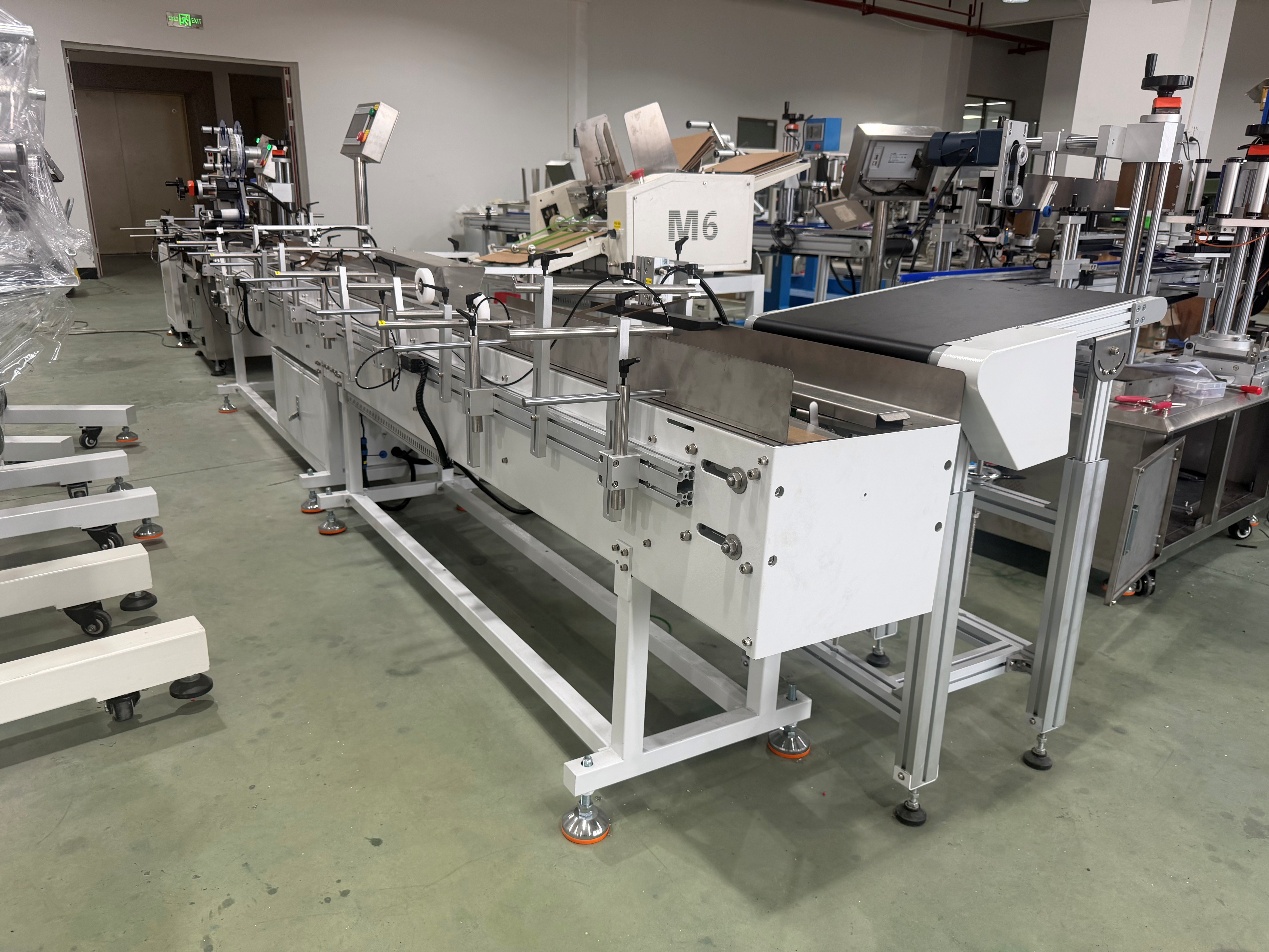
We engineered a custom, non-standard automated line consisting of three core modules:
Wall calendars are typically large-format products. We utilized our JX-420 Friction Feeder, which features a wide 420mm feeding capacity, perfectly suited for large calendar dimensions. As the bound calendar moves down the conveyor, the JX-420 accurately dispenses and inserts the required supplementary page or card onto the calendar with high-speed precision.
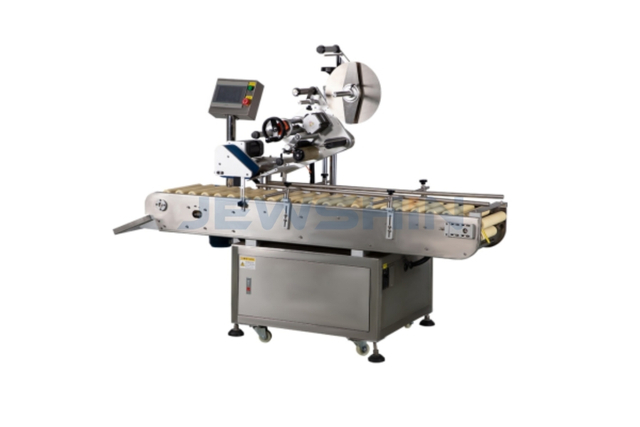
Immediately following the insertion, the calendar passes under the JX-T113 Automatic Flat Surface Labeling Machine. This machine applies the required product label or barcode directly onto the flat surface of the calendar. By automating this step, the customer guaranteed that every single label was placed perfectly straight and in the exact same position, eliminating the crooked placement associated with hand-labeling.
The final step required a hanging hole to be punched through the calendar materials. Because calendar thicknesses and hole-size requirements vary, we engineered a Custom Hole-Punching Station inline with the conveyor. Once the calendar is aligned, the pneumatic punching mechanism drives a clean, precise hole through the product, preparing it for immediate retail display.
The true value of this project was not just in building the 3-in-1 module, but in how we integrated it with the customer's existing factory equipment.
We designed our system to connect seamlessly with the outfeed of their existing collating and binding line. The workflow now operates as one continuous, uninterrupted sequence:
Collating → Binding → (Jewshin System Takes Over) → Automatic Page Insertion → Automatic Labeling → Automatic Hole Punching → Finished Product
From the moment the raw pages enter the collating machine to the moment the fully finished, labeled, and punched calendar exits the line, there is absolutely zero manual intervention.
The customer was exceptionally satisfied with the results. By installing this customized Jewshin line, they achieved:
Total elimination of manual finishing labor, protecting their profit margins on the new order.
Perfect consistency in label placement and hole punching, elevating the final retail quality of their 50-year-old brand.
A fully automated, bottleneck-free production flow that kept pace with their high-speed binding equipment.
The fact that this 50-year-old industry veteran found us through a customer referral—and trusted us to interface with their core production line—speaks volumes about the reliability of Jewshin's custom engineering capabilities.
This Korean case study highlights a critical reality in modern manufacturing: Your production line is only as fast as its most tedious manual step.
For printing, post-press, and stationery manufacturers, secondary packaging and finishing requirements (inserting, labeling, punching, wrapping) often threaten to slow down automated primary production. By utilizing non-standard, customized equipment integration, those manual bottlenecks can be entirely engineered out of the building.
If your factory produces calendars, notebooks, instruction manuals, or flat products that require complex secondary finishing like inserting, labeling, or punching, you do not have to settle for manual labor.
Jewshin — Dongguan Jewshin Intelligent Machinery Co., Ltd.
Website: www.jewshin.com
Email: wendy@jewshin.com
WhatsApp: +86-13128136672
Send us your product dimensions, your specific finishing requirements, and details about your existing upstream equipment, and our engineering team will provide a custom automated integration proposal designed to remove your production bottlenecks.