Views: 0 Author: Wendy Liu Publish Time: 2026-03-22 Origin: Jewshin
If you are planning to buy a Piston Filling Machine from China, you are likely looking for a reliable way to improve filling accuracy, increase production efficiency, reduce product waste, and standardize your packaging process. For many manufacturers, a piston filling machine is not simply a piece of equipment—it is a core part of product consistency, labor efficiency, and packaging line performance.
A Piston Filling Machine is widely used for filling liquids, creams, sauces, gels, and other viscous products into bottles, jars, cups, and other containers. It is especially suitable for products that require accurate volumetric filling and stable operation across repeated production cycles. However, the best piston filling machine is not always the fastest or cheapest model. The right machine depends on your product viscosity, filling volume, container type, production speed, hygiene requirements, and future expansion plan.
In this buyer's guide, I will explain how to choose the best Piston Filling Machine, what factors matter most, and how to compare suppliers from China more effectively.

A Piston Filling Machine is a volumetric filling system that uses a precision piston-cylinder mechanism to draw a measured volume of product into a chamber and then dispense it accurately into a container. Because it works by controlled volume displacement rather than by weight or flow rate, it delivers consistent fill accuracy across a wide range of liquid and semi-liquid products—from thin water-like liquids all the way to high-viscosity pastes and sauces containing solid particles.
Unlike gravity fillers, which struggle with thick or chunky products, a properly engineered piston filler can precisely dose everything from shampoo and lotion to chili sauce, fruit jam, and peanut butter. Depending on the product and packaging line, a piston filler may be configured as a semi-automatic unit, automatic inline machine, multi-head filler, or fully integrated filling line with capping, labeling, coding, and conveyors.
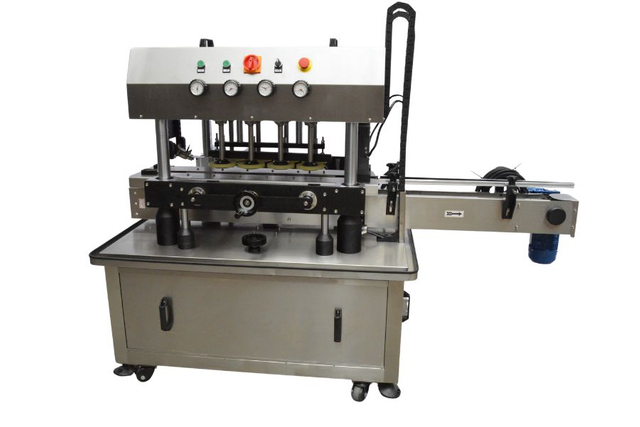
At Jewshin, our flagship piston filling solution is the RF-GZ6T Automatic Piston Liquid & Paste Filling Machine (Servo/Pneumatic)—engineered as an all-in-one solution for liquids, pastes, and particle-containing sauces.
Parameter | Details |
Filling Principle | Piston (Volumetric) |
Filling Range | 100 – 1,000 ml (customizable) |
Filling Accuracy | < ±1% |
Air Pressure | 0.4 – 0.6 MPa |
Power | 3 KW (220V / 50Hz) |
Dimensions | 2000 × 900 × 1900 mm |
Weight | ~400 KG |
One of the most important differentiators of the RF-GZ6T is its world-class component specification. We do not use low-cost generic parts where reliability matters:
Component | Brand | Origin |
PLC Controller | Mitsubishi | Japan |
Touchscreen HMI | Weinview | Taiwan |
Photoelectric Sensor | Keyence | Japan |
Pneumatic Cylinder | AirTac | Taiwan |
Relay | Omron | Japan |
Power Supply | Meanwell | Taiwan |
This component architecture ensures the RF-GZ6T runs smoothly for years of 24/7 production—not just months.
Handles particles without clogging: Specially designed rotary valves allow the machine to fill semi-fluid products containing soft particles—such as fruit chunks in jam, seeds in hot sauce, or vegetable pieces in paste—without jamming or valve damage. This is a capability that most standard piston fillers cannot reliably deliver.
High-viscosity ready: The powerful piston mechanism handles thick products like honey, tomato paste, face cream, laundry detergent, and peanut butter with the same consistent accuracy as thin liquids.
Anti-drip nozzles with wire-drawing prevention: The filling heads feature a specialized shut-off mechanism that prevents dripping and eliminates "wire drawing"—the stringy residue that sticky products like honey or jam tend to leave. Your bottles and conveyor belt stay clean.
No-Bottle-No-Fill intelligent protection: Keyence sensors detect the presence of each container before triggering the fill cycle. If no bottle is present, the machine does not dispense—eliminating product waste and conveyor contamination completely.
Tool-free quick-strip design for GMP compliance: Key product-contact components can be disassembled and reassembled quickly without specialized tools—critical for fast, hygienic changeovers between different products or cleaning cycles.
One-touch volume adjustment via Weinview HMI: Fill volume and filling speed are adjusted directly on the touchscreen with saved recipes. No tedious mechanical adjustments are needed when switching between different bottle sizes.
Flexible nozzle configuration: The RF-GZ6T can be configured with 2, 4, 6, 8, or 12 nozzle heads depending on your production speed requirements—making it scalable from medium-volume operations to high-output industrial lines.

The RF-GZ6T is purpose-built to handle product categories that challenge or defeat lesser filling machines:
Food and condiments: Chili sauce, tomato paste, honey, fruit jam, peanut butter, salad dressing, cooking paste, syrup, mayonnaise.
Cosmetics and personal care: Shampoo, lotion, face cream, liquid soap, conditioner, body wash, toothpaste, ointment.
Chemical products: Dishwashing liquid, laundry detergent, lubricating oil, industrial cleaning gel, paste chemicals.
When helping customers choose a piston filling solution, I recommend evaluating the following ten factors carefully.
This is the most critical starting point. You must clearly define:
Product viscosity and flow behavior (water-thin, medium viscosity, thick paste)
Presence and maximum size of solid particles or chunks
Temperature sensitivity and hot-fill requirements
Foaming tendency during dispensing
Corrosiveness and material compatibility requirements
Hygiene and GMP compliance standards
For example, thick pastes require strong piston suction and rotary valve design—exactly what the RF-GZ6T provides. Products with particles need specifically designed rotary valves with adequate clearance. Without this product information, even a well-built machine will be mismatched to the application.
The piston filler must precisely match your target volume range. The RF-GZ6T covers 100 to 1,000 ml as standard, with customization available beyond this range. Key questions to ask include:
What is the minimum and maximum fill volume in production?
Is one machine expected to handle multiple fill sizes?
How frequently will fill volume need to be adjusted between runs?
A machine optimized for a defined volume range delivers better accuracy and lower dead-volume waste than a machine stretched across too wide a range.
Your containers are just as important as your product. Specify container type (bottle, jar, cup, pouch), dimensions, mouth opening diameter, material, and height range. The RF-GZ6T's one-touch Weinview HMI allows operators to recall saved container recipes for fast, reliable changeover without mechanical adjustment. Provide both product and container samples to your supplier whenever possible.
The RF-GZ6T achieves filling accuracy of < ±1%—one of the tightest tolerances available in this machine class. However, real filling accuracy depends on product behavior, valve design, nozzle performance, machine calibration, and maintenance condition. Always ask whether quoted accuracy is tested with water or with your actual product viscosity. Water tests and high-viscosity paste tests can produce very different results.
The RF-GZ6T's actual filling speed depends on nozzle count, product viscosity, and container supply rate. With configurations from 2 to 12 nozzle heads, the machine can be scaled to match your required containers per minute output. When evaluating speed, always consider it alongside accuracy, drip control, and cleaning cycle impact on effective daily output—not just theoretical peak cycles.
Automation Level | Best Suited For |
Semi-Automatic | Small batch, startups, R&D or pilot lines |
Automatic Inline (RF-GZ6T) | Medium-to-high volume, standardized containers, 24/7 production |
Integrated Filling Line | Full automation with capping, labeling, coding in one flow |
The RF-GZ6T is specifically designed for automatic inline production, with the Mitsubishi PLC and Keyence sensor architecture supporting continuous 24/7 industrial operation. At Jewshin, we can help you expand this into a complete integrated line with capping, labeling, and end-of-line systems.
The RF-GZ6T's anti-drip nozzles feature a specialized shut-off mechanism that prevents both dripping and wire drawing—the two most common nozzle problems in viscous and sticky product filling. The No-Bottle-No-Fill logic adds a second layer of product waste prevention. When evaluating any piston filler, request a live test or video demonstration with your actual product to verify drip-free performance before purchasing.
The RF-GZ6T is built on a full stainless steel frame with a tool-free quick-strip design, allowing key product-contact components to be removed, cleaned, and reinstalled without specialized tools. This design directly reduces cleaning downtime and supports compliance with GMP hygiene standards in food, cosmetic, and pharmaceutical production environments. Evaluate stainless steel grade, hopper accessibility, and dead-corner reduction for your specific hygiene requirements.
The RF-GZ6T can be customized with 2, 4, 6, 8, or 12 nozzle heads, filling range extensions, heated hopper for temperature-sensitive products, mixing agitator for products that separate, and integration with downstream capping and labeling systems.
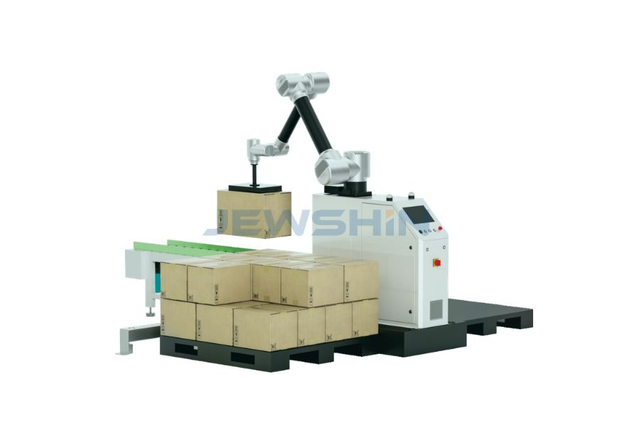
At Jewshin, our broader product range makes it straightforward to build a complete liquid packaging line around the RF-GZ6T. Our Labeling Machines, Automatic Carton Sealers, and Palletizing Systems provide the downstream workflow to complete your production line from fill to pallet.
The true cost extends beyond the quotation. Consider: machine cost, installation, operator training, spare parts supply, cleaning time per shift, product waste from drips or inaccurate fills, downtime risk, and future nozzle or line expansion. A cheaper machine that causes inaccurate filling, poor hygiene access, or frequent dripping creates far higher operating cost over time. The RF-GZ6T's Mitsubishi PLC and Keyence sensor architecture is specifically chosen to minimize downtime and maximize long-term reliability.

Technical understanding: Do they ask about product viscosity, particle content, temperature, and container dimensions before recommending a model? Do they discuss GMP hygiene requirements?
Manufacturing and testing capability: Do they have real production resources and can they perform filling tests with your actual product samples? Can they customize nozzle count, hopper design, and component specification?
Component transparency: Do they clearly specify the brands and origins of PLC, sensors, pneumatics, and HMI? A supplier who cannot tell you what components are inside the machine is not a supplier you should trust with 24/7 production.
Service and support: Do they provide English manuals, operator training, and remote troubleshooting? Can they supply international spare parts efficiently?
Choosing only by price: A low-cost machine with generic components creates filling inconsistency, frequent downtime, and high spare parts cost at scale.
Ignoring product behavior: Viscosity, particles, foaming, and temperature behavior fundamentally determine machine suitability. The RF-GZ6T's rotary valve design is specifically engineered for challenging products that defeat standard piston fillers.
Not requesting a product test: Without an actual filling test using your product and container, accuracy claims cannot be verified.
Focusing only on speed: The RF-GZ6T's value is its combination of accuracy (< ±1%), anti-drip performance, and No-Bottle-No-Fill intelligence—not speed alone.
Overlooking cleaning design: In food and cosmetic production, a machine's cleaning architecture is a direct determinant of real daily productivity.
Product details: Product name, viscosity, particle content and size, temperature condition, GMP/hygiene requirements, foaming tendency.
Filling details: Minimum and maximum volume, required accuracy, target speed, single or multiple fill sizes.
Container details: Photos, dimensions, mouth diameter, material, height range.
Additional functions: Number of nozzle heads needed, heated hopper, agitator, capping integration, labeling, coding, conveyor integration, future line expansion plans.
What products can the RF-GZ6T handle?
It is designed for a wide range of challenging products including chili sauce, tomato paste, honey, fruit jam, peanut butter, shampoo, lotion, face cream, laundry detergent, and other viscous or particle-containing liquids and pastes.
Can the RF-GZ6T fill products with solid particles?
Yes. The RF-GZ6T uses specially designed rotary valves that allow semi-fluid products containing soft particles—such as fruit chunks or seeds—to pass through without clogging.
What filling accuracy does the RF-GZ6T achieve?
The machine achieves filling accuracy of < ±1% under standard production conditions.
How many nozzle heads can be configured?
The RF-GZ6T can be configured with 2, 4, 6, 8, or 12 nozzle heads depending on your production speed requirements.
Why does component brand matter so much?
The RF-GZ6T uses Mitsubishi PLC, Keyence sensors, AirTac pneumatics, and Omron relays. These components are the reason the machine can run reliably for years of 24/7 industrial production. Generic components may cost less initially but create significantly higher maintenance and downtime costs over the machine's operating lifetime.
If you are looking for the right Piston Filling Machine for your liquid or paste packaging line, our team at Jewshin is ready to help you evaluate the RF-GZ6T and configure the ideal solution for your product.
Jewshin — Dongguan Jewshin Intelligent Machinery Co., Ltd.
Website: www.jewshin.com
Email: wendy@jewshin.com
WhatsApp: +86-13128136672
Send us your product samples, container details, and filling volume requirements—and we will configure the RF-GZ6T with the exact nozzle count, hopper design, and integration options that best fit your production line.