Views: 0 Author: Wendy Liu Publish Time: 2026-03-22 Origin: Jewshin
If you are planning to buy a Powder Filling Machine from China, you are looking for a solution that improves filling accuracy, controls dust, increases productivity, and standardizes your packaging process. Powder products are inherently more challenging to handle than liquids or granules—their flow behavior, bulk density variation, dust generation, and bridging tendencies make machine selection far more consequential than it first appears.
A well-matched powder filling machine maintains consistent fill weights, reduces operator intervention, improves hygiene, and supports long-term production efficiency. A poorly matched machine causes unstable filling, powder leakage, contamination, excessive downtime, and product waste that adds up to real operating cost every shift. In this buyer's guide, I will explain how to choose the best Powder Filling Machine, what technical and commercial factors you should evaluate, and how to compare suppliers from China more effectively.
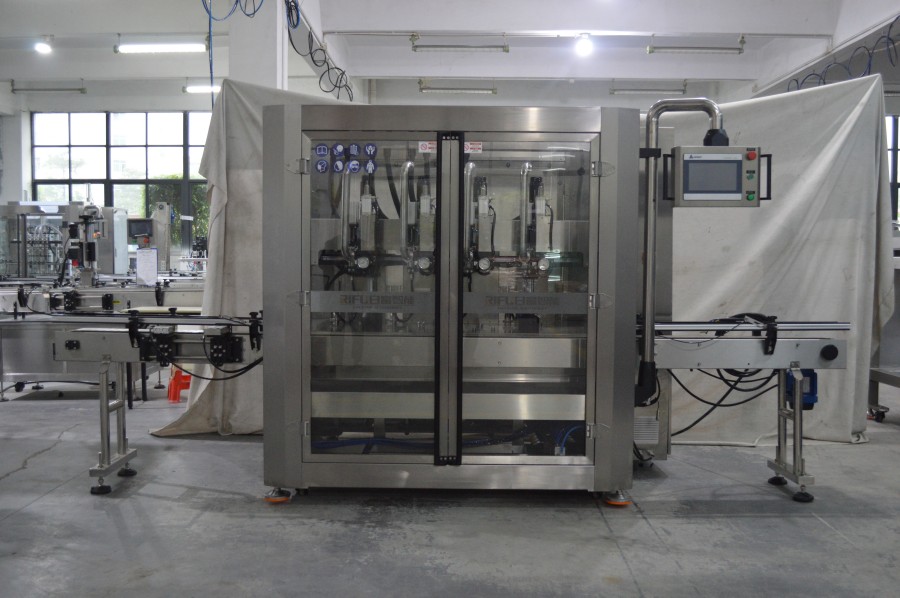
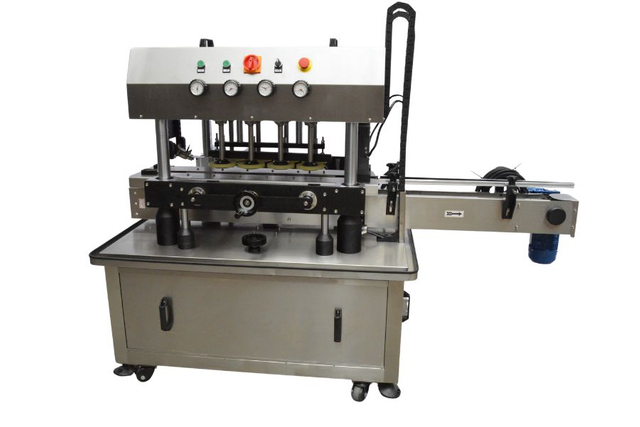
A Powder Filling Machine doses and fills powdered products into containers such as bottles, jars, cans, pouches, or bags with high precision and stable feeding. The most widely used filling principle is the auger filler—a rotating screw mechanism that dispenses a controlled, repeatable volume of powder per cycle.
Depending on the product and production scale, a powder filling system may include powder feeding, precision dosing, dust extraction, container handling, weighing feedback, capping, sealing, labeling, coding, and complete packaging line integration. Powder filling machines serve industries including food, nutraceuticals, pharmaceuticals, chemicals, cosmetics, and industrial materials.
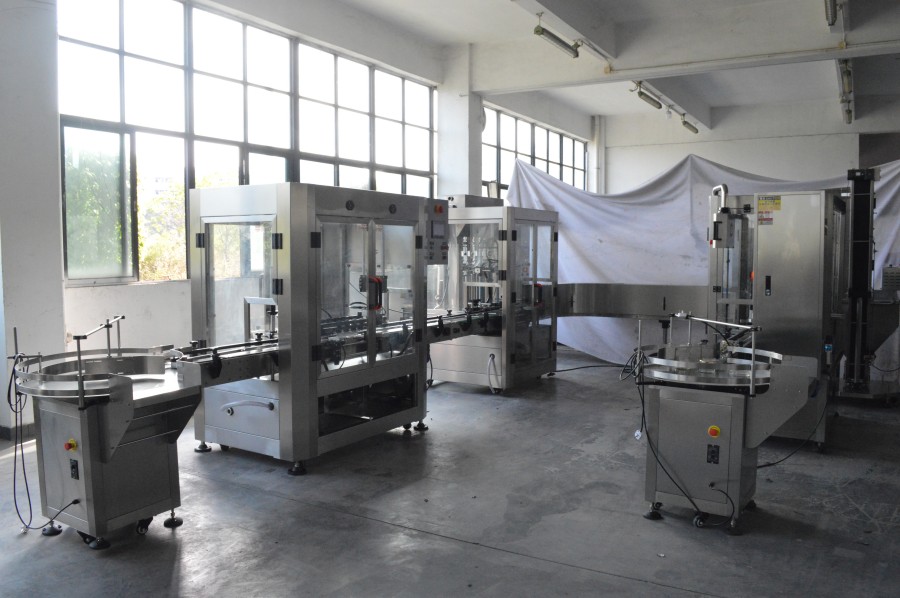
At Jewshin, our powder filling offering goes beyond a single machine. We design, manufacture, and integrate Complete Automatic Powder Filling & Packaging Lines — Customized Turnkey Solutions for Bottles & Jars—modular systems tailored to your specific production speed, floor space, container type, and powder characteristics.
Every Jewshin powder line is assembled from the following precision modules—selected and configured based on your application:
Bottle Unscrambling & Collection: Semi-automatic bottle unscramblers and rotary collecting tables for smooth, continuous container feeding and discharge.
Material Feeding Systems: Screw auger feeders for fine powders, or Z-type elevator feeders for granules and mixed products. The feeding method is matched to your specific powder flowability.
Precision Filling Machines:
Single-Head Auger Filler — compact, precise, ideal for smaller operations
Dual-Head Auger Filler — higher throughput for mid-sized production
Rotary Powder Filler with 14-Head Electronic Weigher — maximum accuracy for high-value or density-variable powders at industrial scale
Advanced Capping Solutions: Cap elevators with 4-wheel capping, high-speed rotary capping, or precision single-head servo capping—matched to your cap type and speed requirement.
Sealing & Quality Control: Water-cooled aluminum foil induction sealers for product freshness protection and tamper-evident presentation.
Labeling & Coding: Flat and round bottle labeling machines paired with inkjet coders for complete product traceability and professional retail branding.
To demonstrate flexibility, here are the four most commonly deployed turnkey layouts from Jewshin:
Line 1 — The Compact Starter Line (Total footprint: ~3,300mm)
Single-Head Powder Filler → 4-Wheel Capping Machine
Best for: Small-batch producers and startups needing a compact, reliable baseline automation footprint with low capital investment.
Line 2 — The Standard Servo-Driven Line
Semi-Auto Unscrambler → Screw Feeder → Single-Head Filler → Vibrating Cap Bowl → Single-Head Servo Capper → Round Bottle Labeler → Collector
Best for: Mid-sized operations requiring precision servo capping and consistent labeling for round bottles or jars.
Line 3 — High-Speed Dual-Head Line with Induction Sealing
Unscrambler → Screw Feeder → Dual-Head Powder Filler → Cap Elevator → High-Speed Capper → Water-Cooled Aluminum Foil Sealer → Labeler → Collector
Best for: Food and pharmaceutical industries requiring airtight aluminum foil sealing for product longevity and dual-head filling for higher throughput.
Line 4 — Premium Rotary & Multi-Weigher Line
Central Control Unit → Unscrambler → Z-Type Elevator → 14-Head Electronic Weigher on Platform → Rotary Powder Filler → Cap Elevator → Dual-Head 4-Wheel Capper → Water-Cooled Foil Sealer → Inkjet Coder → Round Bottle Labeler
Best for: Large-scale enterprises processing high-value powders or mixed granules. Features centralized PLC control, maximum weighing accuracy, and full batch traceability.
Food powders: Milk powder, protein powder, coffee powder, flour, seasoning, spice blends, cocoa powder, soup mix, starch.
Nutraceuticals and health products: Dietary supplement powder, collagen powder, plant-based blends, vitamin powder.
Pharmaceutical powders: Medicinal powder, dry blend formulations, compounding ingredients.
Chemical and industrial powders: Detergent powder, pigment, fine chemicals, additive powder.
Cosmetic powders: Facial powder, loose powder, treatment powder.
However, not all powders behave the same way. Some are free-flowing, some are sticky and cohesive, some bridge in hoppers, and some vary significantly in bulk density batch to batch. Machine selection must be based on real powder characteristics, not just product category name.
This is the most critical starting point—and the step most buyers underestimate. Define clearly:
Powder flowability (free-flowing, semi-free-flowing, cohesive, or compacting)
Bulk density and density stability between batches
Particle size and tendency to bridge or compact in the hopper
Dust level and containment requirements
Moisture sensitivity and hygroscopic behavior
Hygiene and regulatory compliance standard (food grade, GMP, pharmaceutical)
For example, free-flowing protein powder fills more predictably. Light, dusty spice powders require better dust extraction at the nozzle. Sticky powders need agitation in the hopper. High-value nutritional powders with variable density require the 14-head electronic weigher configuration for target weight accuracy. Without understanding the powder itself, no machine can be correctly specified.
Powder filling is evaluated by weight accuracy, not volume alone. Ask:
What is the target fill weight and acceptable tolerance (±g or ±%)?
Is accuracy quoted based on free-flowing water-like powder or your actual product?
Does bulk density variation between batches affect fill weight stability?
Is a closed-loop weighing feedback system required?
For operations where fill weight directly affects regulatory compliance or product cost, the 14-Head Electronic Weigher paired with our Rotary Powder Filler (Line 4) provides the tightest achievable accuracy at high speeds.
Container type fundamentally influences machine design. Specify:
Bottle, jar, can, pouch, or bag
Container opening diameter
Container height and shape (round, square, unique profile)
Material and structural stability on the conveyor
The Jewshin modular line supports adjustable guide rails and interchangeable format parts across unscramblers, fillers, cappers, and labelers—allowing the same line to handle both flat-label square jars and round-label bottles. Always provide container samples for accurate configuration.
Define your minimum and maximum fill weights, number of SKUs, and changeover frequency. A single-head auger filler optimized for a defined weight range delivers better consistency than a machine stretched across too wide a range. For operations packaging both small retail portions and larger bulk containers on the same line, dual-head or rotary configurations provide better flexibility.
Evaluate speed alongside accuracy and dust control—not as an isolated specification. Consider:
Required containers per minute across all SKUs
Powder refill logic and hopper level management
Speed impact of capping and sealing steps
Long-run stability versus short-burst peak speed
A machine that gives reliable daily output is always more valuable than one that achieves a high speed in ideal test conditions but cannot sustain it in real production.
Powder dust affects machine cleanliness, operator safety, fill accuracy, sealing quality, and product loss. Ask:
Is dust extraction integrated at the nozzle area?
How does the hopper design minimize airborne powder leakage?
Is there a dust collection system interface?
How is the machine cleaned between product changeovers?
For food, supplement, pharmaceutical, and cosmetic applications, dust control is not optional—it is a core part of operational quality and regulatory compliance.
The feeding method must match your powder's behavior:
Powder Type | Recommended Feeder |
Fine, free-flowing powder | Screw auger feeder |
Granules or mixed products | Z-type elevator feeder |
Cohesive or bridging powder | Agitated hopper with level control |
High-density variable material | 14-head electronic multi-weigher |
Unstable hopper feeding creates unstable fill weights and reduces line efficiency regardless of how well the filler itself is built.
Rather than asking "which machine do I need?", a more productive question is: "Which line layout fits my current output and future growth?" The Jewshin modular approach lets you start with Line 1 (Compact Starter) and later upgrade to Line 3 or Line 4 without replacing the entire system. Our engineers provide custom CAD layout designs in straight-line, L-shape, or U-shape configurations based on your factory floor plan.
For food, pharmaceutical, and nutraceutical production, evaluate:
Stainless steel grade of all product-contact surfaces
Surface finish and dead-corner reduction design
Ease of disassembling nozzles, auger screws, and hopper for cleaning
Sealing and gasket material quality
A machine that is difficult to clean creates contamination risk, allergen cross-contact risk, and longer changeover downtime. Maintenance accessibility is equally important for real daily production economics.
Many powder packaging projects evolve rapidly. The modular Jewshin line is designed for exactly this reality:
Start small with Line 1 for immediate automation
Add induction sealing when product freshness requirements increase
Add inkjet coding when traceability is mandated
Upgrade to 14-head weigher when output scale demands tighter accuracy
A centralized control unit (Master PLC/HMI) for advanced setups allows operators to monitor speeds, adjust parameters, and manage alarms for the entire line from a single touchscreen.
Technical understanding: Do they ask detailed questions about powder behavior, fill weight, container type, and accuracy target—not just machine category?
Custom layout capability: Can they provide a CAD floor plan proposal before the order? Do they offer straight-line, L-shape, and U-shape options ?
Factory and testing capability: Do they fully assemble and test the complete line in their factory before shipping? Can you request a factory acceptance test video?
Installation support: Do they provide wiring diagrams, detailed installation videos, and remote video commissioning support? Is on-site engineer dispatch available for large turnkey projects ?
Lifetime support: Do they supply spare parts internationally? Is remote troubleshooting available in English?
Choosing a single machine when a line is needed: A standalone filler without matching capper, sealer, and labeler creates a workflow bottleneck that limits total line output to the slowest step.
Ignoring powder behavior: Flowability and density variation are the two biggest causes of fill inaccuracy. Never skip product characterization.
Underestimating dust control: Poor dust handling creates quality, safety, and maintenance problems that compound over time.
Buying for today's volume only: A modular line designed for future expansion is almost always a better investment than buying the cheapest option and replacing it in 18 months.
Not planning for cleaning and changeover: In multi-product operations, fast and thorough sanitation is a direct component of machine productivity.
Powder details: Product name, photos or video of powder behavior, particle size, bulk density, dust level, flowability description, hygiene and compliance requirements.
Filling details: Target fill weight, tolerance requirement, target speed, number of SKUs.
Container details: Bottle or jar photos, dimensions, opening diameter, material, height range.
Additional modules needed: Unscrambler, Z-type feeder, dual-head filling, induction sealer, inkjet coder, labeler, checkweigher, future expansion plan.
What types of powders can your filling lines handle?
Our auger fillers and multi-head weighers handle free-flowing and non-free-flowing powders—including protein powder, milk powder, spices, coffee, flour, and chemical powders—as well as small granules.
Can you design a line for my factory's specific floor plan?
Yes. We provide custom CAD layout designs based on your exact factory dimensions. Whether you need a straight-line, L-shape, or U-shape configuration, our engineers optimize for maximum efficiency and ergonomics.
Do your machines support different bottle sizes and shapes?
Yes. Our unscramblers, fillers, cappers, and labelers feature adjustable guide rails and interchangeable format parts. We can integrate systems that apply both flat and round labels for square, round, or uniquely shaped containers.
Is the complete line controlled by a single system?
For advanced setups, we provide a Centralized Control Unit (Master PLC/HMI) that networks all individual machines—allowing operators to monitor speeds, adjust parameters, and manage alarms for the entire line from one touchscreen.
What is the typical lead time?
Lead times vary based on line complexity, typically ranging from 30 to 60 days. We fully assemble and test the line in our factory before shipping, and provide detailed installation videos, wiring diagrams, and remote video support. On-site engineer commissioning is available for large turnkey projects.
If you are looking for the right Powder Filling Machine—or a complete turnkey powder packaging line—for your production operation, our team at Jewshin is ready to help you design the ideal solution.
Jewshin — Dongguan Jewshin Intelligent Machinery Co., Ltd.
Website: www.jewshin.com
Email: wendy@jewshin.com
WhatsApp: +86-13128136672
Send us your powder specifications, container details, target output, and factory floor dimensions—and we will provide a free customized line layout and engineering consultation to help you build the most efficient and scalable powder packaging system for your business.