Views: 0 Author: Wendy Liu Publish Time: 2026-05-08 Origin: Dongguan Jewshin Intelligent Machinery Co., Ltd.

Labeling is one of those operations that can make or break your production line. Get it right, and your products look professional, meet regulatory requirements, and move smoothly through the supply chain. Get it wrong, and you're dealing with misaligned labels, production bottlenecks, and costly reworks.
We've worked with labeling equipment for years at Jewshin, helping manufacturers across the food, pharmaceutical, cosmetics, and household goods industries find the right labeling solution for their specific needs. In this guide, I want to walk you through everything you need to consider before you buy — so you can make a confident, informed decision.
A lot of buyers focus all their attention on filling or packaging machines and treat labeling as an afterthought. That's a mistake. Labeling is often one of the highest-visibility operations — your label is the first thing a customer sees when they pick up your product. It's also where regulatory compliance gets enforced.
A mismatched or poorly configured labeling machine can cost you:
Production downtime due to frequent jams and re-threading
Wasted materials from misaligned labels and incorrect label rolls
Product rejections from retailers or customs if labels don't meet specs
Extra labor costs for manual correction or re-labeling
Getting the right labeling machine upfront pays for itself quickly.
Before we dive into selection criteria, let's get familiar with the main labeling machine types and what they're best at:
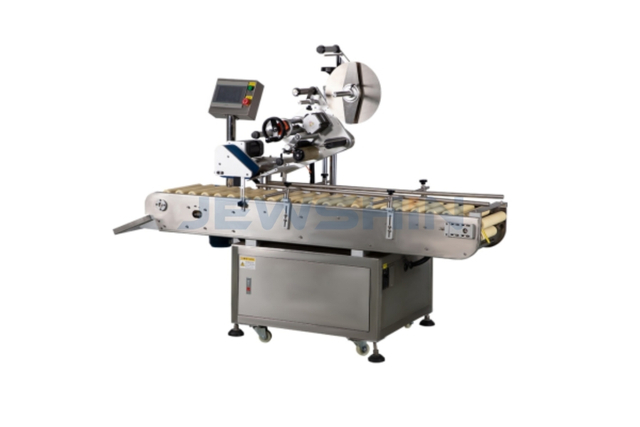
As the name suggests, this machine applies labels to flat, horizontal surfaces — things like boxes, folders, books, cartons, and flat trays.
Our JX-T113 and JX-T115 automatic flat surface labeling machines are servo-driven and handle a wide range of flat products in the pharmaceutical, cosmetics, stationery, and food industries. They feature PLC control for stable, repeatable performance and high-sensitivity photoelectric sensors for accurate label placement.
Best for: Cartons, boxes, folders, flat containers, board packaging
Designed for cylindrical products — bottles, vials, tubes, jars. The product rotates as it passes under the labeling head, applying the label uniformly around the curve.
The JX-T211 and JX-T219 automatic round bottle labeling machines are widely used in pharmaceutical, food, and daily chemical industries. They handle various bottle sizes and shapes with adjustable pressure-sensitive label applicators.
Best for: Bottles, jars, vials, tubes, cylindrical containers
Applies labels to the top surface or side of a product. Common for items like electronics, cosmetics compacts, or pharmaceutical blister packs.
Best for: Flat or slightly curved top surfaces, side panels
Instead of applying a flat label, this machine slides a pre-printed tube of film (the sleeve) over the container. Heat is then applied to shrink the sleeve tightly around the product shape — creating 360° labeling coverage.
Our JX-60 and JX-77 automatic sleeve applicators handle juice, tea drinks, dairy, water bottles, beer, and sports drinks. For heavier containers, the JXGL-250/350/400P sleeve labeling machines accommodate various bottle types and 3-5L containers.
Best for: Full-body product branding, promotional shrink sleeves, beverage bottles, containers requiring 360° coverage
Applies labels around the circumference of cylindrical products without rotation. The label is wrapped around the product body.
Best for: Large diameter containers, cans, wide bottles

Now that you know the main types, here's what you need to assess for your specific operation:
This is your starting point. Ask yourself:
Is my product flat, cylindrical, oval, square, or irregularly shaped?
Does the product need the label on the top, side, bottom, or wraparound?
Is the product stable enough to be rotated during labeling?
A flat box calls for a flat surface labeler. A 500ml bottle needs a round bottle labeler. A promotional beverage bottle with full-body graphics calls for a sleeve labeling machine. Matching geometry to machine type eliminates most early-stage mistakes.
Know your label specs before you start shopping:
Label dimensions (width, height, length)
Label material (paper, film, foil, holographic)
Adhesive type (permanent, removable, freezer-grade)
Core size of the label roll (typically 76mm or 3")
Most labeling machines have a minimum and maximum label size they can handle. Know your range upfront and choose a machine that gives you some flexibility for future products.
Labeling machines are rated by labels per minute (LPM). Make sure your machine's rated speed aligns with — or exceeds — your actual production line speed.
Common speed ranges:
Entry-level labelers: 20-40 LPM
Mid-range automatic labelers: 40-100 LPM
High-speed labelers: 100-300+ LPM
Be honest about your current throughput and your growth projections. It's better to buy slightly faster than you need now than to have to replace the machine in two years.
Different industries have different accuracy requirements:
Pharmaceutical and food: Typically require ±1mm or better label placement accuracy for regulatory compliance
Cosmetics: ±2mm is often acceptable for retail products
Industrial/hardware: Wider tolerances may be acceptable depending on the product
Look for machines with servo-driven label dispensers and high-precision stepper motors for the tightest tolerances.
If you're running multiple SKUs on the same line, changeover speed matters. How long does it take to swap from one label size to another? From one product shape to another?
Look for machines with:
Quick-release label reels
Adjustable label sensor positioning
Pre-saved recipe/parameter systems (our JX-T series labelers store multiple product settings)
Tool-free changeover features
A labeling machine doesn't run in isolation. Consider how it will integrate with upstream and downstream equipment:
Conveyor compatibility: Does the machine's conveyor width and height match your line?
Product handling: Does the machine have sufficient guiding and stabilizing mechanisms for your product?
Electrical compatibility: 110V or 220V? What control interface does it use?
Communication protocols: Does it support the signal types your upstream equipment uses?
If you're building a new line from scratch, we recommend working with a supplier who offers turnkey line integration services — not just single machines.
Ask the supplier:
What wear parts need regular replacement, and how often?
Is technical support available in your time zone?
Are spare parts stocked locally or shipped internationally?
What does the warranty cover?
At Jewshin, we provide ongoing technical support, spare parts supply, and remote troubleshooting assistance for customers worldwide — including our markets in North America, Europe, Southeast Asia, the Middle East, South America, and Africa.

Labeling requirements often include nutritional facts, ingredient lists, batch codes, and barcodes. Look for machines that handle label substrates compatible with food-safe inks and are easy to clean.
Requires strict label accuracy, traceability (often with serialization), and compliance with FDA, GMP, or local regulatory standards. Round bottle and flat surface labelers with vision inspection systems are common in pharma applications.
Aesthetic quality is paramount. Misaligned or wrinkled labels are grounds for product rejection by retailers. Choose high-precision machines and test thoroughly with your actual label substrates.
Products like cleaning bottles and detergent containers often use cylindrical containers with textured or uneven surfaces. Labelers with adjustable pressure and specialized rollers handle these better.
Based on our experience helping customers troubleshoot labeling issues, here are the most common mistakes:
1. Buying based on price alone
A cheap labeler that jams constantly or produces misaligned labels will cost more in the long run than a well-built machine.
2. Ignoring label roll specifications
Label core size, roll diameter, and backing paper thickness must all be compatible with your machine. A roll that's slightly too thick can cause feed issues.
3. Not testing with your actual labels
Always run a sample production run with your actual labels before finalizing a purchase. Label stiffness, curl, and adhesive tack all affect performance.
4. Underestimating floor space
Labeling machines need space for operator access, label roll changes, and maintenance. Factor in clearance when planning your layout.
5. Skipping the integration check
A standalone labeling machine that can't communicate with your PLC, counter, or vision system will create bottlenecks in your line.

We offer a full range of labeling and sleeve labeling machines designed for manufacturing plants of all sizes:
Flat surface labelers: JX-T113, JX-T115 — for boxes, folders, cartons
Round bottle labelers: JX-T211, JX-T219 — for pharmaceutical, food, and cosmetics bottles
Sleeve applicators: JX-60, JX-77 — for beverage and dairy containers
Full-body sleeve labelers: JXGL-250/350/400P — for 3-5L containers and full-sleeve branding
All machines feature PLC-based control, touch screen interfaces, and high-sensitivity photoelectric sensors for accurate label tracking. We also offer custom OEM/ODM configurations if you need a machine tailored to your exact product and production requirements.
About the Author
Wendy Liu is the CEO of Dongguan Jewshin Intelligent Machinery Co., Ltd., a leading manufacturer of automatic labeling and sleeve labeling equipment. With a background in R&D and packaging line optimization, Wendy helps manufacturers worldwide find the right equipment for their production needs. Explore our labeling machine catalog or contact our team to discuss your requirements.