Views: 0 Author: Wendy Liu Publish Time: 2026-03-22 Origin: Jewshin
For manufacturers of liquid detergent, dishwashing liquid, surface cleaner, disinfectant, bleach, and fabric softener, packaging is not simply a finishing step—it is a daily production challenge that directly determines throughput, labor cost, and market competitiveness. These products are produced in high volumes, sold across multiple bottle sizes, and distributed through retail channels where labeling quality and carton presentation are visible to every buyer and consumer.
As output grows, manual or semi-automatic packaging becomes the primary production constraint. Filling by hand creates inconsistent fill levels. Manual capping creates leakage risk. Hand-applied labels create brand image problems at shelf. And manual case packing—often the last step to be automated—absorbs more labor per hour than any other stage in the process.
This is why buyers for daily chemical factories search for a complete household cleaning product filling and packaging line solution, not just a filling machine. In this guide, I will walk through the core packaging challenges for daily chemical liquids, the recommended line configuration from filling to palletizing, and the factors buyers should evaluate before choosing a supplier from China.

This type of packaging line is most directly relevant to:
Liquid detergent and laundry product manufacturers
Dishwashing liquid producers
Household surface cleaner, floor cleaner, and glass cleaner brands
Disinfectant and sanitizer manufacturers
Bleach and chemical cleaner packers
Daily chemical OEM and ODM contract factories
Private label household product manufacturers
Factories currently running semi-automatic lines and planning an upgrade
If your production currently experiences foam-related filling problems, inconsistent capping torque, manual case packing bottlenecks, or high labeling labor cost—this solution addresses each of those problems directly.
Household cleaning products look straightforward from the outside. In practice, they create a set of packaging challenges that standard liquid filling equipment—designed primarily for food or pharmaceutical products—handles poorly.
Many cleaning liquids—particularly dishwashing concentrates, laundry detergents, and floor cleaners—generate foam aggressively during the filling cycle, especially at higher flow rates. Foam inside the bottle creates several downstream problems: unstable fill weight, contaminated bottle mouths that prevent clean cap seating, inaccurate appearance at point of sale, and conveyor contamination that builds up across a production shift.
Foam control is not a secondary concern in daily chemical filling—it is a primary machine selection criterion. A filling system that performs well on a thin disinfectant at 40 BPM may generate unacceptable foam levels when the same line runs a concentrated detergent. The filling nozzle design, flow rate profile, and fill path geometry must all be specified with actual product foam behavior in mind.
Daily chemical factories rarely run a single product. Dishwashing liquid, liquid detergent, fabric softener, and disinfectant can have dramatically different viscosities—from thin water-like sanitizers to thick gel detergents. A line configured only for thin liquids cannot fill high-viscosity products accurately. A line configured only for high-viscosity products may over-meter thin products. The filling system must be selected for the full viscosity range of all products the line will run.
Some daily chemical formulations—particularly bleach, alkaline cleaners, and acid-based toilet cleaners—are chemically aggressive toward standard machine components. Seals, gaskets, nozzles, and wetted surface materials must be confirmed as chemically compatible with the actual product range. A machine that passes an initial water test may degrade rapidly under daily exposure to cleaning chemical formulations.
Household product lines routinely run: small 300ml retail trial bottles, standard 500ml–1L retail SKUs, large 2L–5L family-size formats, and bulk refill containers—sometimes all within the same production week. Each bottle size requires different guide rail settings, different fill volume parameters, and potentially different cap feeding configurations. The practical changeover time between bottle formats is often a more important selection criterion than maximum rated speed.
Daily chemical closures vary significantly across product types:
Standard screw caps on most detergent bottles
Measuring caps with internal dosing cups on premium laundry products
Trigger sprayers on surface and glass cleaners
Pump dispensers on some premium kitchen and hand soaps
Child-resistant closures in some regulatory markets
Each closure type requires a completely different cap feeding, orientation, assembly, and tightening mechanism. A factory running five product categories may need either a highly flexible capping system or separate capping stations for different cap families.
Daily chemical bottles are exposed to liquid during filling—and handle bottles, trigger spray bottles, and flat-sided HDPE bottles all present different labeling geometry challenges. Front-and-back dual labeling on handle bottles requires precise positioning to avoid the handle. Wet or chemically contaminated bottle surfaces reduce label adhesion. Labeling system performance for daily chemical products depends heavily on bottle surface cleanliness at the labeling station—which connects directly back to filling system drip control.
Even when filling, capping, and labeling are fully automated, most daily chemical factories continue to rely on manual case packing, carton sealing, and palletizing. For factories running 3–5 production shifts per day across multiple lines, this represents a very large ongoing labor cost. End-of-line automation—case packing and palletizing—often delivers the strongest single return on investment in daily chemical production because the labor cost it replaces is among the highest in the building.
A complete automatic household cleaning product packaging line typically includes the following modules, scaled based on production volume and automation level.
For factories running continuous high-volume production from bulk bottle supplies, an automatic bottle unscrambler orients and singulates bottles onto the infeed conveyor—eliminating manual loading and supporting uninterrupted production across full shifts. For factories running lower volumes or particularly large HDPE containers, a semi-automatic rotary collecting table provides a practical entry point that can be upgraded to a full unscrambler as output grows.
The filling machine is the most consequential specification decision in the entire line. For daily chemical liquid products, the correct filling method depends on viscosity range, foam behavior, fill volume, required speed, and cleaning method:
For thin-to-medium viscosity products (disinfectants, glass cleaners, dilute floor cleaners):
Flowmeter filling or volumetric filling systems provide high-speed, accurate dosing with low mechanical complexity and easy product changeover via electronic parameter adjustment.
For medium-to-high viscosity products (concentrated detergents, thick dishwashing liquid, gel cleaners):
Piston filling is the preferred method—using controlled volume displacement to fill thick products accurately, without foam entrainment, and without the fill rate instability that gravity or pressure-time systems experience with viscous materials.

The RF-GZ6T Automatic Piston Liquid & Paste Filling Machine is Jewshin's purpose-built solution for viscous and semi-viscous liquid products, with the following key capabilities directly relevant to daily chemical applications:
Parameter | RF-GZ6T Specification |
Filling Accuracy | < ±1% |
Filling Range | 100–1,000 ml (customizable) |
Anti-Drip Nozzles | Yes — wire-drawing prevention design |
No-Bottle-No-Fill | Yes — Keyence sensor (Japan) |
Chemical-Compatible Materials | Stainless steel frame, food/chemical-grade wetted parts |
Quick-Strip Design | Tool-free disassembly for product changeover cleaning |
Volume Adjustment | One-touch via Weinview touchscreen |
Nozzle Configurations | 2, 4, 6, 8, or 12 heads |
PLC | Mitsubishi (Japan) |
For multi-product daily chemical lines filling both thin and thick products, discuss the full product viscosity range with your supplier at specification stage—a single machine may need to cover both ends of the spectrum through nozzle and cylinder configuration changes.
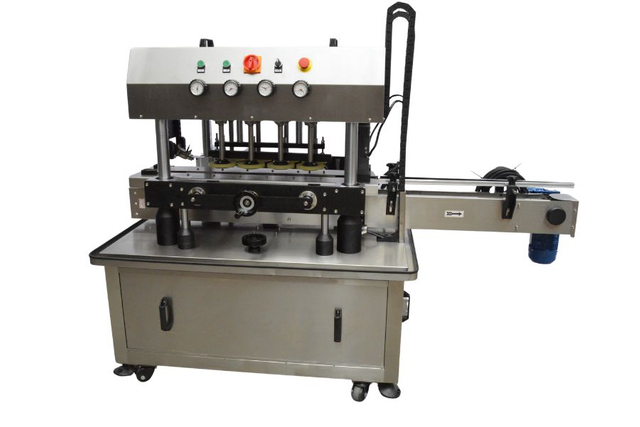
After filling, bottles advance to the capping station. The capping system must match your specific closure type:
Standard screw cap: Automatic rotary cap sorter + screw capper with adjustable torque. Suitable for the majority of detergent and cleaner bottle formats.
Measuring cap with internal cup: Requires cap orientation to ensure the dosing cup is correctly positioned before tightening. More complex cap feeding design required.
Trigger sprayer: Requires a trigger cap assembly station that seats the dip tube and snap-fits the trigger before tightening—separate from standard screw cap stations.
Pump cap: Press-down assembly with controlled force application for the pump actuator.
For factories running multiple closure types on the same line, discuss changeover method and tooling requirements with your supplier before specifying the capping system. The cost and time of cap type changeover directly affects whether one flexible capper or two dedicated stations delivers better daily production value.
For products requiring tamper-evident packaging for retail—common in premium household cleaners, concentrated disinfectants, and child-safety regulated products—an aluminum foil induction sealer applies a hermetic foil liner inside the cap after tightening, creating a visible tamper-evidence feature and improving shelf life by sealing against vapor and moisture ingress.
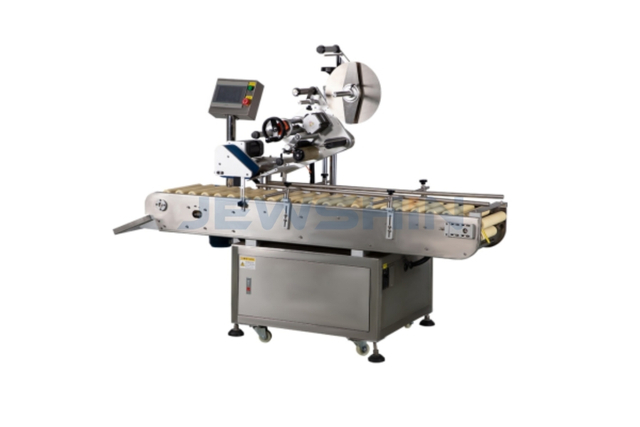
For the majority of household cleaning products packaged in round or oval bottles, the JX-T212 Automatic Round Bottle Labeling Machine is the correct labeling architecture.
Key capabilities directly relevant to daily chemical bottle labeling:
Front & Back Dual Labeling in one pass: Applies both the primary brand label and the rear ingredient/regulatory compliance label simultaneously—critical for household chemical products that carry dense regulatory text on the back panel
Star Wheel Bottle Separation: Significantly more stable feeding than belt-only separators—essential for lightweight 500ml PET bottles that tip or drift at high labeling speeds
Conical Bottle Support: 6-axis adjustment accommodates slightly tapered trigger spray bottle bodies and squeezable bottle formats
Circumferential Positioning (optional): Aligns labels relative to a handle, embossed logo, or seam—important for handle bottles where label placement relative to the handle is a brand specification
GMP Stainless Steel Construction: Resistant to the wet, chemically active environment typical of daily chemical production floors
No-Object-No-Label intelligence: Prevents label waste and conveyor contamination from empty cycle runs
Critical note for daily chemical lines: Label adhesion quality at the labeling station depends directly on bottle surface cleanliness. Anti-drip nozzle performance at the filling station is therefore a prerequisite for stable labeling quality downstream. Specify both stations together, not independently.
Regulatory requirements in most markets mandate production date, expiry date (where applicable), and batch number coding on finished household chemical products. Integration options include:
Inkjet coder mounted inline after labeling—fastest and most flexible, prints directly on bottle surface or label
Thermal transfer printer integrated with the labeling machine—for high-resolution batch data printing directly onto labels before application
Laser coder for permanent marking on HDPE bottles where ink adhesion is a concern
For higher-volume daily chemical lines, optional inline inspection modules include: cap presence detection (confirms every bottle is capped before labeling), fill level verification via camera or weight, label placement detection, and checkweigher integration for fill weight audit. For regulated household chemical products, a metal detector may also be required by certain retail channel compliance programs.
For factories packing finished detergent or cleaner bottles into shipping cartons, the SAE500T Vertical Box Opening, Packing & Sealing Machine integrates case erecting, product loading, and carton sealing in a single compact vertical unit.
Why the SAE500T is the right case packing solution for daily chemical lines:
50% floor space saving vs. traditional modular erector + packer + sealer layouts—critical for daily chemical factories where filling lines consume most available floor area
Fully customizable clamps designed for your specific bottle geometry—handles round detergent bottles, flat spray bottles, and large-format HDPE containers with equal reliability
6–10 cases per minute with dual servo product feeding—sustains output pace for most daily chemical production lines without creating a downstream bottleneck
Both tape and spray adhesive sealing supported—choose based on carton format, sealing speed requirement, and customer specification
L-shaped carton opening mechanism ensures reliable case erecting even with lightweight carton blanks common in household product shipping cases
INOVANCE absolute value servo control (China) with OMRON/Leuze photoelectric detection (Japan/Germany), SKF bearings, Schneider contactors, and IDEC relays (Japan) throughout
For daily chemical factories running 3–6 different bottle SKUs, the SAE500T's adjustable carton size range (L: 250–500mm, W: 150–400mm, H: 150–400mm) with recipe-based changeover handles the full format range from small retail 6-pack cases to large 4-bottle family-size cases from one installation.
At the end of the line, the Collaborative Cobot Palletizer stacks sealed shipping cases onto pallets for warehouse storage and outbound logistics.
The Jewshin cobot palletizer series is explicitly listed for Daily Chemicals & Cosmetics as a primary industry application, covering payload capacities from 20 KG to 60 KG—easily handling the typical carton weights of detergent and cleaner case packs:
Model | Payload | Working Radius | Speed | Best For |
JX-GD20pro | 20 KG | 1,900mm | <12 pcs/min | Light retail cases, small format |
JX-GD30pro | 30 KG | 1,900mm | <12 pcs/min | Standard detergent cases |
JX-GD40pro | 40 KG | 1,900mm | <9 pcs/min | Heavy cases, wider pallet reach |
JX-GD30Max | 30 KG | 1,600mm | <9 pcs/min | Compact layout, standard weight |
JX-GD40Max | 40 KG | 1,700mm | <6 pcs/min | Heavy cases, tight floor space |
JX-GD60Max | 60 KG | 1,700mm | <6 pcs/min | Large-format bulk cases |
Key operational advantages for daily chemical factories:
30-minute operator mastery with graphical programming—no specialist programmer required, no ongoing programming dependency
Minimum footprint of 1,505 × 1,716mm—deployable at the end of most existing production lines without restructuring
±0.04mm repeat positioning accuracy for consistent, stable pallet stacking across full production shifts
TCP/IP integration for seamless connection with the SAE500T case packer and other upstream equipment
Universal grippers customizable for your specific case format and pallet pattern requirements
A full automatic household cleaning product packaging line follows this sequence:
Bottle Unscrambler / Infeed Table
           ↓
Liquid Filling Machine (Piston or Flowmeter)
           ↓
Cap Feeder + Capping Machine
           ↓
Induction Sealer (if required)
           ↓
JX-T212 Round Bottle Labeling Machine
           ↓
Inkjet Coder / Thermal Transfer Printer
           ↓
Cap / Label / Fill Inspection (optional)
           ↓
SAE500T All-in-One Case Packer
           ↓
Cobot Palletizer
           ↓
Stretch Wrapper → Warehouse / Dispatch
Staged investment is a common and commercially practical approach for daily chemical manufacturers:
Stage | Modules | Primary Benefit Delivered |
Stage 1 | Filling + Capping | Accuracy, consistency, labor reduction at core stations |
Stage 2 | + Labeling + Coding | Brand presentation, regulatory compliance, traceability |
Stage 3 | + Case Packing + Sealing | End-of-line labor elimination, shipping consistency |
Stage 4 | + Palletizing | Full end-of-line automation, warehouse efficiency |
Each stage integrates cleanly with the next. Factories that plan the full line architecture upfront—even when purchasing only Stage 1 initially—avoid expensive layout modifications and conveyor retrofits when subsequent stages are added.
Before any equipment specification begins, clearly define for every product the line must run:
Viscosity at fill temperature (thin liquid, medium viscosity, or thick gel?)
Foam generation behavior at target fill speed
Chemical aggressiveness (pH range, alkalinity, bleach content, solvent content)
Fragrance or volatile component considerations
Cleaning method between products (water flush, chemical flush, or full teardown?)
Providing actual product samples to the filling machine supplier for test filling is the single most important step in the specification process. No specification document replaces a real product test.
Document the complete container range the line must handle: all bottle dimensions, materials, neck finishes, fill volumes, and cap types across every SKU currently in production and planned for the next 2–3 years. The most expensive line modification to make after installation is expanding the container or closure range the machine was not designed to handle.
Calculate your actual daily requirement before specifying line speed: How many bottles per shift? How many SKUs per day? What upstream production capacity feeds the packaging line? A stable 40 BPM line with near-zero stoppages and clean transitions between bottle sizes consistently outperforms a 60 BPM line that requires frequent operator intervention for foam issues, cap jams, or label rejects.
Request explicit confirmation of wetted material specifications—seals, gaskets, nozzle materials, valve bodies, conveyor belt materials—for the specific chemical products the line will run. This applies to the filling machine, capping machine, and conveyor system. A material compatibility checklist provided by your supplier, reviewed against your product SDS data sheets, is a minimum standard for any daily chemical line purchase.
Specify explicitly whether the project includes case packing and palletizing—not only to ensure the machines are included in the quote, but to ensure the overall line layout and conveyor design accommodates them from the start. A filling and labeling line laid out without downstream case packing space creates a retrofit problem that is costly and disruptive to fix after installation.
For household chemical manufacturers, the labor cost picture extends far beyond the filling station. In a typical daily chemical factory running 2–3 shifts of high-volume production, the distribution of packaging labor often looks like this:
Filling and capping: Largely automated in most modern facilities
Labeling and coding: Partially automated in many facilities
Case packing and carton sealing: Manual in a large proportion of daily chemical factories
Palletizing: Manual in most daily chemical factories
This means that even a factory with a highly automated filling line may have 8–12 workers per shift manually packing cartons and stacking pallets. At daily chemical production volumes, this labor represents a very large ongoing operational cost.
The SAE500T case packer running at 6–10 cases per minute, combined with a Jewshin cobot palletizer at 9–12 pallet layers per minute, can replace a significant portion of that end-of-line manual workforce—with consistent output quality, zero fatigue-related errors, and operation across unmanned shift segments.
For growing daily chemical manufacturers, end-of-line automation is not the last priority. For many operations, it is the highest-return investment in the building.
Specifying the filling machine for one product only: If the line will eventually run five products across a viscosity range, specify for the full range from the start. Retrofitting a piston system onto a flowmeter line, or vice versa, is an expensive and disruptive modification.
Treating foam as a minor issue: Foam-related fill instability, bottle neck contamination, and cap seating problems compound across every production hour. A filling system with genuine foam control capability pays for itself in reduced downtime and rework alone.
Underestimating trigger cap complexity: Trigger sprayer assembly requires dedicated feeding, orientation, and tightening logic that is fundamentally different from a screw capper. Factories that discover this after purchasing a standard capper face a costly modification.
Not planning line layout for end-of-line expansion: A line installed without the floor space and conveyor architecture for downstream case packing forces a disruptive re-layout when output growth makes automation necessary.
Evaluating suppliers by machine price alone: Chemical compatibility failures, foam-control inadequacy, and inadequate cap handling flexibility all become very expensive problems after installation. The correct evaluation criterion is total operating value over the machine's production life—not the lowest quotation received.
Product information: Product names across the full range, viscosity description for each, foam behavior, pH or chemical aggressiveness, cleaning method, sample availability.
Bottle information: Photos of all bottles the line must handle, dimensions (H × diameter), material (PET/HDPE/glass), neck finish, fill volume range per SKU.
Cap information: Photos of all closure types, cap dimensions, thread specification, trigger or pump assembly requirement, child-resistant requirement if applicable.
Production requirements: Target speed (BPM), daily output volume, number of SKUs and changeover frequency per shift, current packaging process description, available floor space dimensions.
Additional requirements: Labeling type (wrap-around, front/back), coding format, inspection system, case pack format and quantity, palletizing requirements, preferred automation level and investment staging plan.
Can one filling line handle both thin disinfectant and thick detergent gel?
In many cases, yes—but the filling system must be selected and configured for the full viscosity range, not optimized for only one product. Piston filling systems handle a broader viscosity range than flowmeter or gravity systems, but cylinder size, nozzle diameter, and flow path geometry must be matched to both ends of the product range. Always provide your full product list with viscosity data when requesting a specification.
What is the best way to manage foam in a high-speed detergent filling line?
The most effective foam control combines nozzle design (bottom-up fill path that minimizes surface agitation), controlled fill rate profiling (fast initial fill that slows near the bottle neck), and anti-foam nozzle geometry that prevents product from splashing against bottle walls. These design elements must be specified during machine selection—foam control cannot be effectively added as an afterthought to a machine not designed for it.
How many bottle sizes can one line handle?
The practical answer depends on the size range, the differences in neck finish and cap type across sizes, and the changeover method designed into the machine. Lines designed with recipe-based digital parameter adjustment and tool-free mechanical guide rail changes can achieve changeovers in 20–40 minutes for experienced operators. Lines requiring wrench-based mechanical adjustments across multiple stations may take 1–2 hours per changeover. For factories running 3+ SKU transitions per shift, changeover time is a primary specification criterion.
Is the SAE500T case packer suitable for HDPE detergent bottles?
Yes. The SAE500T's fully customizable clamps are designed to accommodate a wide range of bottle geometries, including round HDPE bottles, flat-sided containers, and handle bottles. The clamp design is specified based on actual bottle samples submitted during the quotation process.
How difficult is it to deploy the cobot palletizer in an existing production area?
The Jewshin cobot palletizer requires a minimum floor footprint of only 1,505 × 1,716mm—significantly smaller than traditional robot palletizer cells with perimeter safety fencing. In most daily chemical production areas, this footprint can be accommodated at the end of an existing conveyor line without structural modification. The 30-minute operator training time means that production staff—not specialist programmers—manage day-to-day operation.
If you are building or upgrading a household cleaning product filling and packaging line for detergent, dishwashing liquid, disinfectant, or other daily chemical products, our team at Jewshin is ready to help you design the right configuration from filling through end-of-line palletizing.
Jewshin — Dongguan Jewshin Intelligent Machinery Co., Ltd.
Website: www.jewshin.com
Email: wendy@jewshin.com
WhatsApp: +86-13128136672
Send us your product range, bottle and cap specifications, target speed, and factory layout—and we will provide a free customized line configuration proposal based on your actual daily chemical production requirements