Views: 0 Author: Wendy Liu Publish Time: 2026-06-30 Origin: Jewshin
Table of Contents
Household and cleaning product packaging is the industrial end of the packaging machinery spectrum.
Where cosmetics packaging demands millimeter-level label precision and wrinkle-free overwrapping, household cleaning product packaging demands something different: the ability to run 200 bottles per minute, 20 hours a day, 6 days a week, with chemicals that would corrode a standard machine within months — and still deliver consistent fill weights, torque-verified caps, and retail-ready labels at the end of every shift.
The engineering challenges are real. Liquid bleach at 5% sodium hypochlorite concentration attacks 304 stainless steel over time — 316L is the minimum for product-contact surfaces. Concentrated alkaline cleaners at pH 13 require PTFE-lined filling nozzles and EPDM seals. Heavy 5-litre HDPE containers running at high speed generate impact forces that standard conveyors can't absorb. And the economics of household products — thin margins, high volumes, intense retail competition — make every percentage point of OEE and every gram of over-fill directly visible on the P&L.
This guide is written for household and cleaning product manufacturers, private label producers, and contract packers who are designing or upgrading a packaging line for detergents, surface cleaners, disinfectants, fabric care products, or personal care commodities. It covers the complete line architecture — from filling through to pallet-ready output — with the engineering specificity that this demanding application requires.

The single most common cause of premature machine failure in household product packaging is incorrect material specification for chemical compatibility. Filling machines, conveyor components, and sealing systems that work perfectly with water or food products can fail within weeks when exposed to:
Chemical Type | Typical Products | Aggressive Properties | Risk to Standard Machines |
Sodium hypochlorite (bleach) | Bleach, disinfectant cleaners | Oxidizing; attacks 304 SS, carbon steel, most elastomers | Corrosion of wetted parts; seal failure |
Concentrated alkalis (pH 12–14) | Oven cleaners, drain cleaners, heavy-duty degreasers | Highly corrosive to metals and some plastics | Corrosion; PTFE/EPDM seals required |
Concentrated acids (pH 1–3) | Toilet bowl cleaners, descalers, rust removers | Highly corrosive; attacks most metals | 316L SS minimum; PVDF or PTFE required |
Solvents (alcohols, glycol ethers) | Glass cleaners, multi-surface sprays, hand sanitizers | Dissolve standard elastomers (NBR, neoprene) | Seal failure; EPDM or PTFE seals required |
Surfactant concentrates | Dishwashing liquid, laundry liquid, fabric softener | Foaming; viscosity variation with temperature | Anti-foam filling required; temperature control |
Abrasive particles | Cream cleansers, scouring liquids | Abrasive wear on wetted surfaces | Hardened or ceramic-coated surfaces required |
The material compatibility matrix — specifying the correct wetted materials for every component that contacts the product — is the most important engineering document in a household product filling line design. JEWSHIN's engineering team prepares a material compatibility matrix for every household product line project before specifying any equipment.
Household cleaning products are sold in large formats — 1L, 2L, 3L, 5L containers are standard. A 5L HDPE bottle filled with liquid detergent weighs approximately 5.5kg. Running these containers at 80–120 units/min on a standard conveyor generates:
High impact forces at accumulation points
Container tipping risk on standard flat-belt conveyors
Conveyor drive wear significantly faster than light-product lines
Labeling challenges — heavy containers require positive container control during label application
Household product lines require heavy-duty conveyor systems with stainless steel frames, positive container control (side guides, star wheels, or puck systems), and accumulation tables designed for the container weight.
Household cleaning products are high-volume, low-margin products. The economics only work at scale. A line producing 80 bottles/min on a single shift produces approximately 960,000 units/month — and the line must run at that speed consistently to justify the capital investment.
This means:
Minimal downtime: Every unplanned stop costs $1,500–$4,000 in lost production per hour on a high-speed household product line
Fast changeover: Private label producers and contract packers may run 5–10 different SKUs per week — changeover time directly impacts capacity
Predictive maintenance: Reactive maintenance on a high-speed line is far more expensive than preventive maintenance
Surfactant-based products (dishwashing liquid, laundry liquid, fabric softener, shampoo) foam aggressively when agitated. Standard filling nozzles that fill from the top create turbulence and foam — resulting in under-fills, messy production, and containers that are difficult to cap cleanly.
Foaming products require:
Bottom-up filling: Nozzle enters the container and fills from the bottom, withdrawing as fill level rises
Slow fill speed at start and end of cycle: Minimizes turbulence at the foam-generating moments
Foam detection: Sensor detects foam level and pauses fill until foam subsides
Defoaming agent compatibility: Some operations add defoaming agents to the product — the filling system must handle the modified formulation
Household cleaning product ranges typically span an enormous viscosity range:
Product | Typical Viscosity |
Bleach, window cleaner, disinfectant spray | 1–10 cP (water-thin) |
Toilet bowl cleaner, liquid hand soap | 100–500 cP |
Dishwashing liquid, laundry liquid | 500–3,000 cP |
Fabric softener, conditioner | 1,000–5,000 cP |
Thick cream cleanser, gel detergent | 5,000–50,000 cP |
Concentrated laundry gel capsule fill | 50,000–200,000 cP |
A contract packer running all of the above on a single line needs a filling system that can handle this range — either through a single flexible filler or through quick-changeable filling heads for different viscosity ranges.
Household cleaning products sold into major retail channels must meet:
Requirement | Details |
CE Marking (EU) | Mandatory for machinery; product labeling must comply with EU CLP Regulation (Classification, Labelling and Packaging of hazardous substances) |
GHS/CLP labeling | Hazard pictograms, signal words, hazard and precautionary statements on product labels |
Net content compliance | NIST Handbook 133 (US); EU Directive 76/211/EEC — fill accuracy requirements |
Retailer compliance | Walmart, Tesco, Carrefour, Woolworths — supplier quality audits; GS1 barcode compliance |
Environmental regulations | EU Detergents Regulation; biodegradability requirements; packaging recyclability |
A complete household cleaning product packaging line consists of seven functional stations. The architecture is similar to a food liquid filling line — but with chemical-resistant construction throughout and heavy-duty mechanical specifications at every station.
[1. CONTAINER SUPPLY] → [2. FILLING] → [3. CAPPING] → [4. INDUCTION SEALING] → [5. LABELING & CODING] → [6. INSPECTION] → [7. SECONDARY PACKAGING & PALLETIZING]
For high-volume household product lines (80+ units/min), manual container supply is a bottleneck. Automated container supply systems include:
System | How It Works | Speed | Best For |
Automatic depalletizer | Robotic or layer-by-layer depalletizer feeds containers from full pallets to the line conveyor | 100–300 containers/min | High-volume lines; large containers (1L–5L) |
Bulk container unscrambler | Containers fed in bulk; unscrambler orients and singles them onto conveyor | 60–200 containers/min | Medium-volume lines; smaller containers |
Manual infeed with accumulation table | Operators place containers on accumulation table; table feeds line | Up to 60 containers/min | Lower-volume lines; startup operations |
For lines running 5L containers at high speed, an automatic depalletizer is strongly recommended — manual depalletizing of 5L containers is physically demanding and creates ergonomic risk.
Filling technology selection for household cleaning products follows the viscosity-based framework — but with chemical compatibility as an overriding constraint.
Product Viscosity | Foaming? | Recommended Technology | Wetted Material Specification |
1–100 cP (bleach, disinfectant, window cleaner) | Low | Gravity filling or overflow filling | 316L SS; PTFE seals; PVDF nozzles for bleach |
100–1,000 cP (toilet cleaner, hand soap) | Medium | Piston filling with bottom-up nozzle | 316L SS; EPDM seals; PTFE-lined nozzles |
1,000–5,000 cP (dishwashing liquid, laundry liquid) | High | Piston filling with foam control | 316L SS; EPDM seals; foam detection sensor |
5,000–50,000 cP (thick gel, cream cleanser) | Low-Medium | Gear pump filling | 316L SS; EPDM seals; hardened gear surfaces |
50,000+ cP (concentrated gel, paste) | Low | Rotary lobe pump or piston with large bore | 316L SS; EPDM seals; large-bore nozzles |
This is the most critical specification decision for a household product filling line:
Component | Standard Specification | Bleach / Oxidizers | Strong Acids (pH < 3) | Strong Alkalis (pH > 12) | Solvents |
Product contact surfaces | 304 SS | ❌ Use 316L SS | ❌ Use PVDF or Hastelloy | ✅ 316L SS | ✅ 316L SS |
Seals / O-rings | NBR (Nitrile) | ❌ Use EPDM or PTFE | ❌ Use PTFE or Viton | ✅ EPDM | ❌ Use EPDM or PTFE |
Filling nozzles | 316L SS | ❌ Use PVDF or PTFE-lined | ❌ Use PVDF | ✅ 316L SS | ✅ 316L SS |
Pump body | 316L SS | ❌ Use PVDF or PP | ❌ Use PVDF | ✅ 316L SS | ✅ 316L SS |
Conveyor belting | PVC | ✅ PVC or PU | ❌ Use PP or PVDF belt | ✅ PVC | ❌ Use PU or PTFE |
JEWSHIN practice: For every household product line project, we request the full product formulation (or at minimum, the pH, active ingredients, and concentration) before specifying any wetted materials. We prepare a written material compatibility confirmation as part of the pre-sales engineering review. This prevents the most common and most expensive failure mode in household product packaging lines.
For lines running multiple products — particularly where switching between product types (e.g., bleach to fabric softener) requires complete product changeover — CIP capability is essential. A CIP cycle for a household product line typically involves:
Water flush: Remove bulk product residue
Detergent wash: Clean product-contact surfaces
Rinse: Remove detergent residue
Product flush: Prime system with next product before production starts
CIP reduces changeover time from 60–90 minutes (manual disassembly) to 15–25 minutes (automated cycle) — a critical advantage for contract packers with frequent product changes.
On high-volume household product lines, fill accuracy has a direct and significant impact on profitability:
Example: 1L liquid detergent at $0.85/L product cost; target fill 1,000ml; line speed 100 units/min; 20 hours/day operation.
Fill Method | Average Over-Fill | Daily Product Waste | Annual Cost |
Manual filling | 4.5% (45ml) | 100 × 60 × 20 × 0.045L × $0.85 = $4,590/day | $1,390,000/year |
Automated piston filler (±1%) | 1.0% (10ml) | 100 × 60 × 20 × 0.010L × $0.85 = $1,020/day | $309,000/year |
Automated filler + checkweigher feedback (±0.3%) | 0.3% (3ml) | 100 × 60 × 20 × 0.003L × $0.85 = $306/day | $92,700/year |
The saving from upgrading from ±1% to ±0.3% fill accuracy: $216,300/year on a single 100-unit/min line. The checkweigher feedback system that enables this typically costs $15,000–$25,000 — a payback period of less than 6 weeks.
For the complete ROI methodology, see: Packaging Automation ROI Calculator
Household cleaning product closures must provide both product security and tamper evidence — and must be applied with consistent torque to prevent leakage in transit and on-shelf.
Closure Type | Application | Products | Key Requirement |
Screw cap (flat) | Rotary chuck capper | General cleaners, bleach, detergents | Torque ±10% of target; chemical-resistant chuck material |
Trigger spray head | Press-and-lock or screw | Surface cleaners, disinfectants, glass cleaners | Consistent locking; no cross-threading |
Pump dispenser | Screw or press-lock | Liquid soap, hand sanitizer, fabric softener | Consistent locking; pump prime verification |
Flip-top cap | Press-on + snap | Dishwashing liquid, shampoo, conditioner | Snap force consistency; orientation control |
Child-resistant cap (CRC) | Rotary chuck with CRC tooling | Toilet cleaners, drain cleaners, bleach | CRC engagement verification; torque monitoring |
ROPP cap | ROPP capper | Premium cleaners, spirits-format products | Thread formation quality |
Household cleaning products containing hazardous chemicals — bleach, drain cleaners, toilet bowl cleaners, concentrated acids and alkalis — are required to use child-resistant closures in most markets:
Market | Regulation | Requirement |
United States | PPPA (Poison Prevention Packaging Act) | CRC required for household substances meeting toxicity thresholds |
European Union | EU CLP Regulation (1272/2008) | CRC required for products classified as toxic, very toxic, or corrosive |
Australia | Poisons Standard | CRC required for Schedule 5 and Schedule 6 poisons |
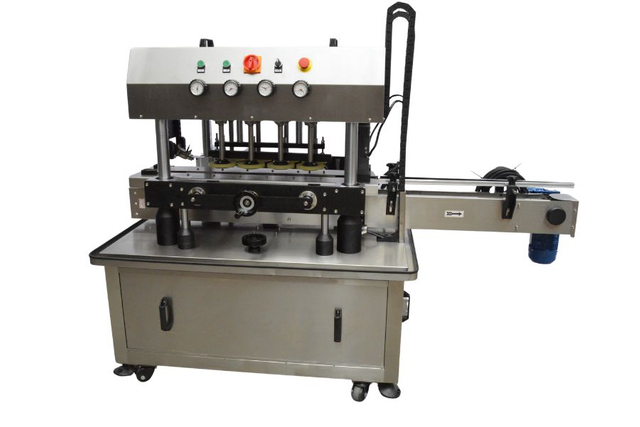
The capping machine must be equipped with CRC-specific tooling and torque monitoring to ensure consistent CRC engagement. JEWSHIN's capping machines include CRC tooling as a standard option for household product applications.
Chemical products have specific torque requirements that differ from food and cosmetics:
Under-torque: Cap loosens in transit; product leaks; safety hazard for corrosive products
Over-torque: Cap cracks (particularly on HDPE bottles at low temperatures); consumer cannot open product
For household chemical products, specify:
Application torque: 1.5–3.5 Nm for standard screw caps (varies by cap diameter and material)
Removal torque: 60–75% of application torque
100% torque monitoring: Every closure verified; out-of-spec closures automatically rejected
Induction sealing is standard for household chemical products — providing both tamper evidence and a secondary hermetic seal that prevents leakage of corrosive or hazardous products.
For household chemical products, induction sealing serves an additional function: regulatory compliance. EU CLP Regulation and US PPPA requirements for hazardous household products often specify tamper-evident packaging — induction sealing satisfies this requirement.
Parameter | Food Application | Household Chemical Application |
Foil material | Aluminum foil + wax or polymer layer | Aluminum foil + chemical-resistant polymer layer |
Seal strength | 15–25 N/15mm (peel test) | 20–35 N/15mm (higher for corrosive products) |
Chemical resistance | Food-grade | Must resist product chemistry (acid, alkali, solvent) |
Temperature resistance | Ambient | Must resist product temperature (some hot-fill applications) |

Household cleaning product labeling must comply with GHS/CLP hazard communication requirements — and the labeling machine must apply labels with sufficient accuracy and durability to maintain compliance throughout the product's shelf life and supply chain journey.
The Globally Harmonized System (GHS) of Classification and Labelling of Chemicals — implemented as CLP Regulation in the EU and incorporated into OSHA HazCom in the US — requires household chemical products to carry:
Label Element | Requirement | Machine Implication |
Hazard pictograms | Specific GHS pictograms (corrosion, exclamation mark, flame, etc.) | Label must be printed at sufficient resolution; vision system verifies pictogram presence |
Signal word | "Danger" or "Warning" | Vision system verifies correct signal word |
Hazard statements | Specific H-statements (e.g., H314: Causes severe skin burns) | Label content verification |
Precautionary statements | Specific P-statements (e.g., P260: Do not breathe vapors) | Label content verification |
Product identifier | Product name and identifier | Barcode verification |
Supplier information | Name and address of supplier | Label content |
Standard paper labels fail rapidly when exposed to household chemical splashes, condensation, and warehouse handling. For household chemical products, specify:
Label Material | Chemical Resistance | Best For |
Polypropylene (PP) film label | Good — resists most household chemicals | Standard household cleaners, detergents |
Polyethylene (PE) film label | Good — flexible; conforms to squeezable bottles | Dishwashing liquid, fabric softener |
Polyester (PET) film label | Excellent — resists acids, alkalis, solvents | Bleach, toilet cleaners, drain cleaners |
Paper label with varnish | Poor — not recommended for chemical products | Avoid for any product with splash risk |
Adhesive specification: For chemical products, specify a solvent-resistant permanent adhesive. Standard acrylic adhesives can be attacked by solvent-based products — causing label lifting or complete label loss.
Container Type | Label Configuration | Machine Type |
Round HDPE bottle (1L–5L) | Wrap-around | Heavy-duty wrap-around labeler with positive container control |
Rectangular HDPE bottle | Front + back | Dual-head labeler |
Trigger spray bottle | Front label | Flat labeler with trigger-head accommodation |
Refill pouch | Front label | Flat labeler |
Jerrycan (5L–20L) | Front + back + top | Multi-head labeler with heavy container handling |
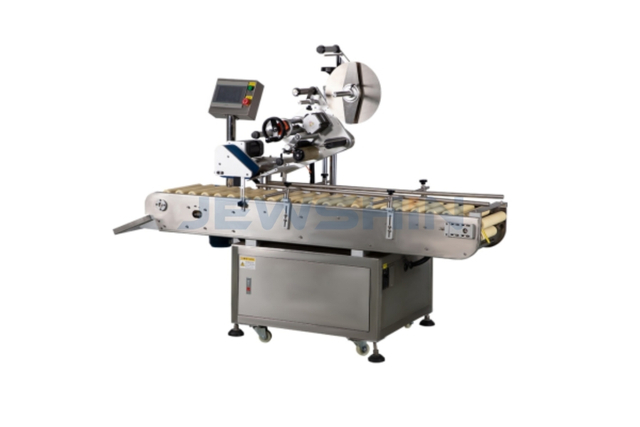
For heavy containers (5L+), the labeling machine must include positive container control — a star wheel or puck system that holds the container firmly during label application. Without positive control, heavy containers wobble on the conveyor, causing label misalignment.
Information Required | Coding Technology | Location |
Best-before / manufacturing date | CIJ coder | Directly on container or on label |
Batch / lot code | CIJ coder | Directly on container |
GS1 barcode (retail) | Pre-printed on label | Label |
Production line identifier | CIJ coder | Container base or label |
For household chemical products, inspection serves both quality and safety functions:
Inspection Type | What It Detects | Technology | Requirement |
Fill weight / volume | Under-fill (regulatory violation); over-fill (cost waste) | Checkweigher | Mandatory for retail compliance |
Cap presence and seating | Missing cap; incorrectly seated cap (leakage risk) | Vision system | Safety requirement for corrosive products |
Induction seal integrity | Failed induction seal (leakage / tamper evidence failure) | Vision system or leak tester | Regulatory / retailer requirement |
Label presence and position | Missing label; GHS pictogram verification | Vision system | CLP/GHS compliance |
Barcode readability | Unreadable barcode (retail rejection) | Barcode verifier | Retailer requirement |
Container integrity | Cracked or deformed container (leakage risk) | Vision system | Safety requirement |
For products classified as corrosive or toxic under GHS/CLP, leak testing is strongly recommended — and may be required by major retailers as a condition of supply. Leak testing methods:
Method | How It Works | Speed | Best For |
Pressure decay test | Container pressurized; pressure drop indicates leak | 10–30 units/min | 100% inline testing for high-risk products |
Vacuum test | Container placed under vacuum; deformation indicates leak | 10–30 units/min | Flexible containers |
Vision-based seal inspection | Camera inspects induction seal for defects | 100+ units/min | High-speed lines; visual defect detection |
Household cleaning products are typically sold in retail multi-packs (2-pack, 4-pack, 6-pack) and shipped in case quantities. Shrink bundling is the standard secondary packaging method:
Bundle Configuration | Film Type | Shrink Tunnel Temperature | Notes |
2×1, 2×2, 2×3 (bottles) | PE shrink film | 160–180°C | Standard for most household products |
Tray + shrink (retail display) | PE shrink film over tray | 150–170°C | Retail-ready packaging for club stores |
Handle-pack (with carry handle) | PE shrink film + handle | 160–180°C | Premium retail; 3L–5L products |
For a complete technical comparison of shrink wrapping methods and film selection, see: Shrink Wrap vs. Flow Wrap vs. Bagging: Which Method Is Right for Your Product?
High-volume household product lines require automated case packing and palletizing to match the filling line speed:
Equipment | Function | Speed |
Automatic case erector | Forms flat-packed cases into open cases | 10–25 cases/min |
Automatic case packer | Places filled containers into cases (drop-packing or robotic) | 8–20 cases/min |
Automatic case sealer | Closes and tapes or glues case tops | 10–25 cases/min |
Case coder | Prints batch code, best-before, and GS1-128 barcode on case | Inline with case sealer |
Automatic palletizer | Stacks cases onto pallets in defined pattern | 8–15 pallets/hr |
Pallet wrapper | Stretch-wraps completed pallets for stability | 3–6 pallets/hr |
For heavy household product cases (5L × 4 = 22kg per case), robotic case packing is strongly preferred over manual case packing — both for ergonomic reasons and for consistent case integrity.

Line balancing methodology follows the same framework as other packaging applications. See our Cosmetics Packaging Line Design Guide for the full methodology. Here we apply it to a household product scenario.
Operation profile: 1L liquid detergent in HDPE bottles; flip-top cap; wrap-around PP film label; PE shrink 2×3 bundle; 22 operating days/month; 2 shifts/day; 8 hours/shift; 85% OEE target.
Required line speed:
Required speed=1,000,00022×2×8×60×0.85=1,000,00017,952≈56 units/minRequired speed=22×2×8×60×0.851,000,000=17,9521,000,000≈56 units/min
Station | Machine | Max Speed | Status |
Container supply | Bulk unscrambler | 120 units/min | ✅ |
Filling | 6-head piston filler with foam control | 80 units/min | ✅ |
Capping | Automatic flip-top press capper | 100 units/min | ✅ |
Induction sealing | Inline induction sealer | 120 units/min | ✅ |
Labeling | Servo wrap-around labeler | 120 units/min | ✅ |
Coding (CIJ) | Continuous inkjet coder | 120 units/min | ✅ |
Checkweigher | Inline checkweigher + filler feedback | 120 units/min | ✅ |
Vision inspection | Cap + label + seal inspection | 120 units/min | ✅ |
Shrink bundler | 2×3 bundle shrink wrapper | 12 bundles/min (72 units/min) | ✅ |
Case packer | Automatic drop-packer | 10 cases/min (60 units/min) | ✅ |
Palletizer | Automatic palletizer | 10 pallets/hr | ✅ |
Bottleneck | Filling (80 units/min) | — | Line runs at 80 units/min |
Monthly capacity: 80 × 2 × 8 × 60 × 0.85 × 22 = 1,434,240 units/month — 43% headroom above the 1,000,000 unit target. This headroom accommodates volume growth and peak production periods without line upgrades.
Contract packers and private label producers running multiple household product SKUs on a single line face significant changeover challenges — particularly when switching between chemically incompatible products (e.g., bleach to fabric softener).
Type 1: Format changeover (same product chemistry, different container/label)
Change container size guides on conveyor
Change filling nozzle depth / fill volume recipe
Change capping chuck tooling
Change label roll and recipe
Change shrink bundle configuration
Typical time: 25–45 minutes with good changeover design
Type 2: Product changeover (different product chemistry)
All of Type 1, plus:
Full CIP cycle on filling system
Flush and verify all product-contact surfaces
Verify no cross-contamination (particularly critical for bleach ↔ acid products — mixing creates chlorine gas)
Typical time: 45–90 minutes including CIP
⚠️ Critical safety note: Never switch directly between bleach (sodium hypochlorite) and acid-based products (toilet cleaners, descalers) without a complete water flush and CIP cycle between them. Residual bleach + acid = chlorine gas generation — a serious safety hazard. This must be documented in the changeover procedure and enforced operationally.
For the complete SMED methodology for packaging line changeover, see: Packaging Line Changeover Guide: How to Cut Format Change Time by 80%
Household product line-specific changeover optimization:
Station | Key Changeover Action | Optimization |
Filling | Nozzle depth adjustment; fill volume recipe | Servo recipe recall + quick-release nozzle clamps |
Capping | Chuck tooling change | Color-coded, tool-free chuck change |
Labeling | Label roll change; position recipe | Servo recipe recall; pre-staged label rolls |
Shrink bundler | Bundle configuration change | Servo recipe recall; pre-staged lane guides |
CIP (product change) | Full product flush and clean | Automated CIP program; fixed cycle time |
All packaging machinery sold into the EU must carry CE Marking — including household chemical packaging lines. For a complete guide to CE Marking requirements, see: Meeting FDA, CE, and GMP Standards: A Packaging Machine Compliance Guide
For household chemical packaging lines, additional CE considerations include:
ATEX Directive (2014/34/EU): If the line handles flammable solvents or produces flammable vapors (e.g., alcohol-based hand sanitizers, solvent-based cleaners), ATEX-rated electrical equipment may be required in the hazardous zone
Machinery Directive chemical resistance: Guards and enclosures must be resistant to the chemicals handled — standard polycarbonate guards may be attacked by solvent vapors
The packaging line's labeling system must be capable of applying GHS/CLP compliant labels — and the vision inspection system should verify that the correct label (with correct hazard pictograms and signal word) is applied to each container.
For export products, GHS labeling requirements vary by market:
Market | GHS Implementation | Key Requirement |
EU | CLP Regulation (1272/2008) | Full GHS label with EU-specific additions |
US | OSHA HazCom 2012 | GHS label; SDS required |
Australia | Safe Work Australia | GHS label; SDS required |
China | GB 30000 series | Chinese-language GHS label |
Southeast Asia | Varies by country | GHS adoption varies; check country-specific requirements |
Major household product retailers have specific packaging compliance requirements beyond regulatory minimums:
Retailer | Key Requirement |
Walmart | Supplier Quality Assurance Program; GS1 barcode compliance; packaging sustainability requirements |
Tesco | BRC Global Standard for Consumer Products; GS1 compliance |
Carrefour | IFS Consumer Products standard; GS1 compliance |
Woolworths (Australia) | Supplier Excellence Program; GS1 compliance |
Costco | Club store packaging format (large format, handle-pack); GS1 compliance |
Target: Small household product brand, private label startup, or regional distributor entering own-brand production
Station | Equipment | Speed |
Container supply | Manual infeed with accumulation table | — |
Filling | 2-head semi-auto piston filler (chemical-resistant) | 20–30 units/min |
Capping | Semi-auto rotary capper | 20–40 units/min |
Labeling | Servo wrap-around labeler | 60 units/min |
Coding | CIJ coder | 60 units/min |
Inspection | Bench-top checkweigher | Manual sampling |
Secondary packaging | Manual case packing | — |
Operators: 3–4Monthly capacity (1 shift, 22 days, 75% OEE): ~54,000–81,000 unitsFootprint: 8m × 2.5mInvestment: $35,000–$70,000 (FOB)
Target: Established household product brand or contract packer; retail supply; multi-SKU operation
Station | Equipment | Speed |
Container supply | Bulk unscrambler | 120 units/min |
Filling | 6-head automatic piston/gear pump filler with CIP | 80–100 units/min |
Capping | Automatic rotary capper with 100% torque monitoring | 100 units/min |
Induction sealing | Inline induction sealer | 120 units/min |
Labeling | Servo wrap-around labeler with vision inspection | 120 units/min |
Coding | CIJ coder + case coder | 120 units/min |
Inspection | Inline checkweigher + cap/seal vision system | 120 units/min |
Shrink bundling | Automatic PE shrink bundler | 15 bundles/min |
Case packing | Automatic case erector + packer + sealer | 12 cases/min |
Palletizing | Semi-auto palletizer | 6 pallets/hr |
Operators: 4–5Monthly capacity (2 shifts, 22 days, 85% OEE): ~1,700,000 unitsFootprint: 30m × 6mInvestment: $280,000–$480,000 (FOB)
Target: Major household product brand or large contract manufacturer; multi-line operation; 24/7 production; export to multiple markets
Station | Equipment | Speed |
Container supply | Automatic depalletizer | 200+ units/min |
Filling | 10–12-head automatic filler with full CIP + nitrogen flushing | 150–200 units/min |
Capping | High-speed rotary capper with 100% torque + CRC verification | 200 units/min |
Induction sealing | High-speed inline induction sealer with 100% seal verification | 200 units/min |
Labeling | High-speed servo labeler with 100% vision + GHS pictogram verification | 200 units/min |
Coding | Integrated CIJ + laser + GS1 DataMatrix | 200 units/min |
Inspection | Inline checkweigher + leak tester + full vision system | 200 units/min |
Shrink bundling | High-speed PE shrink bundler with handle applicator | 25 bundles/min |
Case packing | High-speed robotic case packer | 20 cases/min |
Palletizing | Automatic robotic palletizer | 12 pallets/hr |
Pallet wrapping | Automatic stretch wrapper | 6 pallets/hr |
Operators: 5–7Monthly capacity (3 shifts, 22 days, 88% OEE): ~7,600,000 unitsFootprint: 60m × 10mInvestment: $800,000–$1,800,000 (FOB)
For the complete ROI methodology, see: Packaging Automation ROI Calculator
Operation profile: 1L liquid detergent; 1,500,000 units/month target; current method: semi-manual line with 14 operators; US Midwest location.
Investment: $380,000 (landed, including shipping, duties, installation)
ROI Driver | Annual Value |
Labor (14 operators → 5 operators, 2 shifts) | $237,600 |
Fill accuracy (4.5% → 0.3% over-fill, $0.85/L product cost) | $1,020,600 |
Rejection rate reduction (2% → 0.2%, $0.45/unit) | $162,000 |
Downtime reduction (unplanned stops) | $48,000 |
Total annual saving | $1,468,200 |
Simple Payback Period=$380,000$1,468,200≈3.1 monthsSimple Payback Period=$1,468,200$380,000≈3.1 months
The dominant ROI driver here is fill accuracy — on a high-volume, low-margin product like liquid detergent, eliminating over-fill waste generates savings that dwarf the labor saving. This is why fill accuracy specification is the most important economic decision in household product line design.

For the complete supplier evaluation framework, see: How to Evaluate a Chinese Packaging Machine Manufacturer
For household chemical applications specifically, verify:
1. Chemical compatibility documentationRequest a written material compatibility confirmation for your specific product chemistry. A supplier who cannot provide this — or who provides only a verbal "yes, it's compatible" — is a significant risk.
2. 316L stainless steel certificates for wetted partsFor bleach, acid, or alkali products, 304 SS is not adequate. Request mill certificates confirming 316L grade for all product-contact surfaces.
3. Seal material specificationRequest the seal material specification (EPDM, PTFE, Viton) for all O-rings and seals in the product-contact path. This is a common area where cost-cutting occurs — NBR seals are cheaper than EPDM but fail rapidly with bleach and solvents.
4. CIP validationFor multi-product lines, request evidence that the CIP system achieves the required cleanliness standard — residual product concentration after CIP should be below the cross-contamination threshold for your most sensitive product.
5. Reference customers in household chemicalsRequest reference customers specifically in household chemical manufacturing — not just food or cosmetics. The chemical compatibility requirements are sufficiently different that cosmetics experience does not fully qualify a supplier for household chemical applications.
6. ATEX compliance (if applicable)If your products contain flammable solvents (alcohol-based sanitizers, solvent-based cleaners), verify that the supplier can provide ATEX-rated electrical equipment for the hazardous zone. Not all Chinese packaging machine manufacturers have ATEX experience.
For the complete importing and customs process, see: Importing a Packaging Machine from China: The Complete Procurement Guide
A: Running bleach and fabric softener on the same line is common in household product contract packing — but it requires careful management. The key requirements are: (1) a full CIP cycle between product changeovers, including a water flush to ensure no bleach residue remains before fabric softener is introduced (bleach can degrade fragrance and color in fabric softener); (2) 316L SS wetted surfaces that are compatible with both products; (3) EPDM seals throughout (compatible with both bleach and fabric softener); (4) a documented changeover procedure that specifies the sequence and verification steps. We design multi-product household lines with these requirements built in — contact wendy@jewshin.com with your product range for a compatibility review.
A: Heavy container tipping is a common problem on standard flat-belt conveyors. The solutions are: (1) reduce conveyor speed at accumulation points — most tipping occurs when containers collide at accumulation; (2) add side guides throughout the conveyor to prevent tipping; (3) use a puck (carrier) system for the most unstable containers — each container rides in a custom-shaped puck that provides a stable base; (4) use a mass flow conveyor (multiple parallel narrow belts) rather than a single flat belt — mass flow conveyors are gentler on heavy containers. For 5L containers at speeds above 60 units/min, we recommend a puck system or mass flow conveyor as standard.
A: Yes — curved and irregular bottle labeling is handled with a combination of: (1) a servo-controlled labeler with a flexible label application pad that conforms to the bottle curve; (2) a custom bottle-holding fixture (star wheel or puck) that presents the bottle at the correct orientation and angle for label application; (3) a vision system that verifies label placement post-application. We design custom labeling solutions for irregular household product containers — send us your bottle drawings or samples and we'll design the appropriate fixture and labeling configuration.
A: Multi-retailer private label production is a standard use case for household product contract packers. The solution is: (1) a label printer-applicator integrated with your ERP/WMS — the system prints the correct retailer label in real time as each production run starts; (2) servo recipe management in the labeling machine — label position parameters are stored per retailer SKU and recalled automatically; (3) vision inspection that verifies the correct label (correct retailer branding, correct barcode) is applied to each container. This eliminates the risk of applying the wrong retailer's label — a costly error in private label production. Contact wendy@jewshin.com to discuss WMS integration options.
A: Aerosol filling and sealing is a specialized application requiring pressure-rated filling equipment, crimping machines for aerosol valves, and ATEX-rated electrical systems throughout — this is outside JEWSHIN's standard product range. However, JEWSHIN can supply the downstream stations for aerosol lines: labeling, coding, shrink bundling, case packing, and palletizing. Contact wendy@jewshin.com to discuss a downstream-only supply scope for your aerosol line.
Product & Chemical Definition
Full product formulation reviewed (pH, active ingredients, concentration)
Material compatibility matrix prepared for all wetted components
Foaming tendency assessed
Viscosity range documented (all SKUs)
Flammability / ATEX requirement assessed
Container & Closure Definition
Container type, material, and dimensions documented (all SKUs)
Closure type documented (screw / flip-top / trigger / pump / CRC)
CRC requirement confirmed (hazardous products)
Induction seal requirement confirmed
Production Requirements
Monthly volume target defined
Operating days and shifts defined
OEE target defined (recommend 85% for household lines)
Required line speed calculated
Number of SKUs and changeover frequency defined
Compliance Requirements
Target markets identified
GHS/CLP labeling requirements confirmed
CE Marking required (EU market)
ATEX requirement assessed (flammable products)
Retailer compliance requirements identified (GS1, audit standards)
Supplier Verification
Chemical compatibility documentation requested
316L SS certificates requested (for corrosive products)
Seal material specification confirmed
CIP validation data requested
Household chemical reference customers requested
JEWSHIN's engineering team designs household and cleaning product packaging lines from individual machines to complete turnkey solutions — with chemical-resistant construction, CE certification, and full commissioning support.
To request a line proposal, share:
Your product type, pH, and key active ingredients
Container type and dimensions (all SKUs)
Monthly production target and number of SKUs
Target markets (for compliance requirements)
Current packaging method and key pain points
We'll respond within 48 hours with a line configuration recommendation, material compatibility review, and complete quotation.
Email: wendy@jewshin.com WhatsApp: +86-13128136672
Explore household product packaging solutions: www.jewshin.com/Solution.html
Related Reading:
Shrink Wrap vs. Flow Wrap vs. Bagging: Which Method Is Right for Your Product? →
Packaging Automation ROI Calculator: Build Your Business Case →
Packaging Line Changeover Guide: How to Cut Format Change Time by 80% →
Meeting FDA, CE, and GMP Standards: A Packaging Machine Compliance Guide →
Importing a Packaging Machine from China: The Complete Procurement Guide →
About the Author: Wendy Liu is the CEO of Dongguan Jewshin Intelligent Machinery Co., Ltd., a manufacturer and global exporter of automated packaging machines and turnkey line solutions. JEWSHIN's founding team brings 15+ years of packaging machinery engineering experience, with 200+ machine models exported to 80+ countries across North America, Western Europe, Southeast Asia, the Middle East, South America, and Africa. Explore our household product packaging solutions →