Views: 0 Author: Wendy Liu Publish Time: 2026-07-27 Origin: Jewshin
Table of Contents
Agrochemical and industrial product packaging operates at the extreme end of the packaging machinery performance envelope.
The products are hazardous. The regulatory requirements are among the most stringent in the world. The fill accuracy requirements are driven not by commercial economics but by toxicology — an over-filled pesticide container doesn't just waste product, it creates a safety hazard for the farmer who handles it. The packaging materials must be UN-certified for transport of dangerous goods. And the production environment — dusty, corrosive, potentially explosive — places demands on equipment durability that no other packaging application matches.
At the same time, agrochemical and industrial packaging is a massive global market. The global agrochemical market exceeded $260 billion in 2024. Fertilizer production is measured in hundreds of millions of tonnes annually. Industrial chemical packaging spans everything from 100ml pesticide concentrate bottles to 1,000-litre intermediate bulk containers (IBCs). The manufacturers in this space — from multinational agrochemical companies to regional fertilizer producers to specialty chemical contract packagers — need packaging lines that combine precision, durability, safety, and regulatory compliance in equal measure.
This guide covers the complete engineering framework for agrochemical and industrial product packaging lines: from liquid pesticide filling through powder fertilizer bagging, seed packaging, and industrial drum filling — with the chemical compatibility, regulatory compliance, and process safety specifications that this demanding application requires.

Agrochemicals and industrial chemicals are classified as dangerous goods under international transport regulations — and their packaging must be UN-certified to transport them legally.
The UN dangerous goods classification system assigns every hazardous substance to one of nine classes:
UN Class | Hazard Type | Typical Agrochemical/Industrial Products |
Class 3 | Flammable liquids | Solvent-based pesticide formulations, some industrial solvents |
Class 6.1 | Toxic substances | Concentrated pesticides, rodenticides, some industrial chemicals |
Class 8 | Corrosive substances | Concentrated acids, alkalis, some fertilizer solutions |
Class 9 | Miscellaneous dangerous goods | Some pesticide formulations, lithium batteries |
Not classified | Non-dangerous | Many dilute formulations, granular fertilizers, seeds |
Packaging for UN-classified dangerous goods must be UN-certified — tested and certified to withstand the physical stresses of transport (drop, stack, vibration) without failure. The UN certification code appears on the packaging:
Code Element | Meaning | Example |
UN | UN-certified packaging | UN |
Packaging type | 1A1 = steel drum; 3H1 = HDPE bottle; 4G = fibreboard box | 3H1 |
Performance level | X = Packing Group I (highest); Y = PG II; Z = PG III | Y |
Maximum gross mass or specific gravity | kg or S.G. | 1.4 |
Year of manufacture | Last two digits | 24 |
Country of approval | Country code | CN |
Example: UN 3H1/Y1.4/24/CN = UN-certified HDPE bottle, Packing Group II, max S.G. 1.4, manufactured 2024, approved in China.
The packaging line must handle UN-certified containers — and must not compromise the container's UN certification through improper filling, capping, or labeling that damages the container or closure.
Agrochemical products — particularly pesticide concentrates — contain active ingredients at high concentrations (10–95% active ingredient by weight). The consequences of fill inaccuracy are:
Under-fill: Product below declared concentration → reduced efficacy → crop loss → regulatory violation → liability
Over-fill: Product above declared concentration → increased toxicity risk → regulatory violation → potential safety incident
Fill accuracy requirements for agrochemicals are typically tighter than for food or household products:
Product Type | Typical Fill Accuracy Requirement | Why |
Pesticide concentrate | ±0.5–1.0% | High active ingredient concentration; toxicity risk |
Herbicide | ±0.5–1.0% | Crop safety margin; regulatory compliance |
Fungicide | ±1.0% | Efficacy and resistance management |
Fertilizer liquid | ±1.0–2.0% | Nutrient concentration compliance |
Granular fertilizer | ±0.5–1.0% (by weight) | Net content compliance |
Seed | ±0 (by count) or ±0.5% (by weight) | Seeding rate accuracy |
Agrochemicals include some of the most chemically aggressive substances encountered in any packaging application:
Chemical Type | Typical Products | Aggressive Properties | Machine Requirement |
Organic solvents (xylene, toluene, NMP) | EC (emulsifiable concentrate) pesticides | Dissolve standard elastomers; attack plastics | PTFE seals; PVDF or SS wetted parts |
Concentrated acids (H₂SO₄, HCl, HNO₃) | Fertilizer solutions, industrial chemicals | Highly corrosive to metals | Hastelloy C or PVDF wetted parts |
Concentrated alkalis (NaOH, KOH) | Industrial cleaners, some fertilizers | Corrosive to aluminum; attacks some SS grades | 316L SS; EPDM seals |
Oxidizing agents (H₂O₂, chlorine compounds) | Disinfectants, bleach | Oxidize metals; attack elastomers | 316L SS; PTFE seals |
Abrasive slurries | Wettable powder (WP) suspensions, SC formulations | Abrasive wear on wetted surfaces | Hardened or ceramic-coated surfaces |
Flammable solvents | EC, EW formulations | Fire and explosion risk | ATEX-rated electrical equipment |
Many agrochemical formulations contain flammable solvents — xylene, toluene, cyclohexanone, NMP — at concentrations that create explosive atmospheres during filling. The packaging line must be designed for the hazardous zone:
Zone Classification | Definition | Equipment Requirement |
Zone 0 | Explosive atmosphere present continuously | ATEX Category 1 equipment |
Zone 1 | Explosive atmosphere likely during normal operation | ATEX Category 2 equipment |
Zone 2 | Explosive atmosphere unlikely; only in abnormal conditions | ATEX Category 3 equipment |
For solvent-based pesticide filling, the filling area is typically classified as Zone 1 — requiring ATEX Category 2 electrical equipment throughout. This includes:
ATEX-rated motors and drives
ATEX-rated control panels and HMIs
ATEX-rated sensors and actuators
Grounding and bonding of all conductive components (prevents static discharge ignition)
Non-sparking materials for product-contact components
All agrochemical and industrial chemical products must carry GHS (Globally Harmonized System) hazard communication labels. For agrochemicals, additional regulatory labeling requirements apply:
Label Element | GHS/CLP Requirement | Agrochemical-Specific Addition |
Hazard pictograms | GHS pictograms (skull, corrosion, flame, etc.) | Pesticide-specific pictograms (bee, fish) |
Signal word | "Danger" or "Warning" | — |
Hazard statements | H-statements | — |
Precautionary statements | P-statements | PPE requirements; re-entry interval |
Active ingredient | Not required by GHS | Required by pesticide regulations (EPA, EU) |
Registration number | Not required by GHS | EPA registration number (US); authorization number (EU) |
Directions for use | Not required by GHS | Required by pesticide regulations |
First aid | P-statements | Detailed first aid required by pesticide regulations |
Environmental hazards | H400/H410 statements | Bee hazard; aquatic toxicity; buffer zone requirements |
Agricultural production is inherently seasonal — pesticide and fertilizer demand peaks in spring and autumn planting/growing seasons. This creates extreme production demands:
Peak season: Line must run at maximum speed, 24/7, for 8–12 weeks
Off-season: Line may be idle or running at 20–30% capacity for months
Changeover frequency: Multiple products may be run in rapid succession during peak season
The packaging line must be designed for this duty cycle: robust enough to run continuously at peak season, easy to maintain and restart after off-season downtime, and fast to change over between products during the compressed production window.
[IBC / Bulk Tank] → [Liquid Filling] → [Capping] → [Induction Sealing] → [Labeling + Coding] → [Inspection] → [Case Packing / Shrink Bundling] → [Palletizing]
For: EC, SC, SL, EW, CS pesticide formulations; liquid fertilizers; industrial chemical solutions
[Bulk Silo / Day Bin] → [Weighing / Dosing] → [Bag Filling + Sealing] → [Metal Detection] → [Checkweigher] → [Labeling + Coding] → [Case / Pallet Packing]
For: WP, WG, DF pesticide formulations; granular fertilizers; powder industrial chemicals
[Seed Infeed / Cleaning] → [Seed Treatment (optional)] → [Weighing / Counting] → [Bag Filling + Sealing] → [Labeling + Coding] → [Case Packing]
For: Treated and untreated seeds — vegetable, field crop, flower
[Drum / IBC Supply] → [Drum Filling (weight-based)] → [Bung Sealing] → [Labeling + Coding] → [Palletizing]
For: Industrial chemicals in 20L–200L drums and 1,000L IBCs

Liquid agrochemicals are typically stored in bulk IBCs (1,000L) or fixed tanks and transferred to the filling machine's day tank. Key engineering requirements:
Closed transfer system: Minimizes operator exposure to hazardous vapors during product transfer
Nitrogen blanketing: Oxygen-sensitive or flammable formulations require nitrogen blanket over the day tank
Temperature control: Some formulations require heated or cooled product tanks to maintain target viscosity
Agitation: Suspension concentrates (SC) and wettable powder suspensions require continuous agitation to prevent settling
Filling technology selection for liquid agrochemicals follows the same viscosity-based framework as other liquid applications — but with chemical compatibility and ATEX requirements as overriding constraints.
Formulation Type | Viscosity | Filling Technology | Wetted Material | ATEX Required |
SL (soluble liquid) | 1–50 cP | Gravity or piston filler | 316L SS; PTFE seals | No (aqueous) |
EC (emulsifiable concentrate) | 10–200 cP | Piston filler | PVDF or 316L SS; PTFE seals | Yes (solvent) |
SC (suspension concentrate) | 500–5,000 cP | Piston filler with agitation | 316L SS; EPDM seals; ceramic nozzle | No (aqueous) |
EW (emulsion in water) | 50–500 cP | Piston filler | 316L SS; EPDM seals | No (aqueous) |
CS (capsule suspension) | 200–2,000 cP | Piston filler (gentle) | 316L SS; EPDM seals | No |
Liquid fertilizer | 1–500 cP | Gravity or piston filler | 316L SS; EPDM seals | No |
Concentrated acid | 1–100 cP | PVDF piston filler | PVDF; PTFE seals | No |
For pesticide concentrates, fill accuracy is a regulatory requirement — not just a commercial consideration. Under-fill violates the product registration (which specifies the declared concentration), and over-fill creates safety risks.
Recommended filling system: Servo-driven piston filler with:
Closed-loop fill weight control (checkweigher feedback to filler)
Fill accuracy: ±0.3–0.5% of target fill weight
100% checkweighing with automatic rejection of out-of-spec containers
Electronic batch record of fill weights for regulatory documentation
Agrochemical filling nozzles must be drip-free — any drip of pesticide concentrate outside the container creates a contamination hazard and a regulatory violation. JEWSHIN's agrochemical fillers use:
Snuff-back nozzles: Retract product at end of fill cycle to prevent dripping
PTFE-lined nozzles: Chemical resistance + non-stick surface
Drip tray: Catches any residual drips; drains to waste collection
For lines running multiple products — particularly when switching between different active ingredients — CIP is essential to prevent cross-contamination. Agrochemical CIP is more complex than food CIP:
Solvent flush: For solvent-based products, flush with compatible solvent before water wash
Water flush: Remove bulk product residue
Detergent wash: Clean product-contact surfaces
Rinse: Remove detergent residue
Verification: Rinse water tested for residual active ingredient before next product
All CIP waste must be collected and disposed of as hazardous waste — it cannot be discharged to drain.
Agrochemical containers require closures that provide both product security and child resistance — and must maintain integrity under the chemical and physical stresses of transport and storage.
Closure Type | Application | Chemical Resistance | CRC Required |
Induction-sealed screw cap | Liquid pesticides, herbicides | Must resist active ingredient | Yes (Class 6.1 products) |
Child-resistant trigger pump | RTU (ready-to-use) sprays | Must resist formulation | Yes |
Tamper-evident flip-top | Liquid fertilizers, adjuvants | Standard chemical resistance | No (non-toxic) |
Bung closure (drum) | Bulk liquid chemicals | Must resist active ingredient | No |
Valve closure (aerosol) | Aerosol pesticides | Must resist propellant + active | Specialist scope |
For Class 6.1 (toxic) pesticide products, child-resistant closures are mandatory in most markets — US (PPPA), EU (CLP Regulation), Australia (Poisons Standard). The capping machine must apply CRCs with 100% torque verification.
Induction sealing is standard for liquid agrochemical containers — providing tamper evidence, hermetic sealing against leakage of hazardous liquids, and an additional barrier against vapor loss (important for volatile solvent-based formulations).
For solvent-based products, specify induction seal foil with a solvent-resistant polymer layer — standard food-grade induction seals may be attacked by organic solvents, causing seal failure.
Agrochemical labels are among the most heavily regulated in the world — and the most legally consequential. An incorrect or missing label element on a pesticide product can result in:
Product recall
Regulatory enforcement action
Criminal liability (in some jurisdictions)
Civil liability for crop damage or personal injury
Market | Regulation | Key Requirement |
United States | FIFRA (Federal Insecticide, Fungicide, and Rodenticide Act); EPA | EPA registration number; specific label format; signal word; directions for use; re-entry interval; PPE requirements |
European Union | EU Regulation 1107/2009; CLP Regulation | Authorization number; active ingredient; GHS pictograms; operator protection; environmental precautions |
Australia | APVMA (Australian Pesticides and Veterinary Medicines Authority) | APVMA approval number; specific label format; safety directions; first aid |
Brazil | MAPA/ANVISA/IBAMA | Triple registration; specific label format in Portuguese |
China | ICAMA (Institute for the Control of Agrochemicals) | Chinese-language label; registration number; specific format |
India | CIB&RC (Central Insecticides Board & Registration Committee) | Registration number; specific format; local language requirements |
Given the legal and safety consequences of label errors, agrochemical labeling lines must include:
100% label presence verification: Vision system confirms label applied to every container
OCR verification: Camera reads and verifies registration number, active ingredient, and signal word on every label
Barcode verification: GS1 barcode verified on every container
Audit trail: Every container's label verification data recorded for regulatory documentation
Product Type | Flow Characteristics | Weighing Technology | Key Requirement |
WG (water-dispersible granule) | Free-flowing granule | Multi-head weigher or auger | Dust control; accurate dosing |
WP (wettable powder) | Cohesive powder | Auger dosing with agitation | Anti-bridging; dust containment |
DF (dry flowable) | Free-flowing granule | Multi-head weigher | Accurate dosing |
Granular fertilizer (prilled) | Free-flowing granule | Multi-head weigher or net weigher | High throughput; accuracy |
Granular fertilizer (irregular) | Semi-free-flowing | Net weigher or belt weigher | Accuracy; gentle handling |
Powder fertilizer | Cohesive powder | Auger dosing | Dust control; accuracy |
Powder agrochemicals — particularly WP (wettable powder) pesticides — generate toxic dust during filling. Dust control is both a worker safety requirement and a product quality requirement (dust loss = under-fill).
Dust control measures on agrochemical powder filling lines:
Measure | Implementation | Effectiveness |
Enclosed filling head | Filling nozzle enclosed in dust-tight housing | High — prevents dust escape during fill |
Dust extraction | Vacuum extraction at filling head | High — removes dust generated during fill |
Bag inflation | Bag pre-inflated with air before filling | Medium — reduces dust from product impact |
Slow fill start/end | Reduced fill rate at start and end of cycle | Medium — reduces dust from product impact |
Operator PPE | Respirator, gloves, protective clothing | Essential — last line of defense |
Enclosed filling room | Entire filling operation in enclosed, ventilated room | High — protects rest of facility |
Bag Type | Construction | Closure | Best For |
Multi-wall paper bag | 2–4 layers kraft paper; PE inner liner | Sewn or heat-sealed top | Granular fertilizer; large-volume WG |
Woven PP bag | Woven polypropylene; PE inner liner | Sewn or heat-sealed | Granular fertilizer; large-volume |
Laminated stand-up pouch | OPP/PE or nylon/PE laminate | Heat-sealed top | Small-volume WP, WG pesticides |
Aluminum foil pouch | PET/Alu/PE laminate | Heat-sealed | Moisture-sensitive WP; premium products |
Water-soluble bag (PVA) | Polyvinyl alcohol film | Heat-sealed | Closed-system pesticide application |
Water-soluble PVA (polyvinyl alcohol) bags are the fastest-growing packaging format for concentrated pesticide powders and granules — particularly in markets with strict operator safety requirements. The entire bag dissolves in the spray tank, eliminating operator exposure to the concentrated product during mixing.
PVA bag filling requirements:
Low-humidity filling environment (<40% RH) — PVA film is moisture-sensitive and can seal prematurely in high humidity
Specialized heat-sealing tooling — PVA requires lower sealing temperature and pressure than standard PE film
Humidity-controlled storage of filled bags — prevents premature dissolution
JEWSHIN's powder filling lines can be configured for PVA bag filling with humidity-controlled filling enclosures and PVA-specific sealing tooling.
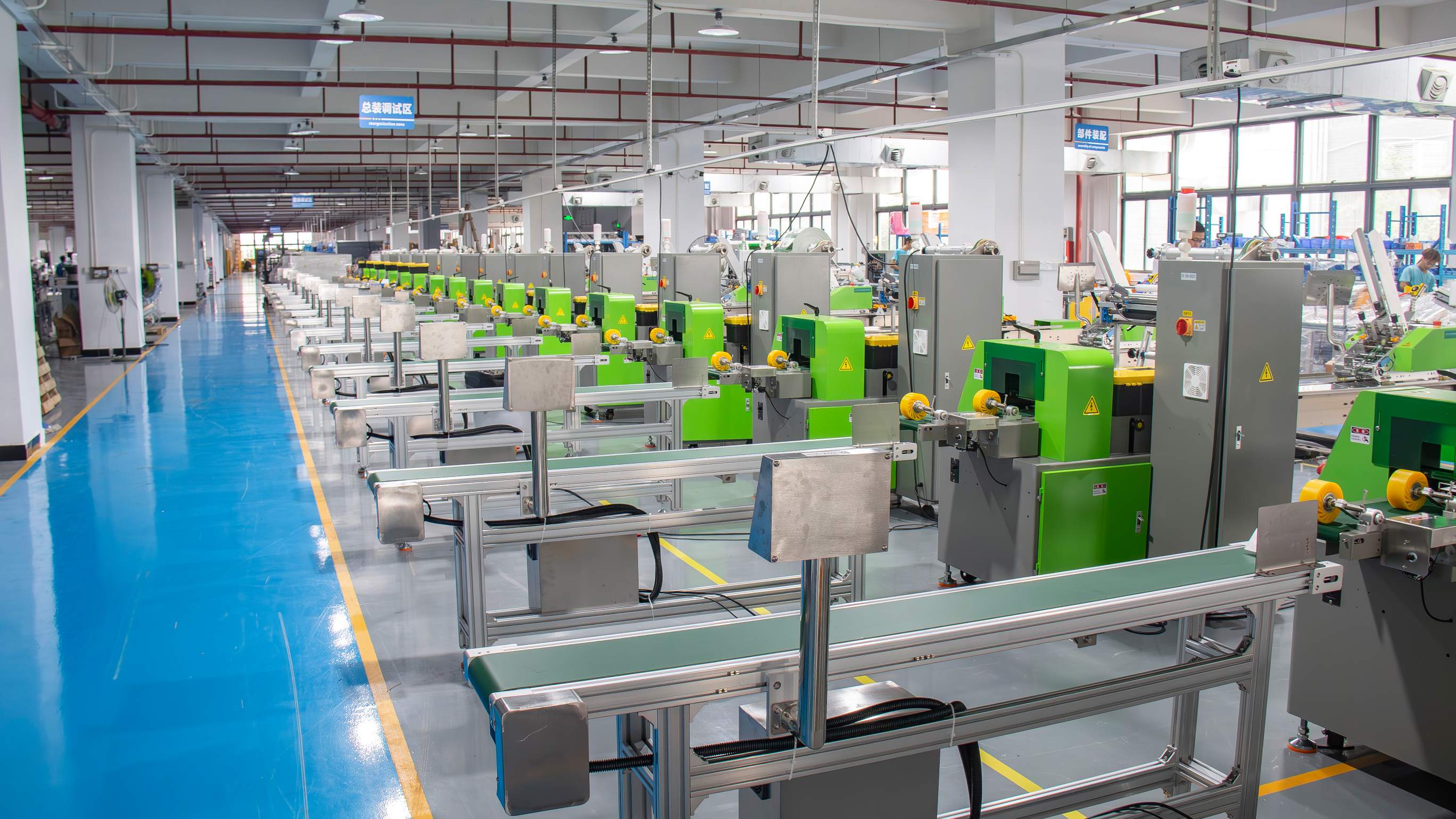
Seed packaging is a specialized application with unique requirements: seeds are living organisms with specific moisture and temperature requirements, and seed treatment chemicals add a layer of chemical compatibility and safety requirements.
Method | Technology | Accuracy | Best For |
Net weight | Multi-head weigher or net weigher | ±0.5–1.0% by weight | Small seeds (grass, vegetable, flower) |
Count by weight | Multi-head weigher + average seed weight | ±1–3 seeds per 1,000 | Medium seeds (corn, soybean, sunflower) |
Individual counting | Electronic counter or vision counter | ±0 (100% count) | Large seeds; high-value seeds (corn, hybrid) |
Volumetric | Cup or disc volumetric filler | ±2–5% by volume | Low-value bulk seeds |
For high-value hybrid seeds (corn, sunflower, soybean), individual electronic counting is the standard — every seed counted, with 100% count verification before sealing. A missing seed in a seed packet is a direct loss of yield for the farmer.
Most commercial seeds are treated with fungicide, insecticide, and/or biological seed treatments before packaging. Treated seeds present specific packaging challenges:
Colorant: Treated seeds are dyed bright colors (red, blue, green) to indicate treatment and prevent human consumption. The colorant can transfer to packaging machine surfaces — requiring easy-clean surfaces and frequent cleaning
Chemical compatibility: Seed treatment chemicals must be compatible with packaging materials (bag film, ink, adhesive)
Dust: Treated seed dust contains active ingredients — dust control and operator PPE required
Moisture sensitivity: Some seed treatments are moisture-sensitive — packaging must provide adequate moisture barrier
Format | Best For | Key Feature |
Foil laminate pouch | High-value hybrid seeds | Excellent moisture barrier; hermetic seal |
Kraft paper bag | Bulk commodity seeds | Breathable; traditional; low cost |
Woven PP bag | Large-volume commodity seeds | Strong; reusable; low cost |
Plastic canister | Premium vegetable seeds | Resealable; moisture-proof; retail-ready |
Blister card | Home garden seeds | Retail display; consumer-friendly |
Operation profile: EC (emulsifiable concentrate) herbicide; 1L HDPE bottles (UN 3H1/Y); induction seal; full-wrap label; 20 operating weeks/year (seasonal); 5 days/week; 2 shifts; 8 hours/shift; 80% OEE target.
Required line speed:
Required speed=2,000,00020×5×2×8×60×0.80=2,000,00076,800≈26 bottles/minRequired speed=20×5×2×8×60×0.802,000,000=76,8002,000,000≈26 bottles/min
Station | Machine | Max Speed | Status |
Bottle unscrambler | Automatic unscrambler | 80 bottles/min | ✅ |
Filling | 4-head ATEX piston filler (EC, PTFE seals) | 40 bottles/min | ✅ |
Capping (CRC) | ATEX rotary CRC capper | 40 bottles/min | ✅ |
Induction sealing | ATEX inline induction sealer | 60 bottles/min | ✅ |
Labeling | Servo full-wrap labeler with OCR vision | 60 bottles/min | ✅ |
Coding | ATEX CIJ coder | 60 bottles/min | ✅ |
Checkweigher | Inline checkweigher + filler feedback | 60 bottles/min | ✅ |
Vision inspection | Label + cap + seal inspection | 60 bottles/min | ✅ |
Case packing | Automatic case packer | 8 cases/min | ✅ |
Palletizing | Semi-auto palletizer | 5 pallets/hr | ✅ |
Bottleneck | Filling (40 bottles/min) | — | Line runs at 40 bottles/min |
Annual capacity: 40 × 2 × 8 × 60 × 0.80 × 20 × 5 × 1L = 3,072,000 litres/year — 54% headroom above the 2,000,000L target. This headroom is intentional for seasonal lines — it allows the full annual volume to be produced in the 20-week season without requiring overtime or a second line.

Target: Regional pesticide formulator, specialty chemical producer, or private label agrochemical brand
Station | Equipment | Speed | ATEX |
Bottle supply | Manual infeed | — | N/A |
Filling | 2-head semi-auto piston filler | 15–25 bottles/min | Optional |
Capping | Semi-auto CRC capper | 20–30 bottles/min | Optional |
Induction sealing | Inline induction sealer | 40 bottles/min | Optional |
Labeling | Servo full-wrap labeler | 40 bottles/min | Optional |
Coding | CIJ coder | 40 bottles/min | Optional |
Checkweigher | Bench-top checkweigher | Manual sampling | N/A |
Operators: 3–4Annual capacity (20 weeks, 5 days, 1 shift, 75% OEE): ~540,000 unitsFootprint: 8m × 2.5mInvestment: $40,000–$85,000 (FOB); add 25–40% for full ATEX configuration
Target: Established agrochemical manufacturer or contract formulator; multi-product; full regulatory compliance; export markets
Station | Equipment | Speed | ATEX |
Bottle unscrambler | Automatic unscrambler | 80 bottles/min | Yes |
Filling | 6-head automatic piston filler (PTFE/PVDF wetted) | 60 bottles/min | Yes |
Capping | Automatic CRC capper with 100% torque monitoring | 60 bottles/min | Yes |
Induction sealing | Inline induction sealer with seal verification | 80 bottles/min | Yes |
Labeling | Servo full-wrap labeler with OCR + barcode verification | 80 bottles/min | Yes |
Coding | ATEX CIJ coder | 80 bottles/min | Yes |
Checkweigher | Inline checkweigher + closed-loop filler control | 80 bottles/min | Yes |
Vision inspection | Full bottle inspection (cap, seal, label, code) | 80 bottles/min | Yes |
Case packing | Automatic case erector + packer + sealer | 10 cases/min | No |
Palletizing | Automatic palletizer | 8 pallets/hr | No |
Operators: 4–5Annual capacity (20 weeks, 5 days, 2 shifts, 82% OEE): ~5,900,000 unitsFootprint: 28m × 5mInvestment: $320,000–$580,000 (FOB, full ATEX configuration)
Target: Major agrochemical company or large industrial chemical manufacturer; multi-line; 24/7 seasonal operation; global export
Station | Equipment | Speed | ATEX |
Bottle depalletizer | Automatic depalletizer | 200 bottles/min | Yes |
Filling | 10–12-head high-speed piston filler with CIP | 120–150 bottles/min | Yes |
Capping | High-speed CRC capper with 100% torque + vision | 150 bottles/min | Yes |
Induction sealing | High-speed sealer with 100% verification | 200 bottles/min | Yes |
Labeling | High-speed servo labeler with 100% OCR + vision | 200 bottles/min | Yes |
Coding | ATEX CIJ + laser | 200 bottles/min | Yes |
Checkweigher | High-speed checkweigher + closed-loop control | 200 bottles/min | Yes |
Vision inspection | Full GMP-grade inspection system | 200 bottles/min | Yes |
Case packing | High-speed robotic case packer | 20 cases/min | No |
Palletizing | Automatic robotic palletizer | 12 pallets/hr | No |
Operators: 5–7Annual capacity (20 weeks, 5 days, 3 shifts, 85% OEE): ~36,700,000 unitsFootprint: 50m × 8mInvestment: $850,000–$1,600,000 (FOB, full ATEX configuration)
For the complete ROI methodology, see: Packaging Automation ROI Calculator
Operation profile: EC herbicide concentrate; 1L bottles; 4,000,000 units/year target; current method: semi-manual line with 12 operators; product cost $8.50/L.
Investment: $480,000 (landed, full ATEX configuration, including shipping, duties, installation)
ROI Driver | Annual Value |
Labor (12 operators → 5 operators, 2 shifts, seasonal) | $100,800 |
Fill accuracy (2.5% → 0.4% over-fill, $8.50/L) | $714,000 |
Rejection / rework reduction (1.2% → 0.1%) | $374,000 |
Label compliance (OCR verification eliminates label recalls) | Risk mitigation |
Total quantified annual saving | $1,188,800 |
Simple Payback Period=$480,000$1,188,800≈4.8 monthsSimple Payback Period=$1,188,800$480,000≈4.8 months
The dominant ROI driver is fill accuracy — at $8.50/L product cost, even a 2.1% reduction in over-fill on 4,000,000 litres/year generates $714,000 in annual savings. For high-value agrochemical concentrates, fill accuracy is the single most important economic specification on the packaging line.
The non-quantified ROI driver — label compliance verification — is equally important. A single pesticide product recall due to a label error can cost $500,000–$5,000,000 in direct costs, plus regulatory penalties and brand damage. An OCR vision system that verifies every label costs $15,000–$25,000 — the insurance value alone justifies the investment.
For the complete supplier evaluation framework, see: How to Evaluate a Chinese Packaging Machine Manufacturer
For agrochemical applications specifically, verify:
1. ATEX certification documentationFor solvent-based products, request ATEX certificates for all electrical components in the hazardous zone. ATEX certification must be issued by a notified body (TÜV, DEKRA, SGS, etc.) — not self-declared. Verify that the ATEX category matches your zone classification.
2. Chemical compatibility matrixRequest a written material compatibility confirmation for your specific formulation — active ingredient, solvent system, pH, concentration. For EC formulations, verify PTFE seal compatibility with your specific solvent system (xylene, toluene, and NMP have different compatibility profiles).
3. PVDF or Hastelloy wetted parts for aggressive chemistriesFor concentrated acids or highly aggressive solvents, 316L SS is not adequate. Request material certificates confirming PVDF, Hastelloy C-276, or other appropriate exotic alloy for product-contact surfaces.
4. Drip-free nozzle validationRequest a demonstration or video of the filling nozzle operating with a product of similar viscosity and surface tension to your formulation. Drip performance is critical for agrochemical filling — a supplier who cannot demonstrate drip-free performance should not be considered.
5. CIP waste management designVerify that the CIP system collects all wash effluent for hazardous waste disposal — it must not discharge to drain. Request the CIP waste management design as part of the line specification.
6. Reference customers in agrochemicalsRequest reference customers specifically in agrochemical or industrial chemical manufacturing. ATEX experience and chemical compatibility expertise are sufficiently specialized that food or cosmetics experience does not qualify a supplier for agrochemical applications.
For the complete importing and customs process, see: Importing a Packaging Machine from China: The Complete Procurement Guide
A: Xylene is an aromatic hydrocarbon solvent that attacks most standard elastomers (NBR, neoprene, EPDM) and some plastics. For xylene-based EC formulations, specify: (1) PTFE seals and O-rings throughout the product-contact path — PTFE has excellent resistance to aromatic hydrocarbons; (2) 316L SS or PVDF for all product-contact metal surfaces — xylene attacks carbon steel but is compatible with 316L SS and PVDF; (3) PVDF or PTFE-lined filling nozzles — 316L SS nozzles are acceptable but PVDF provides better long-term resistance; (4) ATEX Category 2 electrical equipment — xylene has a flash point of 27–32°C (Class 3 flammable liquid), requiring Zone 1 ATEX rating for the filling area; (5) grounding and bonding throughout — xylene is a static charge generator. Share your complete formulation (active ingredient, solvent system, concentration) with our engineering team for a full material compatibility review before specifying any equipment.
A: A 50:1 container size range (100ml to 5L) on a single line is at the extreme end of what is practical — but it is achievable with the right design. The key requirements are: (1) servo-driven filling heads with recipe-based fill volume adjustment — switching from 100ml to 5L fill is a recipe change, not a mechanical adjustment; (2) modular conveyor width adjustment — 100ml and 5L containers have very different footprints; (3) adjustable capping tooling — different chuck sizes for different cap diameters; (4) adjustable labeling guides — different container heights and diameters. In practice, most agrochemical producers with this range run two separate lines — one optimized for small containers (100ml–500ml) and one for large containers (1L–5L) — because the changeover time and complexity of a single line covering the full range erodes the efficiency gains. Contact wendy@jewshin.com with your full container range and production volumes for a specific recommendation.
A: PVA (polyvinyl alcohol) sachet filling requires specialized equipment due to the moisture sensitivity of PVA film: (1) humidity-controlled filling environment — the filling room must be maintained at <40% relative humidity; PVA film begins to absorb moisture above 40% RH, causing premature sealing and film degradation; (2) low-temperature sealing — PVA seals at 120–150°C (vs. 160–180°C for PE), requiring precise temperature control on the sealing jaws; (3) low sealing pressure — PVA is softer than PE and requires lower jaw pressure to avoid film damage; (4) anti-static film handling — PVA film generates static charge; ionizing bars required on the film path; (5) humidity-controlled finished goods storage — filled PVA sachets must be stored in moisture-proof outer packaging immediately after filling. JEWSHIN has supplied PVA sachet filling lines for agrochemical customers in Europe and Southeast Asia. Contact wendy@jewshin.com with your sachet dimensions, fill weight, and production volume for a specific configuration.
A: Ammonium nitrate and ammonium nitrate-based fertilizers are highly corrosive to most metals and present specific safety considerations: (1) 316L SS construction for all product-contact surfaces — ammonium nitrate attacks carbon steel and 304 SS over time; (2) EPDM seals — compatible with ammonium nitrate solutions; (3) no copper, zinc, or lead components in the product zone — these metals catalyze decomposition of ammonium nitrate; (4) explosion risk assessment — ammonium nitrate is an oxidizer (UN Class 5.1) and can detonate under confinement and heat; the filling area must be assessed for explosion risk and designed accordingly; (5) grounding and bonding — prevents static discharge in the presence of ammonium nitrate dust. Additionally, ammonium nitrate is subject to security regulations in many countries (due to its use in improvised explosives) — verify that your facility and supply chain meet the applicable security requirements before designing the packaging line. Contact wendy@jewshin.com for a full safety and compatibility review for ammonium nitrate applications.
A: Multi-market pesticide label management is one of the most complex labeling challenges in the packaging industry — each market has different regulatory requirements, different languages, and different label formats. The solution is: (1) a label printer-applicator that prints the correct market-specific label in real time from a template library; (2) ERP integration — the production order specifies the target market, triggering the correct label template automatically; (3) OCR vision verification — camera reads and verifies the registration number, active ingredient, signal word, and market-specific elements on every label; (4) audit trail — every container's label data recorded for regulatory documentation. This eliminates the risk of applying the wrong market's label — a potentially catastrophic error for a registered pesticide product. Contact wendy@jewshin.com to discuss ERP integration options and OCR verification capability for your specific label requirements.
Product & Chemical Definition
Product classification confirmed (UN class / packing group / not regulated)
Formulation type documented (EC / SC / SL / WP / WG / granule / seed)
Active ingredient and concentration documented
Solvent system documented (aqueous / organic solvent / type of solvent)
Flash point documented (determines ATEX requirement)
pH documented
Material compatibility matrix prepared
Container & Closure Definition
Container type and UN certification confirmed (3H1 / 3H2 / 4G / other)
Container size range documented
Closure type confirmed (CRC / standard / bung)
Induction seal requirement confirmed
PVA water-soluble requirement confirmed (if applicable)
Regulatory & Compliance Requirements
Target markets identified
Pesticide registration numbers confirmed for each market
GHS/CLP label requirements confirmed
ATEX zone classification confirmed
CIP waste management design confirmed
Production Requirements
Annual volume target defined
Production season length defined (weeks/year)
Operating days and shifts defined
OEE target defined (recommend 82% for agrochemical lines)
Required line speed calculated
Number of products and changeover frequency defined

JEWSHIN's engineering team designs agrochemical and industrial chemical packaging lines from individual machines to complete turnkey solutions — with ATEX-rated configurations, chemical-resistant construction, UN-certified container handling, and full commissioning support.
To request a line proposal, share:
Your product type, formulation, and active ingredient
Flash point and UN classification (if known)
Container type and size range
Annual production target and season length
Target markets and regulatory requirements
We'll respond within 48 hours with a line configuration recommendation, ATEX assessment, material compatibility review, and complete quotation.
Email: wendy@jewshin.com
WhatsApp: +86-13128136672
Explore agrochemical packaging solutions: www.jewshin.com/Solution.html
Related Reading:
Shrink Wrap vs. Flow Wrap vs. Bagging: Which Method Is Right for Your Product? →
Packaging Automation ROI Calculator: Build Your Business Case →
Packaging Line Changeover Guide: How to Cut Format Change Time by 80% →
Meeting FDA, CE, and GMP Standards: A Packaging Machine Compliance Guide →
Importing a Packaging Machine from China: The Complete Procurement Guide →
About the Author: Wendy Liu is the CEO of Dongguan Jewshin Intelligent Machinery Co., Ltd., a manufacturer and global exporter of automated packaging machines and turnkey line solutions. JEWSHIN's founding team brings 15+ years of packaging machinery engineering experience, with 200+ machine models exported to 80+ countries across North America, Western Europe, Southeast Asia, the Middle East, South America, and Africa. Explore our agrochemical packaging solutions →


