Views: 0 Author: Wendy Liu Publish Time: 2026-07-08 Origin: Jewshin
Table of Contents
Of all the packaging applications in the industry, pharmaceutical and healthcare product packaging carries the highest stakes.
A mislabeled pharmaceutical product can cause patient harm. A contaminated nutraceutical can trigger a product recall affecting hundreds of thousands of units. A packaging line that cannot produce an audit trail for every batch is disqualified from supplying to regulated markets — regardless of how well the product itself is manufactured.
At the same time, the pharmaceutical and healthcare packaging market is one of the fastest-growing segments in global packaging machinery. The global nutraceutical market alone exceeded $500 billion in 2024 and is growing at 8% annually. Dietary supplements, OTC medicines, medical devices, and functional foods are being manufactured and exported at scale from facilities that must meet the same GMP, FDA, and EU regulatory standards as major pharmaceutical companies — regardless of their size.
This guide is written for pharmaceutical manufacturers, nutraceutical producers, dietary supplement brands, OTC medicine packagers, and contract packaging organizations (CPOs) who are designing or upgrading a packaging line for regulated healthcare products. It covers the complete line architecture — from primary packaging through serialization and track-and-trace — with the engineering specificity, validation framework, and compliance documentation that regulated healthcare packaging requires.

Before specifying a single machine, you must understand the regulatory framework that governs your packaging line. The requirements vary significantly by product type and target market.
Product Category | US Regulation | EU Regulation | Key Packaging Implication |
Prescription pharmaceutical | FDA 21 CFR Parts 210/211 (cGMP) | EU GMP Annex 1/15; EU FMD (2011/62/EU) | Full GMP validation; serialization mandatory |
OTC medicine | FDA 21 CFR Parts 210/211; OTC monograph | EU GMP; national OTC regulations | GMP validation; tamper-evident packaging |
Dietary supplement (US) | FDA 21 CFR Part 111 (cGMP for dietary supplements) | EU Food Supplement Directive | GMP-equivalent validation; label compliance |
Nutraceutical / functional food | FDA 21 CFR Part 117 (food GMP) | EU Food Law; EFSA regulations | Food GMP; health claim compliance |
Medical device (Class I/II) | FDA 21 CFR Part 820 (QSR); ISO 13485 | EU MDR (2017/745); ISO 13485 | Sterile barrier system validation; UDI labeling |
In-vitro diagnostic (IVD) | FDA 21 CFR Part 820; IVDR | EU IVDR (2017/746) | Sterile barrier; UDI; cold chain |
Veterinary pharmaceutical | FDA 21 CFR Part 514 | EU Veterinary Medicinal Products Regulation | GMP-equivalent; species-specific labeling |
For practical line design purposes, pharmaceutical and healthcare packaging lines fall into three compliance tiers:
Tier 1: Full Pharmaceutical GMPApplies to: Prescription drugs, sterile products, biologics
Full IQ/OQ/PQ validation of all packaging equipment
21 CFR Part 11 compliant electronic records and audit trails
Serialization and track-and-trace (US DSCSA; EU FMD)
Cleanroom environment (ISO Class 7 or 8)
Annual product reviews and change control
Tier 2: GMP-Equivalent (Dietary Supplement / Nutraceutical)Applies to: Dietary supplements (21 CFR Part 111), nutraceuticals, functional foods
Equipment qualification (IQ/OQ/PQ recommended; required for major retailer supply)
Electronic batch records recommended
Tamper-evident packaging required
Label compliance (FDA, EU, country-specific)
Allergen control
Tier 3: Healthcare Product / OTCApplies to: OTC medicines, medical devices Class I, personal care with health claims
GMP-aligned practices
Tamper-evident packaging
Lot traceability
Retailer audit compliance
JEWSHIN's scope: JEWSHIN's pharmaceutical and healthcare packaging lines are designed for Tier 2 and Tier 3 applications — dietary supplements, nutraceuticals, OTC medicines, and healthcare products. For full Tier 1 sterile pharmaceutical applications (aseptic filling, isolator technology), specialist pharmaceutical equipment suppliers are more appropriate. This guide covers Tier 2 and Tier 3 in depth.
Healthcare product packaging lines are more complex than food or household product lines — because they typically involve multiple primary packaging formats (bottles, blisters, sachets, tubes), secondary packaging (cartons), and tertiary packaging (cases), all with integrated coding, inspection, and traceability systems.
The primary packaging format is the most consequential decision in healthcare line design — it determines the entire line architecture.
Format | Products | Advantages | Disadvantages | Line Complexity |
Bottle (HDPE/PET/glass) | Tablets, capsules, liquids, powders | High-speed; versatile; consumer familiar | Larger footprint; child-resistant cap required | Medium |
Blister pack (PVC/Alu-Alu) | Tablets, capsules, lozenges | Unit-dose; tamper-evident; moisture barrier | Slower; higher tooling cost; limited to solid dose | High |
Sachet | Powders, granules, single-dose liquids | Low cost; flexible; portion control | Limited barrier; not child-resistant | Medium |
Tube | Creams, gels, ointments | Hygienic dispensing; good barrier | Slow filling; tube sealing complexity | High |
Vial / ampoule | Injectables, eye drops, diagnostics | Sterile; hermetic | Requires aseptic filling (Tier 1 scope) | Very High |
Stick pack | Powder supplements, effervescent | Convenient; single-dose | Lower barrier than sachet; limited volume | Medium |
Architecture A: Bottle Line (Solid Dose — Tablets/Capsules)
[Bottle Unscrambler] → [Tablet/Capsule Counter] → [Desiccant Inserter] → [Cotton/Filler Inserter] → [Capping] → [Induction Sealing] → [Labeling] → [Coding + Serialization] → [Vision Inspection] → [Cartoning] → [Case Packing]
Architecture B: Bottle Line (Liquid Dose — Syrups, Suspensions, Drops)
[Bottle Unscrambler] → [Liquid Filling] → [Capping] → [Induction Sealing] → [Labeling] → [Coding + Serialization] → [Vision Inspection] → [Cartoning] → [Case Packing]
Architecture C: Blister + Carton Line (Solid Dose)
[Tablet/Capsule Infeed] → [Blister Forming] → [Product Loading] → [Lidding/Sealing] → [Blister Punching] → [Coding] → [Vision Inspection] → [Leaflet Insertion] → [Cartoning] → [Serialization] → [Case Packing]
Architecture A is the most common configuration for JEWSHIN's healthcare customers — covering dietary supplements (tablets, capsules, softgels), OTC vitamins, and nutraceutical products in bottles.
Pharmaceutical-grade bottle unscramblers differ from standard unscramblers in three ways:
Material: All product-contact surfaces in 304/316L SS or food-grade plastic
Cleanability: Tool-free disassembly for cleaning between product changeovers
Gentle handling: Bottle handling designed to prevent scratching or marking of pharmaceutical-grade containers
Speed: 50–300 bottles/min depending on bottle size and configuration.
The tablet/capsule counter is the most technically critical station on a solid-dose bottle line. It must count the correct number of tablets or capsules into each bottle — with zero tolerance for over-count (regulatory violation) or under-count (patient safety issue and regulatory violation).
Technology | How It Works | Accuracy | Speed | Best For |
Slat counter | Tablets fall through slotted slats; counted by slot | ±0 (mechanical) | 20–80 bottles/min | High-speed, uniform tablets |
Electronic counter (sensor-based) | Infrared sensors count tablets/capsules as they fall through channels | ±0 (electronic verification) | 30–120 bottles/min | Most solid dose products |
Vision-based counter | Camera counts and inspects tablets as they pass | ±0 + defect detection | 20–80 bottles/min | Premium products; defect detection required |
Weighing counter | Net weight used to verify count (weight ÷ average tablet weight) | ±1 tablet (statistical) | 60–200 bottles/min | High-speed; uniform tablets |
For GMP-compliant operations, electronic sensor counting with 100% count verification is the standard. Every bottle must have its count verified — not sampled. Any bottle with an incorrect count is automatically rejected before capping.
A GMP-compliant counting system must:
Count every tablet/capsule electronically
Verify count against target before releasing bottle to capping
Automatically reject any bottle with incorrect count
Record count data for every bottle (or at minimum, every batch) in the electronic batch record
Generate an alarm and stop the line if rejection rate exceeds a defined threshold (typically 0.1%)
Many pharmaceutical and nutraceutical products require desiccant (silica gel or molecular sieve) to maintain product stability, and/or cotton or synthetic filler to prevent tablet movement in the bottle.
Insertion Type | Products | Machine Type | Speed |
Desiccant canister | Moisture-sensitive tablets, capsules, softgels | Automatic desiccant inserter | 60–200 bottles/min |
Desiccant sachet | Moisture-sensitive products | Sachet inserter | 40–120 bottles/min |
Cotton plug | Traditional pharmaceutical bottles | Cotton inserter | 40–100 bottles/min |
Synthetic filler | Modern supplement bottles | Filler inserter | 60–150 bottles/min |
Desiccant insertion must be 100% verified — a bottle without a required desiccant is a product quality failure. Vision systems or sensor-based verification confirm desiccant presence in every bottle before capping.
Child-resistant closures (CRC) are mandatory for most pharmaceutical and OTC products in the US (PPPA) and EU. The capping machine must apply CRCs consistently — with verified engagement of the child-resistant mechanism.
CRC Type | Mechanism | Application Method | Verification |
Push-and-turn (P&T) | Requires simultaneous push and turn to open | Rotary chuck capper with P&T tooling | Torque monitoring + vision |
Squeeze-and-turn (S&T) | Requires simultaneous squeeze and turn | Rotary chuck capper with S&T tooling | Torque monitoring |
Locking ring | Outer ring locks inner cap | Two-stage capper | Torque monitoring |
Blister-backed CRC | Blister card prevents cap removal | Manual or semi-auto | Visual inspection |
Parameter | Specification | Why |
Application torque | Per cap manufacturer specification (typically 1.5–3.0 Nm) | Ensures CRC mechanism engages correctly |
Torque monitoring | 100% of closures | GMP requirement; out-of-spec closures rejected |
Torque data recording | Every batch; statistical summary | Electronic batch record; GMP audit trail |
Induction sealing is standard for pharmaceutical and nutraceutical bottles — providing tamper evidence (required by FDA and EU regulations), hermetic sealing (extends shelf life), and an additional barrier against moisture ingress.
For pharmaceutical applications, induction seal integrity must be 100% verified — not sampled. Verification methods:
Vision-based seal inspection: Camera inspects every seal for completeness and defects
Seal integrity tester: Pressure or vacuum test on every bottle (slower; used for high-risk products)
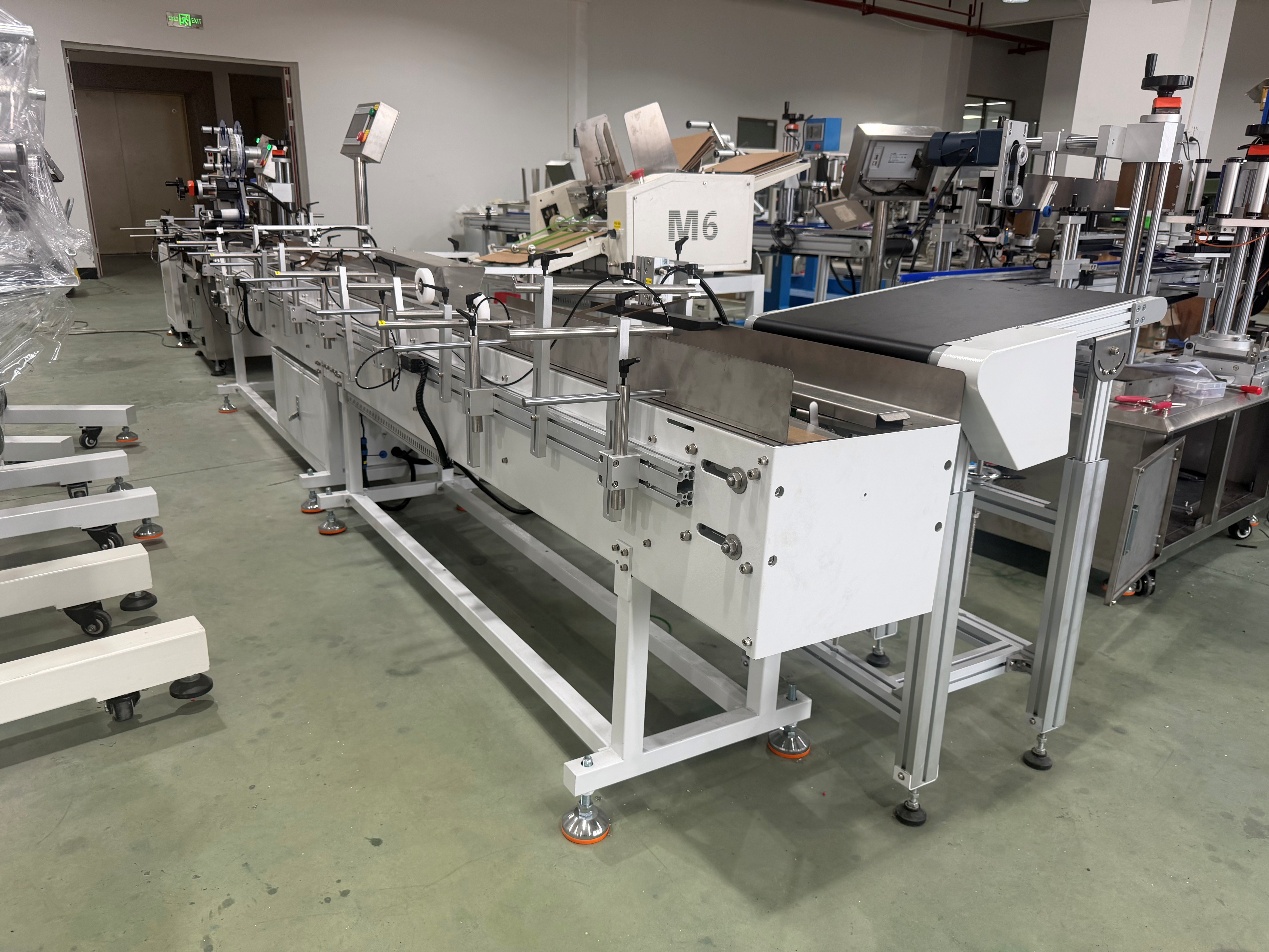
Pharmaceutical labeling is the most regulated labeling application in the packaging industry. The label must carry all required regulatory information — and the labeling machine must apply it with the accuracy and consistency that GMP requires.
Market | Regulation | Key Label Elements |
US (OTC drug) | FDA 21 CFR Part 201 | Drug Facts panel; active/inactive ingredients; directions; warnings; lot number; expiry date |
US (dietary supplement) | FDA 21 CFR Part 101 | Supplement Facts panel; ingredient list; net quantity; manufacturer; lot number; best-by date |
EU (medicine) | EU Directive 2001/83/EC | INN name; strength; pharmaceutical form; contents; excipients; route of administration; expiry; batch number; Braille (for prescription) |
EU (food supplement) | EU Directive 2002/46/EC | Nutrient declaration; ingredient list; recommended daily dose; warning statements; lot number |
Australia (TGA) | TGA labeling requirements | AUST R/AUST L number; active ingredients; directions; warnings; batch; expiry |
Pharmaceutical labeling requires tighter placement accuracy than most other applications:
Parameter | Standard Commercial | Pharmaceutical GMP |
Label placement accuracy | ±1.5mm | ±0.5–1.0mm |
Label skew | ±2° | ±0.5° |
100% label verification | Optional | Required |
Audit trail | Optional | Required (label applied, verified, batch recorded) |
A pharmaceutical-grade labeling system must include an integrated vision system that verifies, on every bottle:
Label presence (no missing labels)
Label position (within specification)
Label content — OCR verification of lot number and expiry date
Barcode readability (minimum ISO grade B)
For serialized products: 2D DataMatrix code readability and content verification
Coding and serialization is the most technically complex station on a modern pharmaceutical packaging line — and the requirements are increasing rapidly as global serialization mandates expand.
Every pharmaceutical and healthcare product must carry:
Information | Technology | Location |
Lot/batch number | CIJ or laser | Directly on container or label |
Expiry date | CIJ or laser | Directly on container or label |
Manufacturing date | CIJ or laser | Container or label |
Retail barcode (EAN-13/UPC-A) | Pre-printed on label | Label |
Serialization code (2D DataMatrix) | Inkjet or laser | Label or directly on carton |
Serialization — the assignment of a unique serial number to every individual saleable unit — is now mandatory for pharmaceutical products in most major markets:
Market | Regulation | Deadline | Requirement |
United States | DSCSA (Drug Supply Chain Security Act) | November 2023 (fully enforced) | Unique product identifier (NDC + serial number + lot + expiry) on every unit; 2D DataMatrix |
European Union | EU FMD (Falsified Medicines Directive) | February 2019 (enforced) | Unique identifier + tamper-evident feature on every prescription medicine pack |
China | NMPA Traceability System | Phased rollout 2019–2024 | Unique identifier on every drug package; upload to national database |
South Korea | MFDS Serialization | 2015 (enforced) | Unique identifier on every pharmaceutical pack |
Saudi Arabia | SFDA Serialization | 2017 (enforced) | Unique identifier; upload to Salama system |
Brazil | ANVISA SNCM | Phased rollout | Unique identifier; upload to national database |
For dietary supplements and nutraceuticals, serialization is not yet universally mandated — but major retailers (Walmart, Costco, Amazon) are increasingly requiring it as a condition of supply, and the regulatory trend is clearly toward broader serialization requirements.
A complete serialization system consists of four layers:
[L1: Coding & Scanning] → [L2: Line Control (aggregation)] → [L3: Site Management] → [L4: Enterprise (ERP/EPCIS)]
Layer | Function | Equipment |
L1 | Print unique 2D DataMatrix on each unit; scan and verify | Inkjet/laser coder + camera verifier |
L2 | Aggregate unit serials into case and pallet serials; manage line events | Line serialization controller (PC-based) |
L3 | Manage all serialization data for the site; connect to ERP | Site serialization server |
L4 | Connect to national track-and-trace systems (DSCSA, FMD, NMPA) | ERP integration; EPCIS repository |
JEWSHIN's serialization-ready packaging lines include L1 and L2 as standard, with interfaces for customer-supplied L3/L4 systems (SAP, Oracle, TraceLink, Antares Vision, etc.).

Liquid pharmaceutical and nutraceutical filling — syrups, suspensions, drops, tinctures — shares many characteristics with food liquid filling, but with GMP construction and validation requirements at every level.
Product Type | Viscosity | Filling Technology | GMP Requirement |
Aqueous solutions (syrups, drops) | 1–500 cP | Peristaltic pump or piston filler | 316L SS or PTFE/silicone product path; CIP |
Suspensions (antacids, vitamins) | 100–5,000 cP | Piston filler with agitation | Agitated product hopper; 316L SS; CIP |
Oils (fish oil, CBD oil, vitamin E) | 50–500 cP | Gear pump or piston filler | 316L SS; nitrogen flushing for oxidation-sensitive products |
Viscous syrups (honey-based, thick suspensions) | 5,000–50,000 cP | Gear pump or rotary lobe pump | 316L SS; heated product path for temperature-sensitive viscosity |
For aqueous pharmaceutical solutions, peristaltic pump filling is often preferred over piston filling because:
No product contact with pump mechanism: Only the peristaltic tubing contacts the product — the pump rollers contact only the outside of the tubing
Easy product path sterilization: Replace tubing between batches; no metal surfaces to clean and validate
No cross-contamination risk: Tubing is single-use or easily replaced
Gentle pumping action: Suitable for shear-sensitive products
Limitation: Peristaltic pumps are less accurate than piston fillers at high speeds — accuracy is typically ±0.5–1.0% vs. ±0.2–0.5% for piston fillers.
Pharmaceutical liquid fill accuracy requirements are defined by pharmacopoeial standards:
Fill Volume | USP Tolerance (single-dose) | EP Tolerance |
≤ 2ml | +10% / -0% | +10% / -0% |
2–10ml | +8% / -0% | +8% / -0% |
10–50ml | +6% / -0% | +6% / -0% |
50–100ml | +4% / -0% | +4% / -0% |
> 100ml | +3% / -0% | +3% / -0% |
Note: These are the minimum regulatory tolerances — most manufacturers target much tighter tolerances (±0.5–1.0%) to maintain quality and minimize over-fill waste.
Blister packaging is the dominant primary packaging format for solid-dose pharmaceutical and OTC products in Europe and Asia. It provides unit-dose dispensing, excellent moisture and oxygen barrier, and tamper evidence — and it is the format required by many national health systems for reimbursable medicines.
A blister machine (also called a thermoformer or blister packaging machine) performs four operations:
Forming: PVC or Alu-Alu forming film is heated and formed into blister cavities
Loading: Tablets or capsules are loaded into the blister cavities (by gravity, brush, or vacuum)
Lidding: Aluminum foil lidding is applied over the filled blisters
Sealing: Heat and pressure seals the lidding foil to the forming film
Punching: Individual blister cards are punched from the web
Film Type | Moisture Barrier | Oxygen Barrier | Clarity | Cost | Best For |
PVC | Low | Low | Excellent | Low | Standard tablets; non-sensitive products |
PVDC-coated PVC | Medium | Medium | Good | Medium | Moderate moisture-sensitive products |
Aclar (PCTFE) | High | Medium | Excellent | High | Highly moisture-sensitive products |
Alu-Alu (cold form) | Excellent | Excellent | Opaque | High | Light/moisture/oxygen sensitive; tropical markets |
OPA/Alu/PVC (cold form) | Excellent | Excellent | Opaque | High | Premium moisture-sensitive; tropical markets |
For export to tropical markets (Southeast Asia, Africa, Middle East), Alu-Alu cold-form blisters are often required — the high humidity in these markets causes rapid product degradation through standard PVC blisters.
Machine Type | Speed | Blister Format | Best For |
Intermittent motion | 15–40 cycles/min | Flexible; easy changeover | Small-medium volume; multiple formats |
Continuous motion | 40–100 cycles/min | Fixed format per tooling set | High-volume; single format |
High-speed continuous | 100–200+ cycles/min | Fixed format | Industrial pharmaceutical production |
Every pharmaceutical and healthcare product requires a carton — both for regulatory compliance (package insert/leaflet must be included) and for retail presentation.
Type | How It Works | Speed | Best For |
Horizontal cartoner | Product inserted horizontally into open carton end | 60–300 cartons/min | Bottles, tubes, blister cards |
Vertical cartoner | Product dropped vertically into open carton top | 40–200 cartons/min | Sachets, pouches, irregular products |
Wrap-around cartoner | Carton blank wrapped around product | 40–150 cartons/min | Bottles, cans, irregular shapes |
Every pharmaceutical product requires a package insert (leaflet) in the carton. The cartoner must:
Insert the correct leaflet (verified by barcode scan)
Verify leaflet presence in every carton (vision or sensor)
Reject any carton with missing or incorrect leaflet
Leaflet insertion is a GMP critical control point — a carton without a leaflet cannot be released. JEWSHIN's pharmaceutical cartoners include 100% leaflet presence verification as standard.
For pharmaceutical and GMP-equivalent applications, packaging equipment must be formally validated before it can be used in production. The validation framework consists of three protocols:
IQ verifies that the equipment has been installed correctly according to the manufacturer's specifications.
IQ documents and verifies:
Equipment identity (model, serial number, software version)
Installation location and utilities (power, compressed air, water)
All components present and correctly installed
Calibration status of all measurement instruments
Cleaning and maintenance procedures available
Operator training records
JEWSHIN provides for IQ: Equipment specifications, installation drawings, utility requirements, component list, calibration certificates for all measurement instruments, cleaning procedures, maintenance schedule.
OQ verifies that the equipment operates correctly throughout its specified operating range.
OQ tests and verifies:
All machine functions operate as specified
Operating parameters (speed, temperature, torque, fill volume) are achievable and controllable
Alarm functions operate correctly
Rejection systems operate correctly
Safety systems operate correctly
Equipment operates correctly at minimum, nominal, and maximum specified speeds
JEWSHIN provides for OQ: OQ protocol template; factory acceptance test (FAT) data; alarm and rejection system test records; operating range specifications.
PQ verifies that the equipment consistently produces output meeting specifications under actual production conditions, with actual product.
PQ tests and verifies:
Fill accuracy meets specification across the full production run
Label placement accuracy meets specification
Count accuracy meets specification (solid dose)
Seal integrity meets specification
Output rate meets specification
Rejection system correctly identifies and rejects out-of-spec units
JEWSHIN provides for PQ: PQ protocol template; acceptance criteria; data collection forms; statistical analysis templates.
FDA 21 CFR Part 11 requires that electronic records used in pharmaceutical manufacturing meet specific requirements for integrity, security, and audit trail. For packaging equipment, this means:
Requirement | Implementation |
Audit trail | All parameter changes, alarms, and operator actions recorded with timestamp and user ID |
User access control | Role-based access; unique user IDs; password protection |
Electronic signatures | Batch release and critical parameter changes require electronic signature |
Data integrity | Records cannot be deleted or modified without audit trail entry |
Backup | Electronic records backed up to prevent loss |
JEWSHIN's pharmaceutical-grade HMI systems include 21 CFR Part 11 compliant audit trail functionality as a standard option for healthcare customers.

Operation profile: 60-count vitamin D3 softgel capsules in 150ml HDPE bottles; CRC screw cap; induction seal; front + back label; carton with leaflet; 22 operating days/month; 2 shifts; 8 hours/shift; 83% OEE target.
Required line speed:
Required speed=2,000,00022×2×8×60×0.83=2,000,00017,587≈114 bottles/minRequired speed=22×2×8×60×0.832,000,000=17,5872,000,000≈114 bottles/min
Station | Machine | Max Speed | Status |
Bottle unscrambler | Automatic unscrambler | 200 bottles/min | ✅ |
Capsule counter | 8-channel electronic counter | 120 bottles/min | ✅ |
Desiccant inserter | Automatic canister inserter | 150 bottles/min | ✅ |
Capping (CRC) | Automatic rotary CRC capper | 150 bottles/min | ✅ |
Induction sealing | Inline induction sealer | 200 bottles/min | ✅ |
Labeling | Servo dual-head labeler + vision | 150 bottles/min | ✅ |
Coding + serialization | CIJ + 2D DataMatrix + camera verifier | 150 bottles/min | ✅ |
Vision inspection | Full bottle inspection system | 150 bottles/min | ✅ |
Cartoning | Horizontal cartoner with leaflet inserter | 120 cartons/min | ✅ |
Case packing | Automatic case packer | 15 cases/min | ✅ |
Bottleneck | Capsule counter (120 bottles/min) | — | Line runs at 120 bottles/min |
Monthly capacity: 120 × 2 × 8 × 60 × 0.83 × 22 = 2,110,464 bottles/month — 5.5% headroom above target.
Optimization option: Upgrade to a 12-channel counter (150 bottles/min) to increase monthly capacity to 2,638,080 — enabling volume growth without additional line investment.
Target: New supplement brand or small nutraceutical producer; first automated line; GMP-aligned but not full pharmaceutical validation
Station | Equipment | Speed |
Bottle supply | Manual infeed with accumulation table | — |
Counting | 4-channel electronic counter | 40–60 bottles/min |
Desiccant insertion | Semi-auto inserter | 40 bottles/min |
Capping | Semi-auto CRC capper | 40–60 bottles/min |
Induction sealing | Inline induction sealer | 80 bottles/min |
Labeling | Servo dual-head labeler | 80 bottles/min |
Coding | CIJ coder | 80 bottles/min |
Cartoning | Semi-auto horizontal cartoner | 30 cartons/min |
Operators: 3–4Monthly capacity (1 shift, 22 days, 78% OEE): ~312,000 bottlesFootprint: 12m × 3mInvestment: $65,000–$120,000 (FOB)
Target: Established supplement brand or OTC manufacturer; retail supply; GMP-equivalent compliance; major retailer audit-ready
Station | Equipment | Speed |
Bottle unscrambler | Automatic unscrambler | 200 bottles/min |
Counting | 8-channel electronic counter with 100% verification | 120 bottles/min |
Desiccant insertion | Automatic canister inserter with presence verification | 150 bottles/min |
Capping | Automatic CRC capper with 100% torque monitoring | 150 bottles/min |
Induction sealing | Inline induction sealer with 100% seal verification | 200 bottles/min |
Labeling | Servo dual-head labeler with OCR + vision inspection | 150 bottles/min |
Coding | CIJ + 2D DataMatrix + camera verifier | 150 bottles/min |
Vision inspection | Full bottle inspection (cap, seal, label, code) | 150 bottles/min |
Cartoning | Automatic horizontal cartoner with leaflet inserter | 120 cartons/min |
Case packing | Automatic case erector + packer + sealer | 15 cases/min |
Palletizing | Semi-auto palletizer | 6 pallets/hr |
Operators: 4–5Monthly capacity (2 shifts, 22 days, 83% OEE): ~2,400,000 bottlesFootprint: 35m × 6mInvestment: $350,000–$600,000 (FOB)
Target: Major supplement brand, OTC manufacturer, or large CPO; multi-shift; full GMP validation; serialization; export to multiple regulated markets
Station | Equipment | Speed |
Bottle unscrambler | High-speed automatic unscrambler | 300 bottles/min |
Counting | 12-channel electronic counter with 100% verification + 21 CFR Part 11 audit trail | 180 bottles/min |
Desiccant insertion | High-speed automatic inserter | 200 bottles/min |
Capping | High-speed CRC capper with 100% torque + vision | 200 bottles/min |
Induction sealing | High-speed sealer with 100% verification | 300 bottles/min |
Labeling | High-speed servo labeler with 100% OCR + vision | 250 bottles/min |
Serialization | L1/L2 serialization system (2D DataMatrix + aggregation) | 250 bottles/min |
Vision inspection | Full GMP inspection system | 250 bottles/min |
Cartoning | High-speed automatic cartoner with leaflet inserter | 200 cartons/min |
Serialization (carton) | Carton-level 2D DataMatrix + aggregation to case | 200 cartons/min |
Case packing | Robotic case packer | 20 cases/min |
Palletizing | Automatic robotic palletizer | 12 pallets/hr |
Operators: 5–7Monthly capacity (3 shifts, 22 days, 85% OEE): ~7,200,000 bottlesFootprint: 55m × 8mInvestment: $900,000–$1,800,000 (FOB)
For the complete ROI methodology, see: Packaging Automation ROI Calculator
Operation profile: 60-count vitamin C tablets; 1,500,000 bottles/month; current method: semi-manual line with 12 operators; US East Coast location.
Investment: $480,000 (landed, including shipping, duties, installation, validation support)
ROI Driver | Annual Value |
Labor (12 operators → 5 operators, 2 shifts) | $201,600 |
Count accuracy (manual ±2 tablets → automated ±0) | $108,000 |
Rejection rate reduction (1.8% → 0.15%) | $297,000 |
Retailer compliance enablement (Walmart, Costco access) | Revenue enablement |
Serialization compliance (DSCSA, retailer requirements) | Compliance enablement |
Total quantified annual saving | $606,600 |
Simple Payback Period=$480,000$606,600≈9.5 monthsSimple Payback Period=$606,600$480,000≈9.5 months
The non-quantified ROI drivers — retailer compliance and serialization compliance — are often the primary business case for healthcare packaging automation. Without GMP-aligned equipment and serialization capability, many supplement brands cannot access Walmart, Costco, or major pharmacy chains at all.

A: For dietary supplements in the US, FDA 21 CFR Part 111 requires GMP compliance — but the validation requirements are less prescriptive than pharmaceutical GMP (21 CFR Parts 210/211). In practice, the level of validation required depends on your customer base: if you supply to Walmart, Costco, or major pharmacy chains, they will audit your facility against GMP-equivalent standards and expect documented equipment qualification (IQ/OQ/PQ). If you supply direct-to-consumer only, a simpler qualification may be acceptable. JEWSHIN provides IQ/OQ/PQ protocol templates for all healthcare packaging equipment — we recommend completing at least IQ and OQ for any dietary supplement line, regardless of channel.
A: For dietary supplements exported to the EU, the key requirements are: (1) product compliance with EU Food Supplement Directive (2002/46/EC) — permitted ingredients, maximum levels, labeling; (2) CE Marking on all packaging machinery; (3) GS1 barcode compliance; (4) EU language labeling (language requirements vary by country). For OTC medicines exported to the EU, EU GMP compliance and EU FMD serialization are mandatory. See our Compliance Guide for the full CE Marking and GMP documentation framework.
A: Sticky softgels are a known challenge for electronic counting systems — clumped capsules can be miscounted as single units. The solutions are: (1) a counting machine with individual channel sensors that detect clumping and trigger a rejection; (2) a vibrating feed system that separates softgels before they enter the counting channels; (3) a vision-based counting system that can distinguish individual capsules even when partially touching. For sticky softgels, we recommend a vision-based counter or a sensor-based counter with anti-clump vibration — contact wendy@jewshin.com with your softgel dimensions and stickiness characteristics for a specific recommendation.
A: JEWSHIN's L1/L2 serialization system generates and verifies unique 2D DataMatrix codes at the unit and case level, and outputs serialization data in standard formats (EPCIS XML, CSV). Integration with your ERP or L3/L4 serialization platform (SAP, Oracle, TraceLink, Antares Vision, rfxcel, etc.) is done via standard APIs or file exchange — we provide the interface specification and work with your IT team or serialization platform vendor to complete the integration. For customers without an existing L3/L4 platform, we can recommend serialization software partners. Contact wendy@jewshin.com with your ERP platform and DSCSA compliance timeline.
A: At US/European labor rates, a fully automated Configuration 2 line typically becomes cost-justified at around 300,000–500,000 units/month on a single shift. However, for healthcare products, the compliance driver often justifies automation at lower volumes — many supplement brands automate at 150,000–200,000 units/month specifically to achieve the GMP-aligned documentation and traceability that major retailers require, even before the pure labor ROI is compelling. Use our Packaging Automation ROI Calculator to calculate the specific breakeven for your cost structure.
Regulatory & Compliance Definition
Product category confirmed (dietary supplement / OTC / medical device)
Target markets identified (US / EU / AU / other)
Applicable regulations identified (21 CFR Part 111 / 210/211 / EU GMP)
Serialization requirement confirmed (DSCSA / EU FMD / other)
Retailer audit standard identified (NSF, USP, GMP audit)
Product & Format Definition
Dosage form confirmed (tablet / capsule / softgel / liquid / powder)
Count per bottle / fill volume documented
Desiccant requirement confirmed
Primary packaging format confirmed (bottle / blister / sachet)
CRC requirement confirmed
Production Requirements
Monthly volume target defined
Operating days and shifts defined
OEE target defined (recommend 83% for healthcare lines)
Required line speed calculated
Number of SKUs and changeover frequency defined
Validation Requirements
IQ/OQ/PQ requirement confirmed
21 CFR Part 11 requirement confirmed
FAT (Factory Acceptance Test) requirement confirmed
SAT (Site Acceptance Test) requirement confirmed
JEWSHIN's engineering team designs pharmaceutical and healthcare packaging lines from individual machines to complete turnkey solutions — with GMP-aligned construction, CE certification, IQ/OQ/PQ validation support, and serialization integration.
To request a line proposal, share:
Your product type and dosage form
Target count/fill volume and bottle/container dimensions
Monthly production target and number of SKUs
Target markets and regulatory requirements
Serialization requirements (DSCSA / EU FMD / other)
We'll respond within 48 hours with a line configuration recommendation, validation framework, and complete quotation.
Email: wendy@jewshin.com WhatsApp: +86-13128136672
Explore healthcare packaging solutions: www.jewshin.com/Solution.html
Related Reading:
Meeting FDA, CE, and GMP Standards: A Packaging Machine Compliance Guide →
Packaging Automation ROI Calculator: Build Your Business Case →
Importing a Packaging Machine from China: The Complete Procurement Guide →
About the Author: Wendy Liu is the CEO of Dongguan Jewshin Intelligent Machinery Co., Ltd., a manufacturer and global exporter of automated packaging machines and turnkey line solutions. JEWSHIN's founding team brings 15+ years of packaging machinery engineering experience, with 200+ machine models exported to 80+ countries across North America, Western Europe, Southeast Asia, the Middle East, South America, and Africa. Explore our healthcare packaging solutions →


